Rising Damp
Rising damp occurs when moisture from the ground moves upwards through porous building materials such as brick and mortar.

Call Today on 08082508820 * or Book a Survey Online
A damp proof course is an essential component of a property to prevent moisture rising upwards through masonry from the ground.
There are various types of damp proof courses that a building can have, depending on the age and construction material used.
Not all properties have a damp proof course, and over time, they can deteriorate or become bridged and therefore not work as intended, allowing moisture to enter the fabric of the building.
We have put together a simple guide on how to spot if your property has a damp proof course, and whether or not you have a related damp problem.
If you have noticed musty smells and damp patches in your property, up to a metre high on the ground floor walls, your property may have a damp problem, and could require the installation of a remedial damp proof course.
Damp problems are often misdiagnosed, so it's important for a professional surveyor to fully understand the extent of the damp problem through a damp survey, and they will inform you if damp proofing is required.
As existing damp proof courses can become bridged by building defects or high ground levels, this could mean that the installation of a new damp proof course is unnecessary, if the defect can be fixed or the ground levels reduced, making it important to get a professional and honest opinion.
In the UK, a damp proof course (DPC) is the primary barrier of defence standing between your home and the moisture in the ground.
A Damp Proof Course (DPC) is a protective layer or barrier built into the wall of a building and installed horizontally, typically along the mortar course around 150mm above ground level. Its purpose is to stop water from the ground rising through the walls via capillary action.
Without an effective DPC, porous masonry materials like brick and stone act as a wick, drawing groundwater upwards and causing significant damage to the structure and internal finishes. Groundwater may contain hygroscopic salts, which can cause plasterwork to deteriorate, while moisture can lead to unpleasant living conditions and cause internal timber to rot.
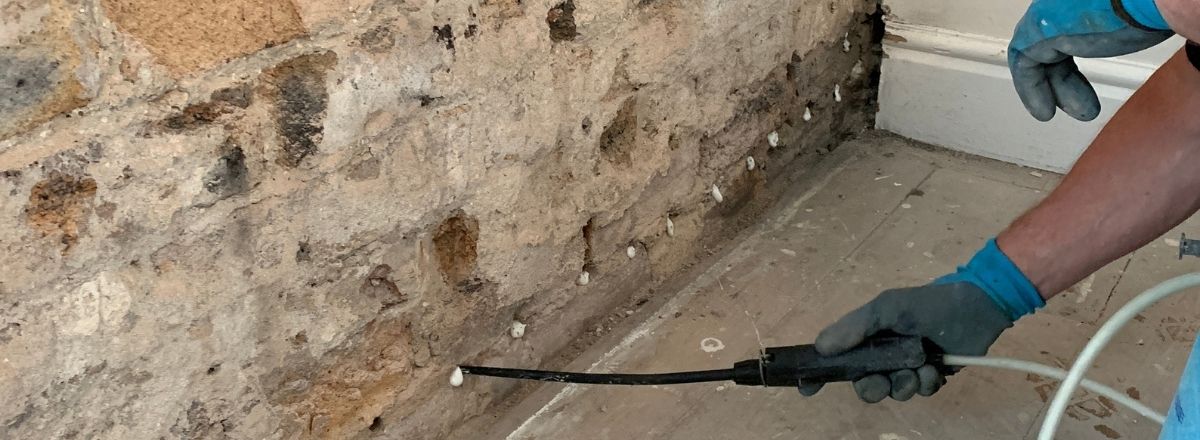
Common types of damp proof course include damp proof membranes, slate, engineering bricks or bitumen. For remedial damp proof courses, a chemical DPC can be installed, with the damp proofing liquid or cream injected into drilled holes in the mortar joint.
Protection from rising damp is essential for maintaining both the structural integrity of your property and keeping a healthy internal environment for occupants.
The main purpose of a damp proof course is to prevent water movement upwards through masonry and mortar. Without a continuous barrier, groundwater will rise upwards through capillary action, which can cause damp patches, damage to internal plasterwork and finishes, and cause further issues such as fungal decay.
Damp internal environments are known triggers for respiratory issues, asthma, and allergies, especially for the young, the elderly or those who are immunosuppressed.
Rudimentary damp proof courses have existed for thousands of years, but it was not until the Building Act of 1878 that the requirement for a damp proof course was introduced in British buildings.
Homes were often constructed with slate or lead damp proof courses, but as more modern products have become available, today's buildings are often constructed with a plastic membrane roll damp proof course.
Because of the varying ages of buildings across the United Kingdom, over time, damp proof courses can become defective and no longer work as intended. Functioning damp proof courses can crack, in the case of slate, become bridged because of changes to external ground levels, or because of poorly installed plasterwork brought to ground level. These issues allow water to rise upwards from the ground and affect the masonry above.
Because of this, an accurate diagnosis of the issues seen is required to fully understand the root cause and if remedial treatments are required.
British Standard 6576:2005 is the code of practice for the diagnosis of rising damp in walls and the subsequent installation of chemical damp-proof courses.
Because of the varying age of housing stock across the UK, there are various types of damp proof courses that properties may be constructed with. Most damp proof courses were placed during the construction process, but in some cases, remedial damp proof courses may be installed at a later date.
Most properties built after 1878 include a physical DPC. These are a thin layer of material, such as slate, bitumen, or plastic membrane, installed during the original build.
Slate and Lead are common materials used during the Victorian and Edwardian periods; these materials were chosen for their natural durability, though they are prone to cracking if the building's foundations settle over time.
Bitumen and Felt are often found in early 20th-century homes; these materials can eventually become brittle and can perish, losing their effectiveness as a moisture barrier.
Damp Proof Membranes (DPMs) and plastic barriers are often used in more modern properties, and are extremely resilient and form a continuous, impermeable barrier when integrated correctly into the masonry.
Chemical damp proof courses are typically remedially applied, and are a modern solution for older properties where the original barrier has failed or was never present.
The process involves the injection at regular intervals of a silicone-based liquid or cream that penetrates into the mortar and masonry, creating a water repellent barrier.
Once injected into pre-drilled holes, it diffuses across the mortar bed, lining the pores of the masonry with a silicone resin that creates a permanent barrier.
Unlike remedial physical DPCs, chemical injections do not require the removal of a mortar course, making them an efficient and cost-effective choice for existing homes. Elements of replastering may be required because of the presence of hygroscopic salts from the ground in the masonry and plasterwork. Replastering with a salt retardant barrier will prevent salts from migrating through to the newly plastered surfaces.
When installed by specialists, these treatments are designed to remain effective for decades and typically come with long-term guarantees, indicating the high standards of work carried out and quality of product used.
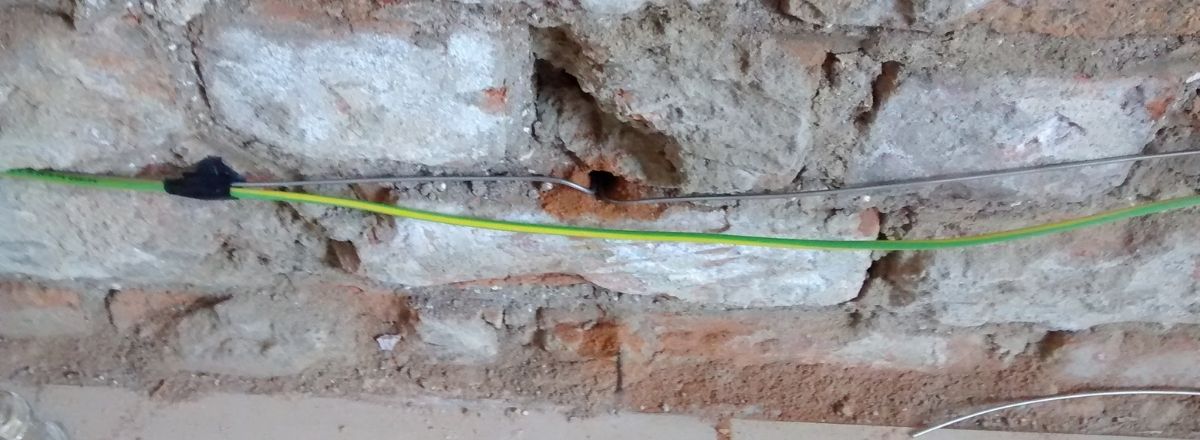
Typically used in specific heritage or historical constructions, these systems employ an earthing rod and small electrical charges to physically repel moisture molecules away from the walls.
This method utilises a series of copper or titanium wires embedded in the mortar course to introduce an electrical current. This charge and the earthing rod counteract the natural capillary forces that draw water upwards, effectively ‘pushing’ the moisture back down towards the ground.
Because it involves no chemical saturation and is ‘reversible’, it is often preferred for listed buildings or heritage structures where preserving the original aesthetic of the stone or brick is paramount.
You may require a remedial damp proof course if you are noticing the telltale signs of rising damp. While many properties are constructed with a damp proof course, over time they can become defective or bridged, meaning moisture can rise upwards via the mortar and masonry, into the building.
Damp problems are not always caused by a lack of a damp proof course, which makes accurate diagnosis essential.
If you are concerned about a damp problem affecting your property, Peter Cox has a number of qualified surveyors who can carry out a survey and provide recommendations for damp proofing, if treatments are required.
All damp proofing is tailored specifically for your property, as no two properties are the same.
While these symptoms are key signs of rising damp, other forms of damp may appear similar. This is why it's important to fully investigate the root cause of the problem before carrying out any remedial treatments.
A professional damp and timber survey carried out by a qualified surveyor can help identify rising damp.
They may use moisture meters, thermal imaging cameras and their knowledge to pinpoint the exact cause and extent of the issue. Amateur attempts to diagnose damp can often lead to misdiagnosis.
Once rising damp has been confirmed, the installation of a remedial damp proof course can be carried out.
The most common and effective method for installing a DPC is by chemical injection. The installation of a remedial damp proof course typically involves:
Yes, when diagnosed correctly, installing a chemical damp proof course is an effective way of preventing rising damp in a building. The silicone-based cream will create a water repellent barrier that prevents moisture ingress from rising upwards into the wall.
The most important factor is to understand and accurately diagnose the type of damp affecting the property - a chemical DPC is a treatment specifically for rising damp. If other types of damp are the root cause of the problem, a DPC will not prevent the problem from returning.
Sometimes the original DPC hasn't failed but is bridged by high external ground levels, flower beds, raised paths or driveways, or by internal plaster touching the solid floor. Fixing these issues will prevent the need for remedial damp proofing.
Because of these factors, a qualified and professional surveyor needs to investigate the root cause of the problem and provide recommendations to solve the issue long-term.
While DIY DPC injection treatments are available, results may be inconsistent. The biggest danger is misdiagnosis; if you treat a wall for rising damp when the real issue is condensation or penetrating damp, the problem will continue.
Professional diagnosis and installation ensure the root cause of the damp is identified, and treatments are typically backed by long-term guarantees, which provide you with lasting peace of mind.
If you are worried about a damp problem in your property, or if you think you need a damp proof course installed, Peter Cox can undertake a professional damp and timber survey to provide you with advice and recommendations.
A damp and timber survey is used to check the health of your property and identify any problems that could affect it, both externally and internally. They will check the condition of any existing damp-proof courses and provide recommendations on how to prevent any damp problems found.
Modern chemical DPC injections are designed to be a long-term solution to rising damp. When high-performance silicon-based creams or fluids are installed correctly by a specialist, the water repellent barrier remains effective within the masonry for decades. At Peter Cox, our damp proofing treatments typically come with a long-term guarantee of 20 years, providing homeowners with lasting peace of mind.
The costs for a damp proof course will vary depending on the size of the property and the extent of the problem. Elements of replastering and timber repair may also be required. Because of this, it is only possible to fully understand the costs involved by carrying out a professional damp and timber survey. If no evidence of rising damp is found, or if the root cause of the problem is caused by building defects or leaking pipes, a damp survey can help save you money by removing the need for unnecessary repairs.
Yes, if your property is suffering from a confirmed rising damp issue, the installation of a remedial damp proof course will help prevent the problem by creating a waterproof barrier to stop moisture from entering the fabric of the building. This will stop the deterioration of internal plasterwork while preventing timber from becoming decayed. It will also remove unpleasant damp smells from the internal environment.
*Survey enquiries for your local branch will be directed to our dedicated central survey control teams across the UK. Calls to 0800 and 0808 numbers are free unless you are calling from a business phone, in which case the rate will be set by your provider.


