
Call Peter Cox on 08082508820 * or Contact Us Online
Sump Pump Installation - Waterproofing Experts
Sump pumps are the beating heart of a Type C waterproofing system, removing water collected from floor drains, membranes and drainage channels and safely removing it from the basement. Without a sump pump, basements will suffer from moisture ingress and flooding which can lead to damage to stored goods and furnishings stored in the below ground space.
Cavity drained basement waterproofing systems provide excellent protection against moisture ingress, and the sump pump, although hidden in the floor slab, is a key component of the Type C system.
Choosing the correct sized sump pump unit for your waterproofing project can be a difficult task, and it's often worth consulting a CSSW qualified surveyor who can provide advice and solutions in designing a Type C system incorporating a correctly sized sump pump.
It must be remembered that as good as these pumps are, they are not designed to run 24/7 and must therefore be correctly specified for each project.
What are Sump Pumps?
A sump pump is a specialised sump and pump system designed to be used in below ground spaces, typically as part of a Type C waterproofing system but also as a standalone water management system. Sumps are used to collect water that seeps into the drainage channels, with the pumps used to discharge water ingress and direct it away from the property. This prevents the below ground space from flooding and can provide excellent protection against significant amounts of groundwater ingress and even flood water.
Pumps are robust and extremely durable and are installed into a specially constructed sump
chamber in the floor slab. The pump system is encapsulated inside a large plastic container known as a sump, that collects the water from the drainage channels, with a discharge pipe to remove the water from the system.
Sump pumps often contain a main pump, and a back up pump for extra protection. Sump pumps should also be installed with high water level alarms to alert you to any issues, and a battery backup to ensure unhindered operation during power outages. Access for maintenance is required, so when they are installed technicians will place them in a location that makes this possible.
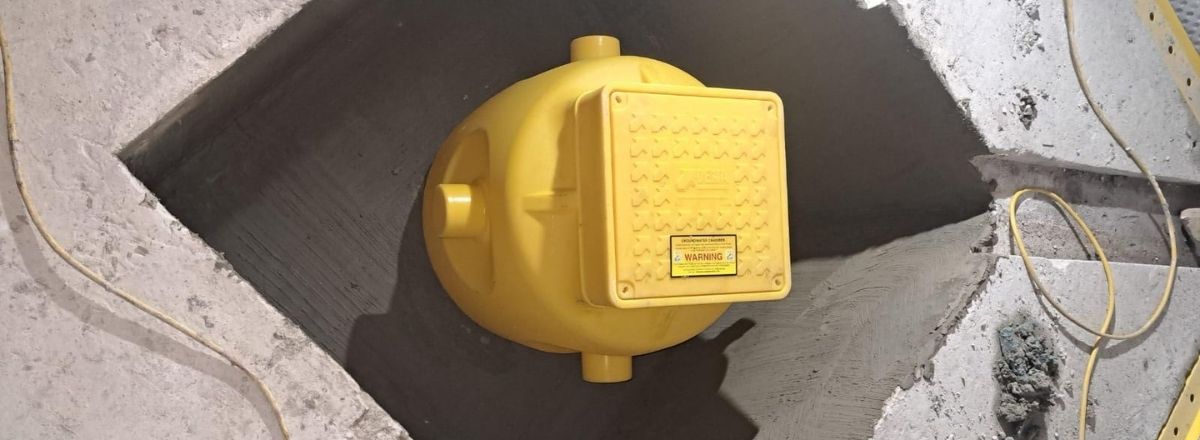
The sump pump is buried into the floor slab, protecting properties from moisture ingress while being out of sight.
How do Sump Pumps Work?
Rather than sump pumps working on their own, they are part of a waterproofing system, known as Type C waterproofing. This system uses membranes that are fitted onto walls and floors to collect moisture that seeps through the surrounding surfaces. This moisture is depressurised and directed to the sump pump through a perimeter drainage system. The water will collect inside the sump and at a designated level the primary pump will activate and remove the moisture through a discharge pipe, away from the property. A secondary pump is located within the sump as a backup thus providing a failsafe and further peace of mind.
Because Type C waterproofing is designed to allow water to enter the system in a managed way, using strategically placed air voids to depressurise and then manage the water away, it is known as a ‘water management system.’ Because it controls moisture ingress, it is seen as a ‘failsafe’ option for below ground waterproofing which can deal with ingressing water and even flooding when designed correctly.
Type C systems can be designed with multiple sump pumps and drainage channels, making them a versatile option for all types of buildings, from domestic basements, cellars in listed buildings and large commercial spaces.
This system is often used in conjunction with other waterproofing methods such as tanking to create a dry and habitable internal environment in accordance with BS8102 guidelines where the structure itself cannot be relied upon to provide primary resistance to ingress. A qualified CSSW surveyor should be involved during the design process in order to design a system fit for purpose.
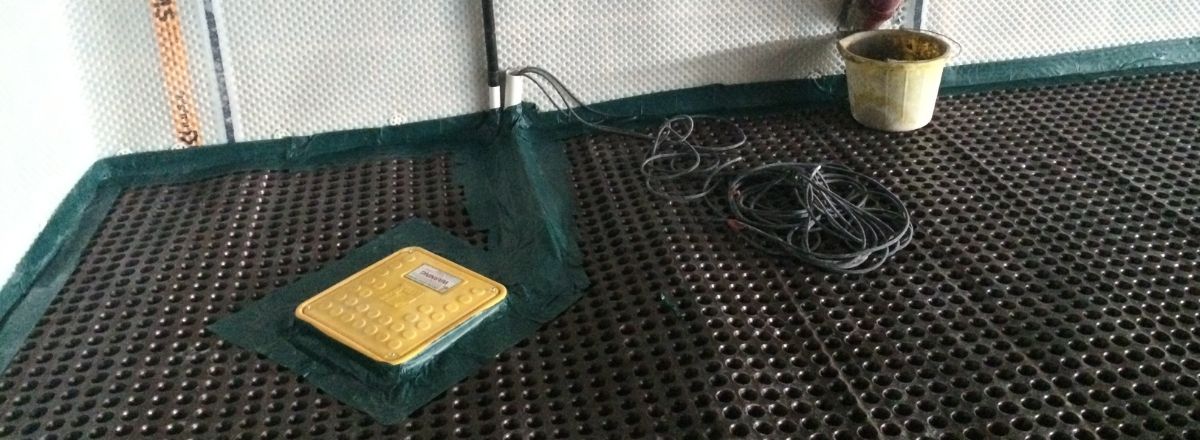
The sump pump is part of a Type C cavity drain membrane system.
Why do you need Basement Drainage Channels?
Basements require drainage channels to collect and direct water towards the sump pump as part of a Type C waterproofing system. These are usually installed into the floor slab around the perimeter and direct moisture ingress into sump chambers. In some cases a sump pump is not required and moisture can be directed via gravity to a suitable discharge point where topography allows.
If there is no drainage in the below ground space, water will collect and cause severe damage to flooring, furnishings and stored goods. It can even lead to structural issues in timber, such as fungal decay.
Water must be removed for the below ground space for it to be considered healthy and habitable. Drains are hidden from sight and incorporate accessible maintenance points, so provide an effective hidden long term solution to water ingress as part of a Type C system.
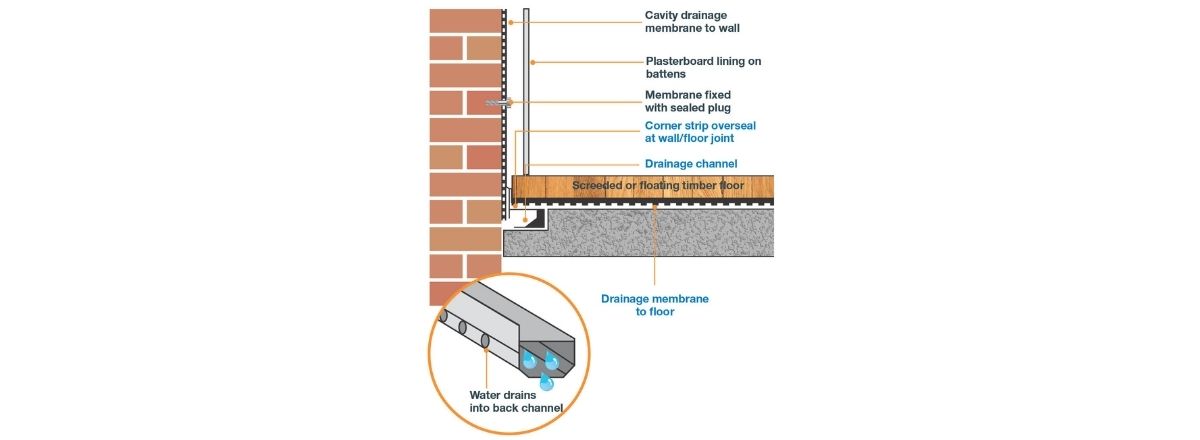
Perimeter drainage channels are used to capture and divert water to the discharge point, typically a sump pump.
Type C Basement Drainage systems
Sump pumps and maintainable perimeter drainage channels are a key part of any Type C system designed to BS8102 specification. They allow for moisture collected between external walls and the walls and floor membranes to be removed safely from the below ground space.
The main benefits of a Type C drainage system:
- Ease of installation compared to external waterproofing
- Flexible and versatile designs for all types of below ground spaces
- More affordable compared to external waterproofing
- Ideal for areas with high ground levels or high hydrostatic pressure
- Easy access for regular maintenance and cleaning
- No risk of drainage clogging from soil or debris from outside
- Hidden from view in a finished basement
- Effective and inconspicuous
- Waterproofing systems designed to BS8102 come with a 10 year guarantee
Perimeter Drainage Systems
Perimeter drainage is required to collect and direct moisture towards the sump pump and is typically installed at the wall floor joint. They will capture any water ingress collected through the Type C membrane system installed on the walls and floors. Channels can be installed in the floor slab, or where a new floor slab is installed, channels can be incorporated.
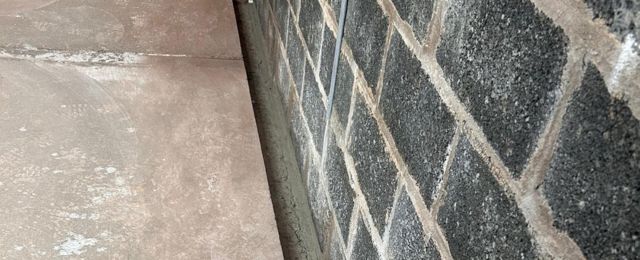
Channels can be pre-cut or designed as part of a new floor slab.
Perimeter drainage channels should never be more than 25m in length before reaching the discharge point. This may mean multiple channels needing to be installed, or extra sump pumps for large below ground spaces.
They must always include inspection ports, in order for inspection and where required maintenance. This is to prevent blockages or inefficiencies. Anti-lime treatments can be used to prevent blockages over time.
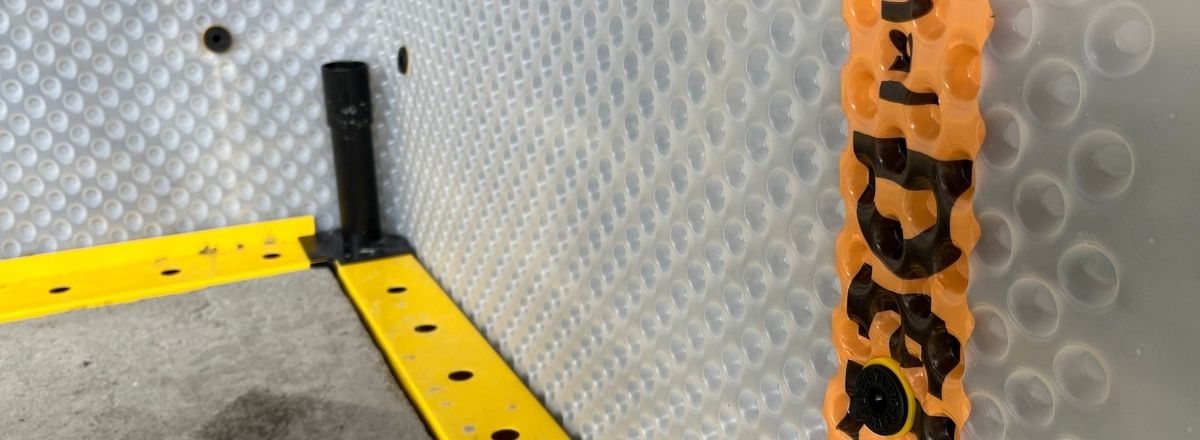
Access point in a corner allows for regular inspection and maintenance to be carried out.
When designing a Type C system, the layout of the cavity drainage channels are designed by CSSW qualified surveyors in accordance with regulations, such as BS8102.
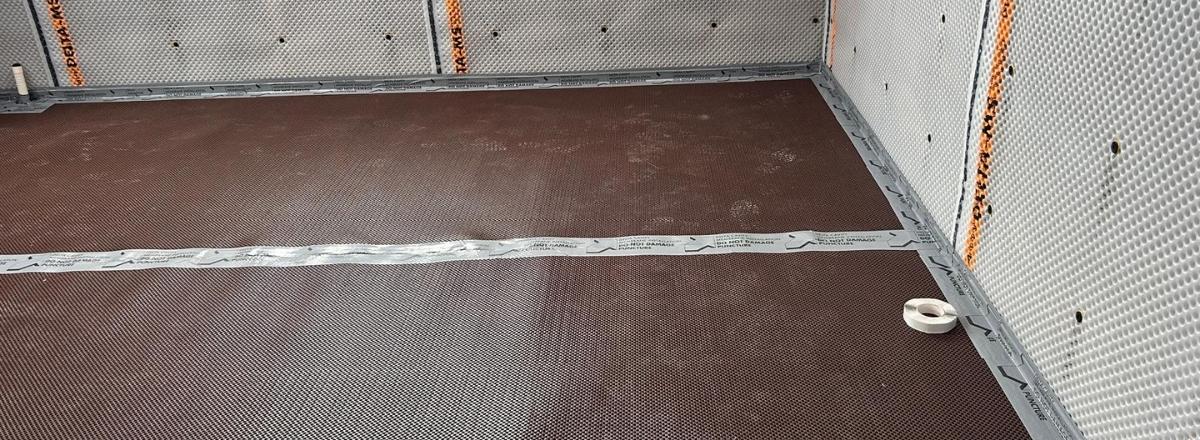
The perimeter drainage system is covered by the floor membrane, with access for inspection and maintenance.
Sump Pump Installation
The requirements for a sump pump system will depend on the size, location and design of a waterproofing system, so it's advisable to discuss this with a CSSW qualified surveyor. They can carry out a comprehensive waterproofing survey and provide a detailed survey report of the below ground space, and provide advice and solutions.
They will provide you with details on the correct sized sump pump to use, as they come in all different sizes and variations.
If you do choose to go ahead with a Type C system that incorporates a sump pump, the installation process will begin with excavating a sump pit in a suitable location. This can be cut out of an existing floor slab or can be built during the installation of a new slab.
Once the floor has been excavated, the new chamber can be installed and concreted into place, the sump pumps can be installed into the chamber with the drainage channels directing ingress into the sump. There should ideally be two connections into a sump chamber from the perimeter drainage channel. The two pump floats are set at different levels with one acting as standby alongside a further float set to activate the high water level alarm.
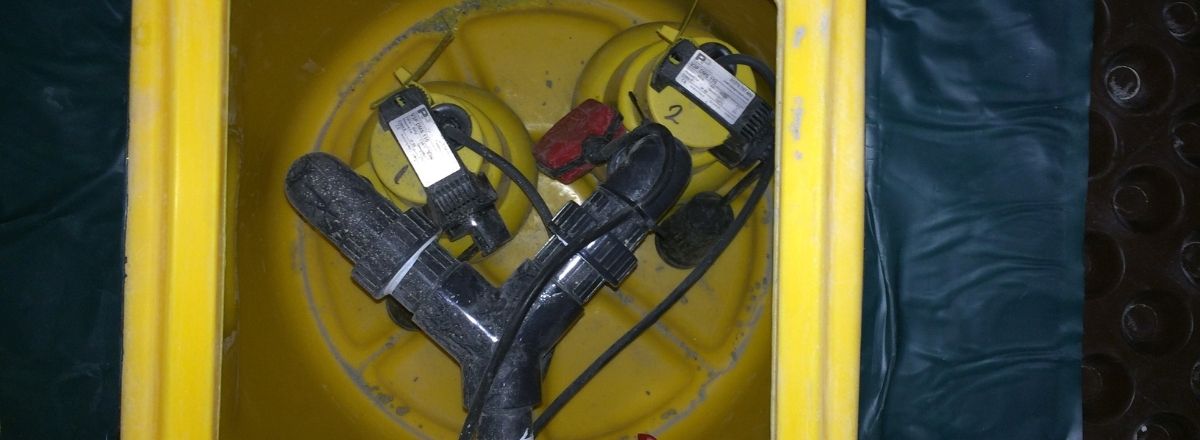
The sump pump is then installed, typically a dual pump system for extra protection.
Sumps are fitted with a sealed access cover which facilitates maintenance and servicing checks. As part of the standard commissioning routine, systems are then flood tested to confirm operational integrity before the access cover is fitted. This means the system is ‘signed off’ and is ready to use. The pumps, alarm and battery backup units should be serviced annually as a minimum to maintain its effectiveness. Details of this will be in the survey report provided.
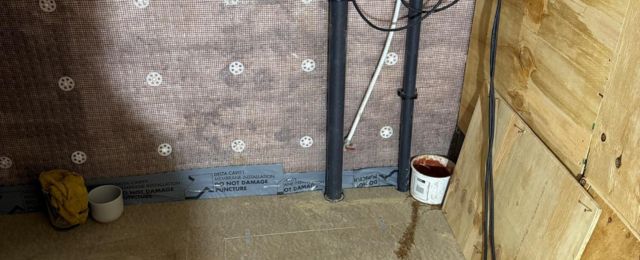
The sump pump is hidden from sight, with a hatch for access for maintenance.
Sump Pump Protection - Alarms and Battery Back Ups
It is important to understand that BS 8102 advises that where a pumped cavity drain membrane system has been provided, an alarm and battery backup should be provided alongside details of the maintenance schedule.
Battery backups allow for continuous power supply in the event of a power supply failure. The duty pump will draw power from the battery which will have been fully charged during normal operation. The unit will automatically recharge when mains power returns and incorporates a compact quick charger to top up the battery. This means in the event of a black out or power failure, your below ground space is protected, even if this corresponds to a storm and heavy rain, giving you peace of mind.
High water level alarms are also a key element of the Type C system, designed to offer the highest level of protection for basement groundwater pumps and sump chambers. It not only provides an alarm to give an early warning that there may be a problem if water in the sump chamber rises above a pre-set point, but can additionally be an active pump monitoring system when connected to wifi.
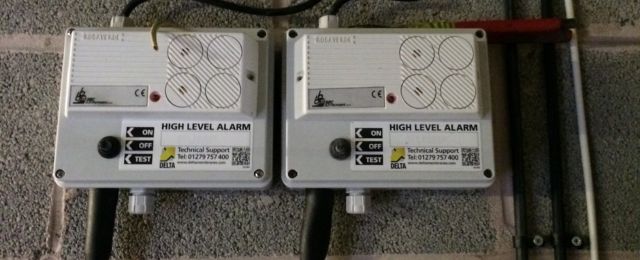
High level alarms offer another layer of protection for your basement or below ground space.
Peter Cox - Sump Pump Installers
Peter Cox are the company to trust with sump pumps and Type C waterproofing. From our network of local branches we have a number of CSSW qualified surveyors with the knowledge and experience to advise on standalone water management systems and Type C waterproofing.
No matter what type of project, we can work with homeowners, architects, contractors and builders to design a waterproofing system to suit your needs. We will be involved through the process step-by-step, from design to completion. We can design systems to British Standards 8102 - the industry standard for below ground waterproofing in the UK.
Peter Cox are approved installers of Delta, Koster, Newton and Safeguard waterproofing products, and all of our technicians undergo rigorous in-house and onsite training in order to be able to qualify as a trusted partner.
We are rated ‘Excellent’ with over 2,500 independent reviews on Trustpilot and are a Which? Trusted Trader, CHAS and Safecontractor approved and are registered as a Quality Assured Firm under ISO 9001.
Frequently Asked Questions
-
How much does it cost to install a sump pump?
Costs will depend on the size of the sump pump required, and the level of protection needed. A waterproofing system for a domestic basement will vary hugely from a large commercial below ground space. The best way to find out about waterproofing costs is to seek a waterproofing survey from a CSSW qualified surveyor.
-
How to drain water out of a basement?
If you have significant levels of water in your basement you may require a Type C system incorporating a sump pump. These systems are designed to handle large amounts of ground water and flood water, and can be used to drain water out of basements. As part of a waterproofing system to BS8102, you can turn a damp basement into habitable living space, which can add significant value to your property.
-
Will a sump pump drain a basement?
Yes, a sump pump is designed to handle large amounts of water and moisture ingress, and are one of the best ways to drain a basement, and create a habitable living space as part of a waterproofing system. If you are interested in waterproofing your below ground space, get in touch with Peter Cox for a basement survey from a CSSW qualified surveyor.
Next Steps
*Survey enquiries for your local branch will be directed to our dedicated central survey control teams across the UK. Calls to 0800 and 0808 numbers are free unless you are calling from a business phone, in which case the rate will be set by your provider.