Rising Damp Treatment
Find out more about how Peter Cox can provide long term solutions for rising damp

Call Today on 08082508820 * or Book a Survey Online
Many homeowners will spot damp problems in their homes and will assume the cause is rising damp, however it is the most commonly misunderstood and misdiagnosed type of damp that affects buildings.
Because of this, rising damp is seen as a controversial topic, in which some deny its existence. Rising damp is a well‑documented phenomenon and has been observed since Roman times, with buildings protected with rudimentary methods to prevent it from occurring.
Most modern buildings are now built with a damp proof course to prevent rising damp.
The telltale signs of rising damp are similar to both condensation and penetrating damp, and a perfectly fine damp proof course can become bridged, which can lead to issues, but can often be rectified without the need for remedial damp proofing.
Because of this, it's important to fully understand the root cause of the damp problem in your property, before assuming you require specialist damp proofing.
We have put together a simple guild on what will cause rising damp problems in properties, along with solutions needed to rectify the issues.
A damp and timber survey can provide answers if you are unsure about whether or not you have a rising damp problem in your property.
Rising damp is caused by the upwards movement of groundwater through masonry walls by a process called capillary action. This is prevented in modern buildings by the presence of a damp proof course (DPC). If a DPC fails, or moisture can bypass it, rising damp can occur.
The extent of the rising damp problem can be exacerbated by high ground moisture levels around the property, the building materials used to construct it and a lack of ventilation through airbricks.
Here are some of the main contributing factors to rising damp in buildings:
Most properties across the United Kingdom will have a damp proof course from when it was constructed, but if moisture can bypass this waterproof barrier, it can continue to rise upwards through masonry, causing rising damp.
A damp proof course can become bridged either on the inside of a property, or the outside, depending on several factors.
It must be stated that if a damp proof course has become bridged, there may not be a need for remedial damp proofing - the problem causing the bridge should be addressed, preventing further moisture ingress. If however the bridging is caused by a high pavement on a street abutting the property, you would need to look at other treatment options.
A damp proof course is typically 150mm above ground level externally, but over time changes around a property can cause material to be built up and therefore allow moisture to bypass the waterproof layer.
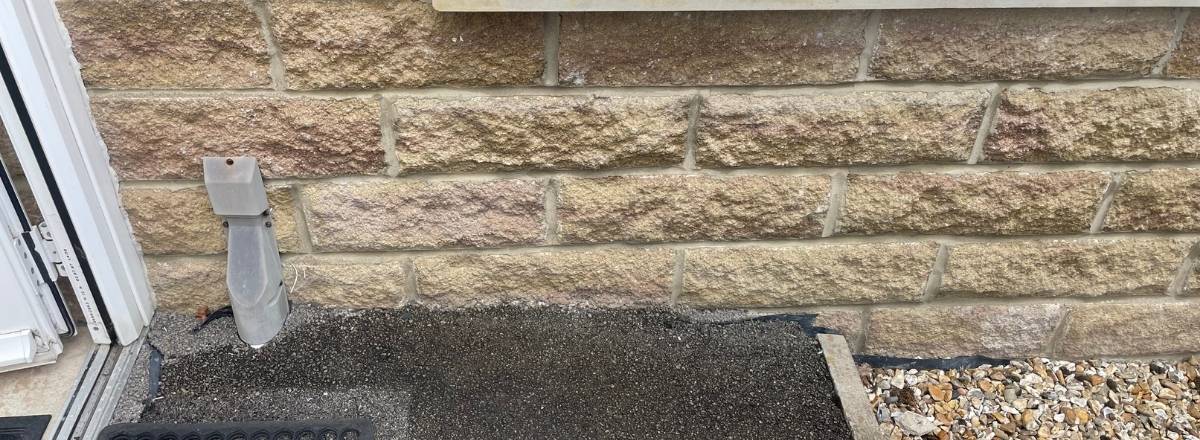
One of the most common causes of damp proof courses becoming bridged externally is when front gardens are repaved, new patios are installed or when footpaths are raised.
Even raised flowerbeds or stored items up against a property can cause issues.
External changes to a property can cause issues when a DPC is mistakenly bridged.
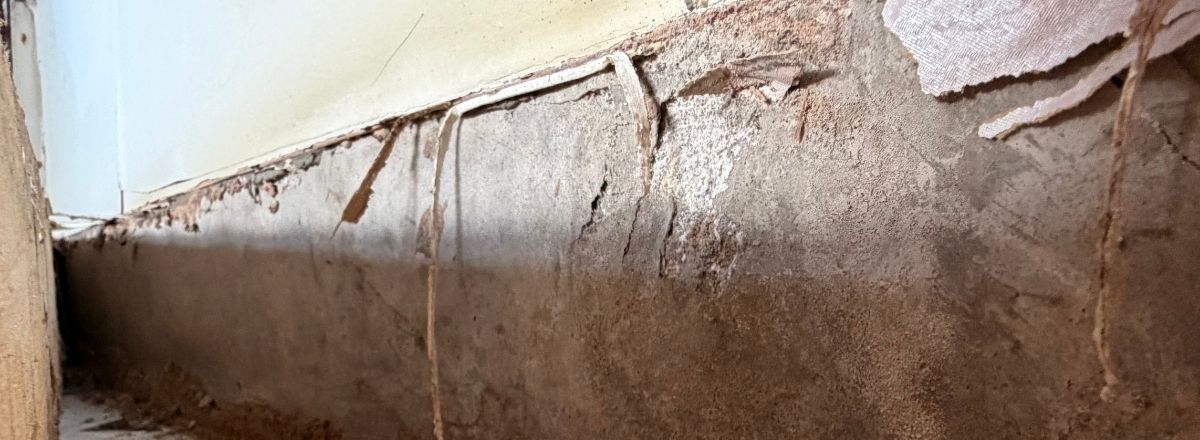
Internally, solid materials like plaster or floor screed can bridge a damp proof course when in contact with the solid floor.
Plasterwork should not be brought down all the way to the floor. It should stop above the level of the DPC and there should a minimum 15mm gap which is then covered by skirtingboards. This prevents the DPC from being bridged. If concrete floors are damp, this may require attention.
For cavity walled properties, mortar dropping, rubble and debris can often fall into the cavity, which can cause a bridge for the DPC from within the wall. This must be removed to prevent the issue.
Many buildings across the United Kingdom are decades, if not centuries old. Over time, subsidence, movement, deterioration and general decay can lead to original damp proof courses becoming defective.
While some property owners may be unaware of ground water levels because the property remains dry inside, they may start suffering from rising damp because of high ground water around the property, particularly in winter.
If a damp proof course has been installed incorrectly, or if the damp proof course has not been installed at all, this could lead to damp problems internally.
A damp proof course needs to be a continuous layer around the property, and if gaps occur this can provide a gap where moisture can rise upwards.
Where suspended timber floors have been replaced with concrete, the damp proof membrane underneath must be brought up the wall and seamlessly installed into the damp proof course level in the wall. If this is done incorrectly, moisture can affect the surrounding walls.
Many properties will look to increase the habitable living space by adding an extension, or garden walls can be installed at a later date. If these structures are installed without adequate thought for the damp proof course, these can become a bridge for moisture to bypass the DPC.
In particular, abutting garden walls can cause 'falling damp' into the property if tiles or coping stones are not put on top of the wall to shed water.
Even something as simple as a new step, decking or a patio can cause issues where the structure is directly constructed onto the side of the property or it is installed above DPC level and runoff water bridges the DPC.
The ground water levels below a building will affect the rate at which moisture can travel upwards through walls by capillary action.
If there is poor ground drainage around a property, surface and ground water is unable to drain away, so this can provide the moisture needed for a rising damp problem. It will also contain the hygroscopic salts which deteriorate internal plasterwork.
Periods of high rainfall, plumbing leaks or flooding can also cause issues.
Poor drainage and concrete or paving around a building can cause moisture to sit at the foot of the wall, and if there is no DPC it can be drawn upwards into the fabric of the building.
Rainwater bouncing off footpaths and paving stones can bridge a correctly installed damp proof course and this can appear similar to a rising damp issue.
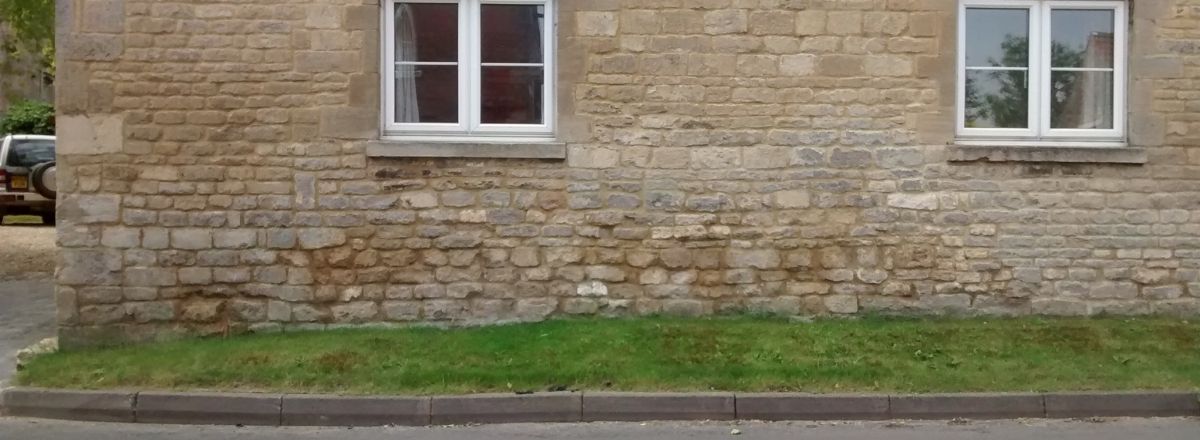
Algae and vegetation growth on exterior walls may be an indicator of a moisture problem at the foot of a building - which will need to be addressed whether the problem is rising damp or not. Damp masonry loses its thermal properties, so affected walls may appear cold and provide an unpleasant internal environment.
A professional surveyor will be able to provide recommendations on whether or not the problem is rising damp or penetrating damp, by carrying out a damp and timber survey. It is important to fully understand the cause of the problem, as the treatment processes will differ depending on what is found.
The impact of rising damp will differ depending on the type of masonry construction. Sandstone is more likely to be affected by rising damp than properties constructed using granite. However, it must not be forgotten that mortar degrades over time and then provides a path for rising damp, independent of the masonry.
Another common issue which can cause rising damp problems is when external renders are brought down to ground level, which bridges a damp proof course.
Although not necessarily a cause of rising damp, when external renders deteriorate they can also trap rainwater inside masonry, which can cause damp problems. Again, accurate diagnosis is key in order to fully understand the root cause.
As we have made clear - remedial damp proofing is only required if a rising damp problem is found and the property in question has no functioning damp proof course.
That said, high moisture levels can cause issues at the base of walls, and steps can be taken to resolve any associated damp problems.
Damp Proof Course - Remedial damp proof injections are a cost effective way of creating a chemical damp proof course which can prevent moisture rising upwards and causing damp walls. When installed by specialists such as Peter Cox, these treatments will be effective for decades and typically come with long-term guarantees, indicating the high standards of work carried out and quality of product used.
Surface water drainage - Where water is pooling around a property, action must be taken to allow for this to drain away, including french drains. Drains and guttering can become blocked if regular maintenance is not carried out to remove foliage and debris. A rising damp problem can be exacerbated by pooling water near to the damp proof course, especially if it has become bridged.
Breathable renders - Moisture can become trapped in masonry which may not be able to dry out due to waterproof renders.
Ventilation - In order to keep the sub floor void beneath a property dry, ventilation in the form of airbricks should be increased. The height of the sub-floor (solum) void should also be checked to ensure there are no obstructions to good air flow and that all timbers are clear of the surface, as this can also cause DPC bridging. This can improve air circulation which will prevent issues such as wet rot and dry rot from occurring.
Once rising damp has been confirmed, efforts can be taken to prevent the problem, whether this is removing whatever is bridging a functioning damp proof course, or the installation of a new chemical damp proof course.
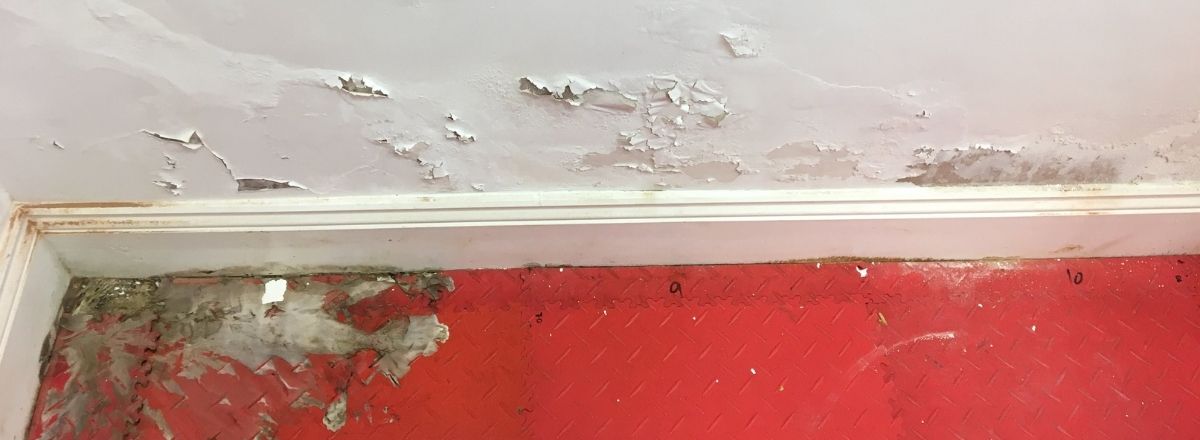
Because rising damp causes groundwater which contains hygroscopic salts to rise up through masonry, as the moisture evaporates these salts are left behind and crystalise on surfaces which can deteriorate plasterwork.
Because of this, and to prevent any further salt damage as the walls dry out, it is necessary to carry out replastering.
Specialist damp proof plaster is required which helps create a barrier between the salt laden masonry walls and the internal plaster finish. This will stop any further salt migration, meaning the internal walls can be decorated without the worry of further damage.
If replastering is required, this will be outlined in the survey report provided to you once a damp and timber survey has been carried out. This will also contain any requirements for timber repairs, as rising damp can cause fungal decay to joists and skirting boards.
If you are worried about a damp problem and you are unsure of what is causing it, it is recommended that you book a professional damp and timber survey which can help provide answers.
A CSRT /CSTDB qualified surveyor will conduct a damp survey, which is used to check the health of your property and identify any problems that could affect it.
They will take their time to investigate both the outside and inside of the property, and come to their conclusions based on physical evidence and by using specialist equipment.
They will also check the condition of timber throughout the property, as dampness can cause wet rot, dry rot and woodworm, which can cause timber to lose its structural integrity.
All findings will be detailed in a survey report, backed by evidence found from their investigation. If the surveyor finds no evidence of rising damp, and the issue is caused by building defects or a lack of maintenance - this will be made clear.
If however damp proofing is required, the surveyor will detail the scope for work and the steps required to return your property back to its original condition.
Details of the long term guarantee will also be in the survey report.
If you are concerned about a rising damp problem in your property, Peter Cox are on hand to provide expert and long lasting damp proofing treatments.
When you choose Peter Cox for damp proofing you benefit from:
*Survey enquiries for your local branch will be directed to our dedicated central survey control teams across the UK. Calls to 0800 and 0808 numbers are free unless you are calling from a business phone, in which case the rate will be set by your provider.