
Call Peter Cox on 08082508820 * or Contact Us Online
Basement and Cellar Tanking - Expert Tanking Services
Damp walls are a common problem in cellars and basements because the earth surrounding the walls is often saturated with water, and this moisture can make its way through the masonry and brickwork. When this moisture ingress passes through the wall, it will often carry salts and minerals with it that will damage any finishes you have applied to the wall like paint.
Tanking walls will prevent damp problems by forming a waterproof barrier and is a common method for below ground waterproofing. It can be used in conjunction with other waterproofing methods to create a dry and habitable internal environment in accordance with BS8102 guidelines.
If you are considering tanking your basement or cellar then we have put together a comprehensive guide on what tanking is, when to use it and how it can be used as part of a comprehensive waterproofing system. When you are carrying out waterproofing you should always use a reputable company along with CSSW qualified surveyors, who can provide you with expert advice and solutions based on British Standard 8102, the industry standard for below ground waterproofing.
Peter Cox are experts in tanking and keeping below ground spaces dry, we have been installing basement waterproofing systems across the UK for decades.
What is Tanking?
Tanking is the application of a coating on the internal or external surface of a structure to prevent moisture ingress. This will create a barrier to prevent moisture from getting into the basement, cellar or below ground space, making the space watertight and preventing moisture and salt migration into the internal space.This will prevent damp patches, condensation and mould growth.
Typically for existing below ground spaces a tanking slurry is used to create the waterproof barrier, which usually consists of a cementitious product that is applied directly onto the walls, floor and sometimes the ceiling of an underground space. The slurry will then cure which will block water by creating an impermeable barrier. It is a versatile way to create a barrier for moisture, and is sometimes known as cementitious waterproofing or Type A Waterproofing.
Additionally, tanking in new build projects can also mean the application of pre or post applied sheet membrane to create a waterproof barrier, but membranes generally are more commonly part of a Type C cavity drainage system for waterproofing.
Type A Waterproofing - Barrier Protection
Tanking is another name for Type A barrier protection, which is outlined in BS8102. Tanking can be used when a structure in itself is not considered to be integrally waterproof, and a barrier should be introduced to gain a degree of watertightness. This can either be internal or external, and usually involves a tanking material applied to the walls and floors of the basement.
BS8102 states where Grade 3 protection is required, the waterproofing design should include a combination of two or more of the types of waterproofing systems where risks are deemed high. This means that a Type A barrier protection system can be used in conjunction with a Type B structurally integral system and/or a Type C drained protection system, therefore lowering risk.
Tanking a Basement or Cellar
Many properties have a basement or cellar, but these spaces are often under utilised because of damp patches and musty smells. If you are thinking of converting the space into a habitable living area, or even just to increase storage space, tanking is a viable option.
Because these spaces are inherently below ground - this means they are susceptible to moisture ingress, flooding and other issues related to dampness. This not only includes lateral penetrating damp into the below ground space through walls and floors, but also factors such as flood risks, surface water runoff and high water tables.
All of this must be considered when you are thinking about tanking a basement or cellar. A CSSW qualified surveyor will be able to provide advice and recommendations in the design of a waterproofing system. When applying a tanking slurry to walls and floors, masonry surfaces will need to be prepared correctly. Walls and floors must be in a good structural condition for tanking to work as intended.
Any water seepage must be addressed and prevented. Care must be taken when applying tanking slurries to the weakest points within the below ground space, typically the floor to wall joint.
If the wrong products are used, or installed incorrectly, this can lead to the tanking system failing and moisture ingress penetrating into the internal space, potentially causing water damage to furnishings and stored goods. Heating and ventilation must also be considered depending on the end use of the below ground space.
There are many factors and regulations involved in creating a watertight environment, which makes it important to use a professional contractor when carrying out below ground waterproofing, especially if the space is to be used as habitable living space.
Tanking Walls
Tanking slurries and membranes can be directly applied onto both external and internal walls, creating a watertight barrier. Where the tanking is applied will depend on access, with below ground conversions typically requiring an internal application as it is impractical to access the buried external surfaces.
For tanking to work as intended tanking systems have to be continuous, meaning walls on all elevations and floors are correctly coated.
The walls and floor have to be of sufficient strength to resist the loading that could be imposed by water pressure coming to bear on the structure. Any existing plaster or renders, and deteriorating mortar will need to be replaced to create a flush bond with the masonry walls.
Tanking on External Walls (Positive Side)
External tanking is often used for new build properties, or where there is sufficient access to the external wall. This is not always possible for basement conversions for existing properties. Because the structure itself is not considered to be integrally waterproof in its own right, a barrier is introduced to gain a degree of watertightness.
Tanking slurries and coatings, either pre or post applied can be applied to the external walls, with a fully bonded sheet membrane usually installed below the slab. Geodrain protection membrane is often placed against the external tanking to protect the newly applied cured waterproofing when the structure is buried.
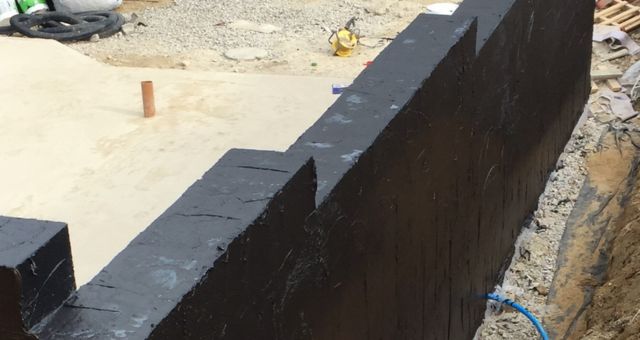
External tanking is an option for waterproofing new builds where there is sufficient access
Tanking on Internal Walls (Negative Side)
When external waterproofing isn’t possible, such as with the majority of existing basements and cellars in properties across the UK, an application of tanking slurry is applied inside the property, meaning the newly applied internal barrier holds back the pressure of the ingressing water.
Internal walls must be prepared correctly for the internal tanking system to work as intended, this means renders and plaster must be hacked off first, old mortar joints repaired and any other loose materials removed. Surfaces will need to be dusted down to allow for the slurry to sufficiently bond. Salt and lime inhibitors may be required where hygroscopic salts are migrating through masonry into the internal space. At least two coats are required to get the best results.
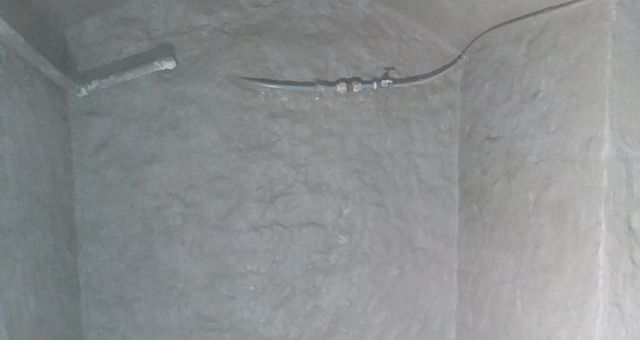
Tanking can be used to create a watertight barrier in cellars and basements
Internal Tanking Decoration
Before decorating you will need to wait for the tanking slurry to cure thoroughly, which can take anywhere between 24 and 48 hours. Different sections of tanking may take longer than others and you may notice the slurry ‘sweating,’ which is a natural part of the drying out process.
Once the application of tanking has dried and cured, it is possible to plaster and apply a skim coat before decorating. When decorating directly onto a surface that has been tanked, it is essential that you do not damage the waterproof barrier, as this will lead to moisture penetration. The surfaces cannot be penetrated by fixings for plasterboard, as this will cause the system to fail. The same is true of anything requiring fixing to the wall surface in the future, including shelving and picture frames. Any penetrations can cause failure of the system.
In most basement conversions however, a tanking system is paired with a Type C cavity drainage system, in which waterproof membranes will be applied over the tanking system. This combination of systems is applied when achieving waterproofing to BS8102 specification and the risk and consequences of failure are deemed high.

Once the slurry has dried and cured, it is possible to render the surfaces ready for decoration.
Tanking Floors
Applying tanking to floors is a similar process, and can differ depending on whether the property is a new build or an existing building. If the property is a new build, pre-applied fully bonded sheet membranes can be used for waterproofing below new floor slabs, which are installed to be continuous with waterproofing to walls.
For existing basement or cellar floors that have been deemed suitable and structurally sound, you will need to clean and prep the surface, before the tanking slurry is applied. Floors can be protected by applying a further floor screed which will add protection to the surface, preventing wear and tear.
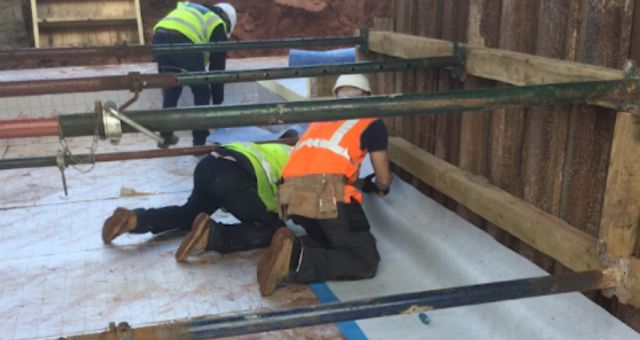
Pre applied tanking can be applied prior to floors being laid on new build projects
Tanking Paint and Slurries
Tanking slurry is a generic name for the material used to create a watertight barrier on below ground spaces such as basements and cellars. This is often referred to as ‘cementitious tanking’ which is essentially an application of slurry onto walls and floors to prevent moisture ingress.
They are made up of a mixture of cements, aggregates and chemicals that are designed to create a bond on masonry making a waterproof barrier that prevents moisture penetrating through into the internal space.
Tanking slurry will usually come in powder form and require mixing. It usually requires a minimum of two coats to be effective. When applying tanking slurry it is particularly recommended to pay close attention to the wall floor joint which will likely require strengthening, as this is an area that is particularly vulnerable to water ingress. For a tanking slurry to be classified as “waterproof” it must satisfy certain conditions set out by the British Standards Institute (BSI).
Peter Cox rigorously follows waterproofing regulations as part of our commitment to best practice within our industry. So you can be sure that any tanking product we use in your basement or cellar is of a high quality and meets the required criteria.
Differences Between Waterproofing and Tanking
Tanking is a category within waterproofing that refers explicitly to the use of either cementitious slurry or membrane barrier protection. It is commonly known as Type A barrier protection, defined in British Standard 8102.
The term waterproofing is more typically used to describe any type of system or damp proofing measure used to protect your home from rising damp, penetrating damp, leaks, and other types of water ingress.
Industry professionals typically refer to damp proofing measures when talking about protecting rooms above ground level at the damp proof course, while waterproofing is usually reserved for discussing systems and products used to keep water out of basements, cellars and other rooms below ground.
What are the Problems with Tanking a Cellar or Basement?
Basements and cellars are subject to various environmental factors which must be considered. New build properties with below ground spaces are designed by a structural engineer to take these conditions into account, however existing below ground spaces may not and could be at risk.
Cellars and basements can be vulnerable to the property settling, vibrations in the ground, or extreme hydrostatic pressure from water in surrounding earth or burst water mains. Both walls and floors are pushed inwards by ground water pressure, which can cause issues to the installed tanking system. These pressures can cause cracks and leaks in the tanking if installed incorrectly.
A professional surveyor can assess if tanking is suitable or if an alternative method of waterproofing is more appropriate.

The effect of rising water table on a structure
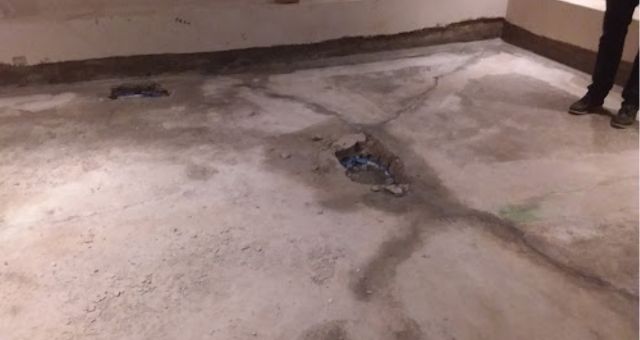
Bending stresses can cause cracking and permanent damage to the structure of a property. In this example, the floor has heaved upwards, causing cracks and water ingress.
Why Choose Peter Cox for tanking?
Peter Cox are the go to installers for below ground tanking and waterproofing, and are the market leaders in property preservation. From our network of local branches we have a number of CSSW qualified surveyors with the knowledge and experience to advise on all types of structural waterproofing.
No matter what type of project, we can work with homeowners, architects, contractors and builders to design a waterproofing system to suit your needs. We will be involved through the process step-by-step, from design to completion. We can design systems to British Standards 8102 - the industry standard for below ground waterproofing in the UK.
Technicians local to you will install the waterproofing system, while using the correct products, installed as intended. This is a hugely important step as one mistake and the waterproofing could fail, leading to a system failure and moisture ingress.
Peter Cox are approved installers of Delta, Koster, Newton and Safeguard waterproofing products, and all of our technicians undergo rigorous in-house and onsite training in order to be able to qualify as a trusted partner.
We are rated ‘Excellent’ with over 2,500 independent reviews on Trustpilot and are a Which? Trusted Trader, CHAS and Safecontractor approved, we are also registered as a Quality Assured Firm under ISO 9001.
Contact Us
Tanking FAQs
-
Is tanking a basement a good idea?
Yes, tanking a basement or cellar is a good idea as it can increase the amount of usable space in your property. It can also be a good investment by improving the value of your home. Tanking works by creating a waterproof barrier between the external moisture and the dry internal space. It is crucial when carrying out tanking that the right products are used, and installed correctly. If the tanking system fails it can lead to moisture penetration which will damage stored goods and furnishings. It is always recommended to seek advice from a CSSW qualified surveyor who can provide you with advice and recommendations for tanking a basement and any additional ventilation required.
-
Can I tank a cellar myself?
It is possible to tank a cellar, but it's a complex procedure that can cause significant damage and costly repairs if done incorrectly. If you have experience in waterproofing it may be possible, but make sure to use the correct products, prepare surfaces and install the products to the recommended guidelines. You will also need to take into account environmental factors and consider factors such as heating and ventilation.
Be aware that many old properties do not have full foundations and digging up the basement floor or removing cobbles can release pressure, undermine foundations and cause movement in the supporting walls and in extreme cases cause collapse of the structure.
If the system fails it can cause severe damage to flooring, possessions and stored goods. Moisture ingress can even cause significant structural damage to timber, causing fungal decay. For significant moisture ingress you may need to consider alternative waterproofing systems and you should consider waterproofing regulations such as BS8102. If you are unsure you should seek professional advice from a qualified CSSW surveyor. Peter Cox are here to provide you with assistance if required. -
How much does it cost to tank a cellar in the UK?
The cost of tanking will depend on the size of the below ground space, type of tanking required and the end use of the area in question. A CSSW qualified surveyor will be able to provide advice and a waterproof design with details on costs. If the space is for habitable living, you will require a waterproofing system designed to BS8102, meaning two types of waterproofing systems to ensure a totally dry environment.
-
Is tanking waterproof?
Tanking is an effective way to create a waterproof barrier in below ground spaces, but all waterproofing systems need to be 100% defect free in order to work effectively. This means considerable attention to detail when installing and applying tanking slurries and membranes. Where a totally dry internal environment is required, a standalone Type A system may not suffice given the recommendations of BS 8102:2009. This means you may require a waterproofing system using a combination of waterproofing methods, which can be designed by a CSSW qualified surveyor.
Next Steps
*Survey enquiries for your local branch will be directed to our dedicated central survey control teams across the UK. Calls to 0800 and 0808 numbers are free unless you are calling from a business phone, in which case the rate will be set by your provider.