
Call Today on 08082508820 * or Book a Survey Online
Types of Woodworm and Woodboring Beetle Species in the UK
The thought of a woodworm infestation is a cause for concern for many homeowners across the United Kingdom. However, many may not be aware that there are different species of woodworm that affect properties, with differing levels of severity.
Woodworm is the common name given to the larvae of various wood-boring beetles that can infest and damage your property.
Woodworm infestations are a serious problem as larvae tunnel inside timber, causing it to become weak and damaged, ultimately causing it to collapse. Some species of woodworm have longer lifecycles than others, meaning that damage can occur unnoticed until it is too late.
In order to prevent a woodworm infestation it's important to fully understand the full extent of the problem, the type of species involved, and associated issues that might be causing the infestation, such as damp.
Peter Cox have put together a guide on the types of woodworm species that affect properties across the UK every year, how the infestation is caused, and the best way to solve it for good.
Peter Cox have been identifying and preventing woodworm problems for decades, providing expert advice and long term solutions for homeowners, commercial clients and social housing providers across the country since 1951.
If you are still unsure about the type of woodworm you have spotted in your property, we have a number of CSRT and CSTDB qualified surveyors who can provide you with an in-depth understanding of the problem, along with recommendations for treatments, if required.
The Most Common Types of Woodworm
Many buildings across the UK are susceptible to woodworm damage, from heritage and listed buildings, to Edwardian properties and those constructed post war. While woodworm is the generic term for the larvae of different woodboring beetles, there are various species that can affect properties built using timber.
The most common type of woodworm species that affects properties across the United Kingdom is the Common furniture beetle, which accounts for around 80% of all woodworm damage to buildings every year.
While this makes it more than likely a woodworm infestation is caused by Common furniture beetles, each species will cause varying degrees of damage and have different life cycles. There may also be associated problems that can cause infestations, such as dampness and high humidity. This makes accurate diagnosis key, and for some types of woodboring species treatments may not even be required.
You are more than likely to spot woodboring beetles between April and September, as the adult beetles emerge from timber in order to mate. They are often visible on window sills as they fly towards the sunlight.
While woodworm infestations are often in hard to reach areas such as the underside of floorboards, sub floor voids or in roof spaces, damage is often spotted when homeowners go into the loft to take down the Christmas decorations in December or are undertaking home improvements.
Here are the most commonly identified types of woodboring insects found in homes across the UK:
Common furniture beetle (Anobium punctatum)
The Common furniture beetle is the most frequently found species in the UK and accounts for more than 80% of all woodworm damage in properties every year. It was first described by the Swedish-Dutch entomologist De Geer in 1774. Since this time, European settlers have spread it around the world in infested furniture.
It has been known to attack both softwoods and European hardwoods, and will severely decay any sapwood (the outer living wood in a standing tree), as this provides the most nutrition for the larvae.
Woodworm larvae require moisture to live, and they obtain this from the wood they ingest. Although ideal conditions are around fibre saturation point (30% moisture content), anything above 13% will allow eggs to hatch. This means that properties with high humidity may be more susceptible to an infestation and makes areas such as sub floor voids, roof spaces and the underside of floorboards more vulnerable to woodworm.
It will attack all manner of timber, from structural timbers to decorative features such as skirting boards, and furniture.
Common furniture beetles will usually be brought into the home in infested second hand furniture or stored goods likely brought into a property after moving home. They often lay their eggs on the plywood lining of furniture, as this usually contains large amounts of sapwood.
During the summer they can also fly into a property when doors and windows are left open, as they are found naturally in old tree stumps and decaying timber in hedgerows.
The life cycle is typically around 3-5 years, during which time larvae will consume timber by tunneling within. Once fully grown, the adult beetle will emerge, with females laying 30-60 eggs singly or in small groups in crevices or cracks on the wood.
Dead beetles are often sighted on window sills as they fly towards the light, indicating to the occupant that there is a woodworm problem. At this point it is possible that the larvae have already been consuming wood for a full lifecycle of 5 years.
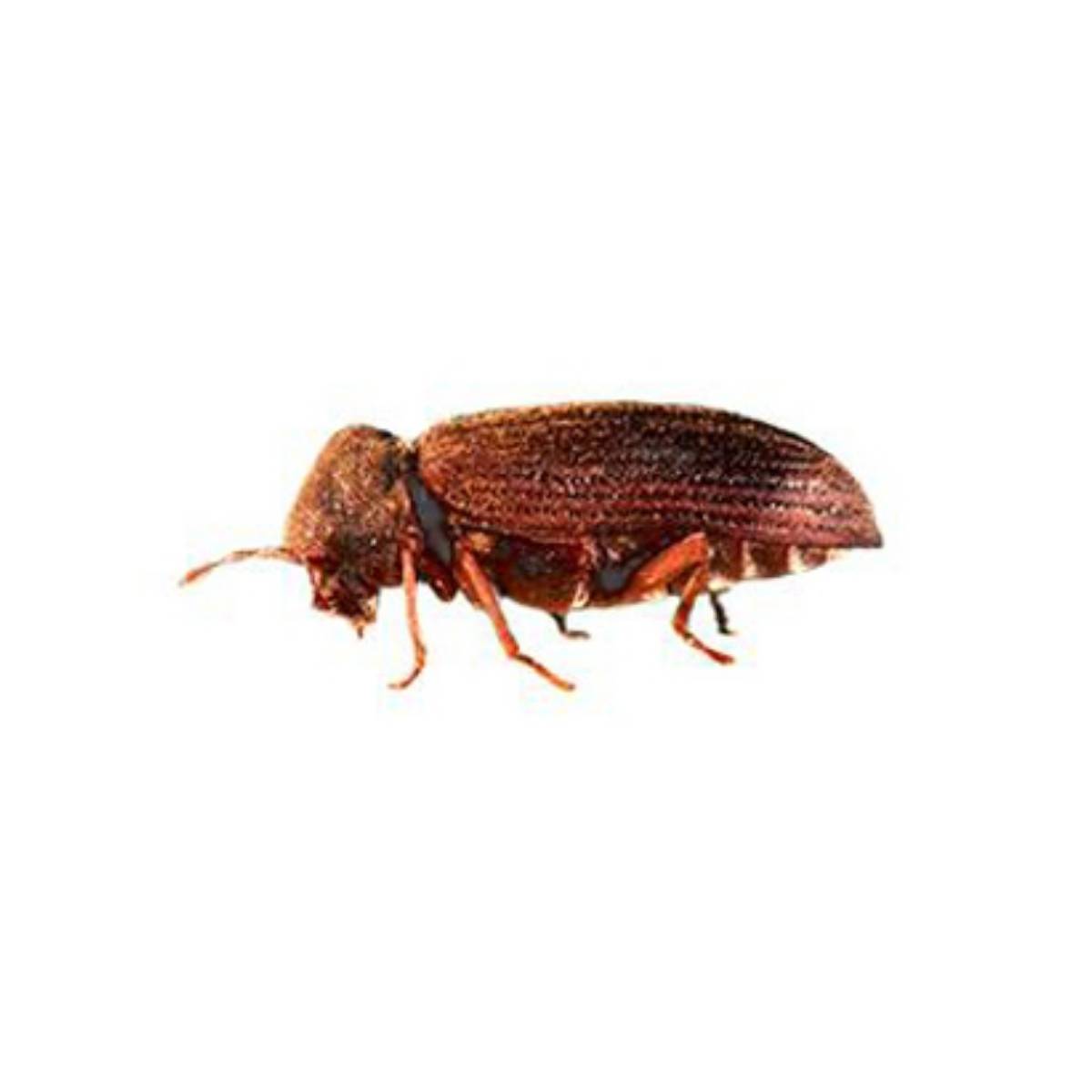
Common Furniture Beetle
Size: 2.5-5mm
Colour: Chocolate brown
Preferred timber: sapwood band of both hardwoods and softwoods
Flight hole size: 1-2mm
Life cycle: 3-5 years
Telltale signs: Brown ellipsoidal bodies with a prothorax resembling a monk's cowl
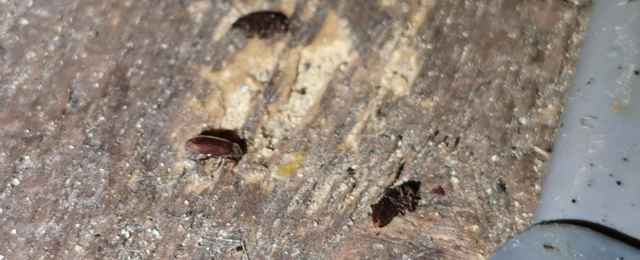
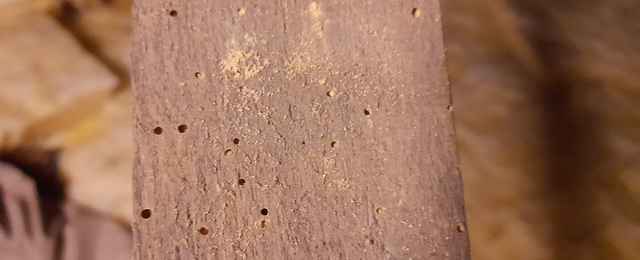
The presence of fresh frass alongside clean emergence holes indicates an active woodworm infestation.
Deathwatch Beetle (Xestobium rufovillosum)
The Deathwatch beetle is native to Britain and has been identified as early as the 1600s, on the basis of its tapping sounds. It is one of the most damaging wood borers because of the size of its tunnelling and long lifecycle.
It will typically affect hardwoods such as oak, ash or sweet chestnut that have been softened by damp or fungal decay, allowing the larvae to chew through. Because of this, Deathwatch is usually found in historic buildings, opposed to newer builds which use softwoods for structural timber. If softwood timbers are in contact with infested hardwoods, the larvae may infest this timber as well.
They are found in England as far north as Cumbria and the North East, but are rare in Scotland and almost unknown in Ireland.
The female beetle will lay between 40-60 eggs in small batches in crevices on the timber, or in the holes left by emerging adults.
The larvae will consume and tunnel through timber for 4-5 years, but can extend to as long as 10 years. When the larvae pupate and the adult beetle emerges from the flight hole, they will attempt to attract a mate.
This is identified by a tapping sound as the beetle bangs its forehead on the surface of the wood. This can sometimes be heard in the rafters of old buildings on quiet nights, so it was named after the vigil (watch) being taken beside the dying or dead.
The Death watch beetle is larger than the Common Furniture beetle meaning that the larvae tunnels can be more disruptive, along with the longer life cycle of between 4-10 years.
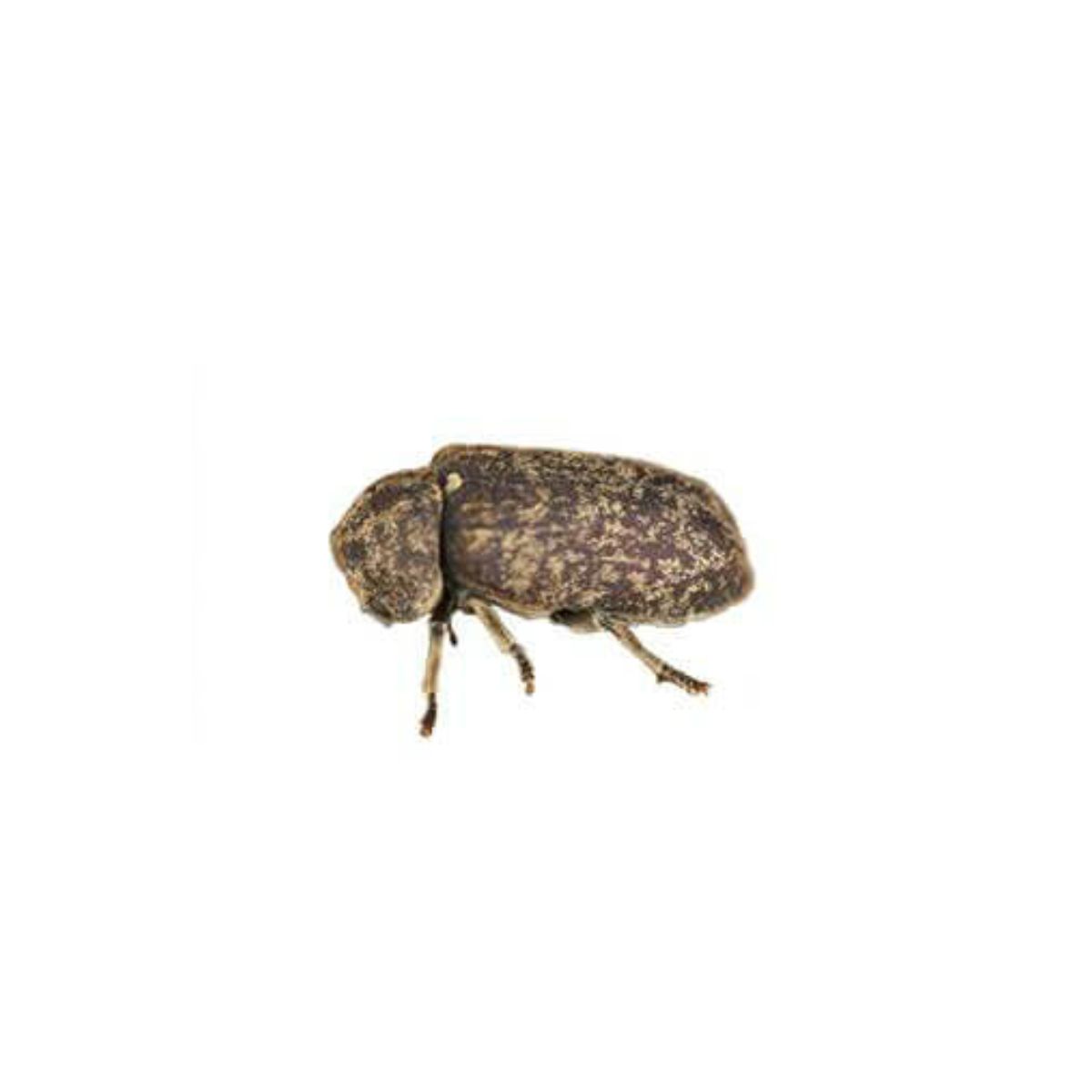
Death Watch Beetle
Size: 5-7mm
Colour: grey-brown with tufts of pale hairs
Preferred timber: Hardwoods such as oak, ash and chestnut
Flight hole size: 2-3mm
Life cycle: 4-10 years
Telltale signs: Dark brown with yellow-grey short hairs on the elytra.
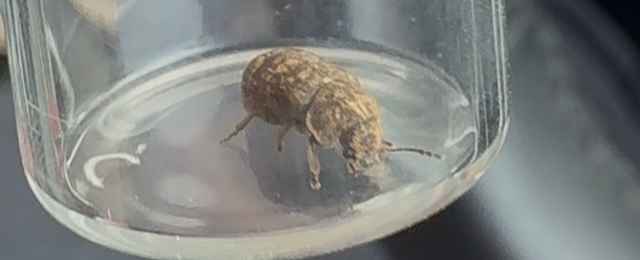
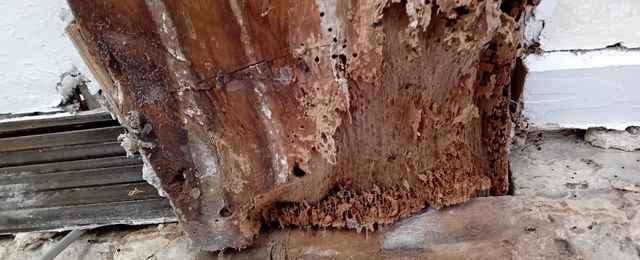
Deathwatch beetles are one of the largest woodboring beetles, and can cause severe damage to hardwords, when combined with fungal decay.
Woodboring Weevils (Euophryum confine)
There are three main species of woodboring weevil found in decayed softwoods and hardwoods that are affected by damp conditions and fungal decay. It is common in properties where rising or penetrating damp has caused timber to decay and can often be found in bathrooms affected by plumbing leaks.
In houses suffering from fungal decay, it is not unknown for hundreds to run for cover when skirting boards are removed.
All our woodboring weevils originated in Chile, New Zealand and Australia. Pentarthrum was first recorded in Exeter in 1854 and the two Euophryum species appeared in London in the 1930s, no doubt imported on decayed timber and have since spread throughout the United Kingdom.
Unlike other types of woodworm, both the adult and larval Wood Boring Weevil will consume decaying wood, meaning that damage can occur rapidly throughout the year. Their habit of preferentially removing the soft early wood from between the resinous rings, leads to the formation of channels in the surface ('striations').
The females bite holes in the surface of wood and lay a single egg before covering it in a white secretion. They will lay upwards of 25 eggs over an 80 day period, while the lifespan of the adult weevil is around 16 months.
The flight holes created by the adults are typically 1mm in diameter, and appear ragged and will follow the grain of the wood.
Because it depends on a source of moisture, in order to treat the infestation you must remove the source of damp and improve ventilation. Once the timber has dried the infestation will die out without the need for insecticidal treatments.
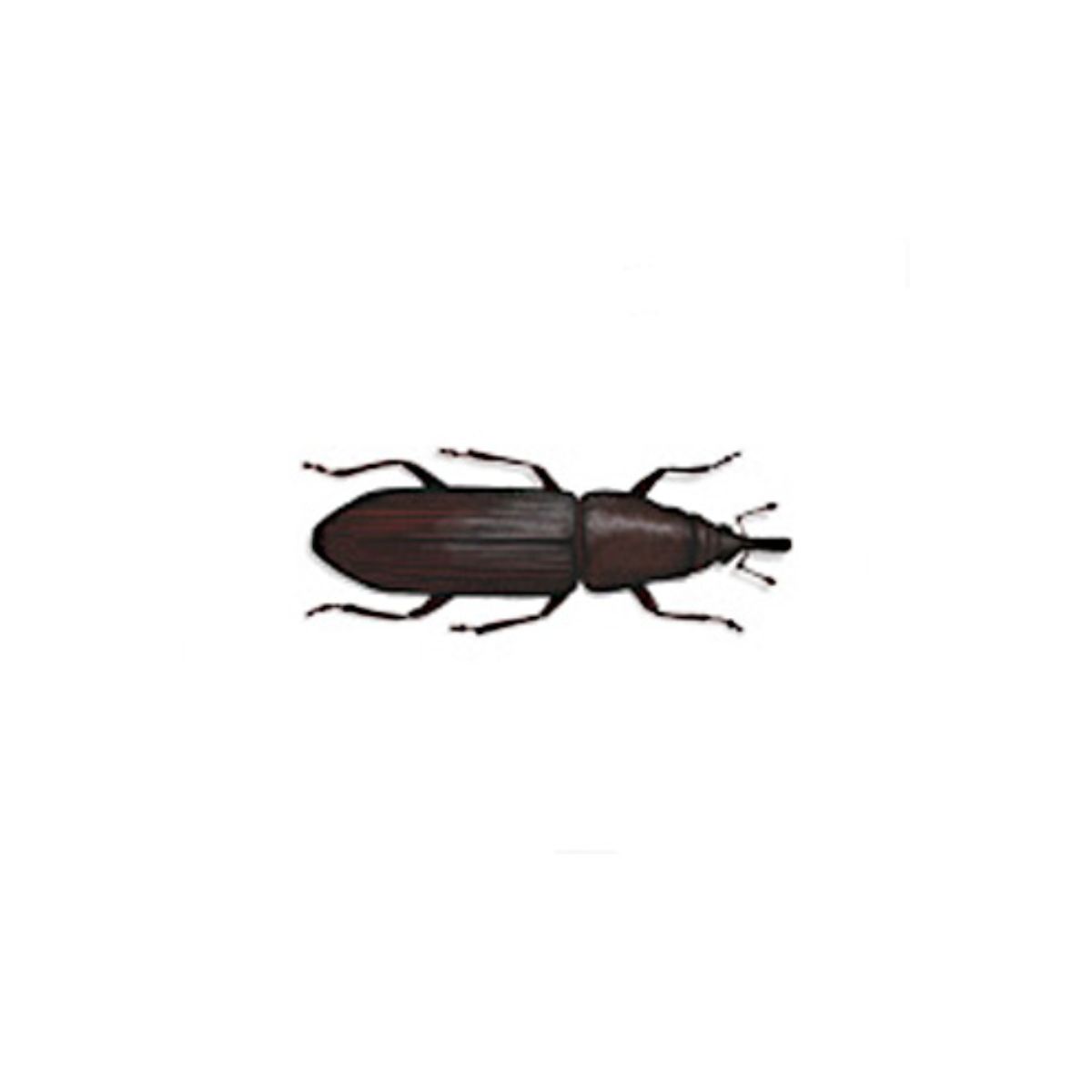
Woodboring Weevil
Size: 2.5-5mm
Colour: black-brown
Preferred timber: damp or decaying timber
Flight hole size: 1mm
Life cycle: 12 Months. Adults can live up to 16 months
Telltale signs: A long snout (rostrum), with its mouth at the tip.
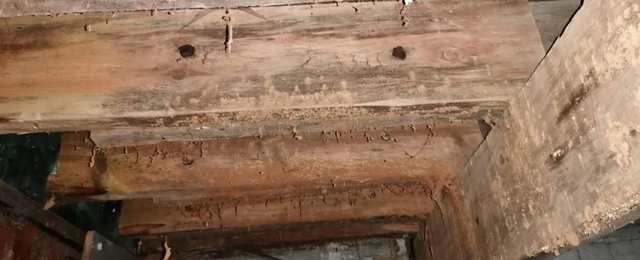
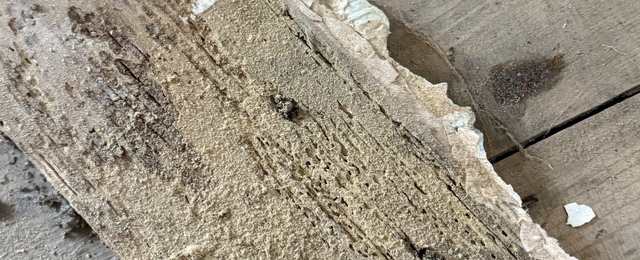
Woodboring weevil damage appears ragged, while inspected up close it will follow the grain of the timber. Weevil is often found in joists in contact with damp masonry and sub floor voids as it requires damp conditions, and can often be accompanied by wet rot. Solving the damp problem and improving ventilation will often eradicate the weevil infestation without the need for chemical treatments.
House Longhorn Beetle (Hylotrupes bajulus)
This large insect is mainly found in the South East of England, particularly in North West Surrey and around London. Because of this it has often been referred to as the ‘Camberley Beetle.’ It is almost entirely confined to the built environment and rarely found in the wild. It is often found in imported softwoods and finished articles with a high sapwood content. Historically, orange crates from Spain were a common infested item.
Larger than most other types of woodworm, the adult beetle can grow to 25mm with exit holes as large as 10mm, which are oval in shape. This makes it much larger than the Common furniture beetle.
The larvae attack the sapwood of most softwoods and will bore through the heartwood to emerge. Because of its size and ability to bore extensively through sapwood, the damage caused is rapid and severe. It prefers timber affected by high temperatures and humidity, increasing the moisture content. This can make roofing timbers more susceptible to House Longhorn beetle infestation and is the usual location it is discovered in the UK.
Dispersal from house to house is not simple and adults will remain in place if conditions are suitable and a food source is present.
Adult beetles will emerge from timber between July and September, and will live for 3-4 weeks.
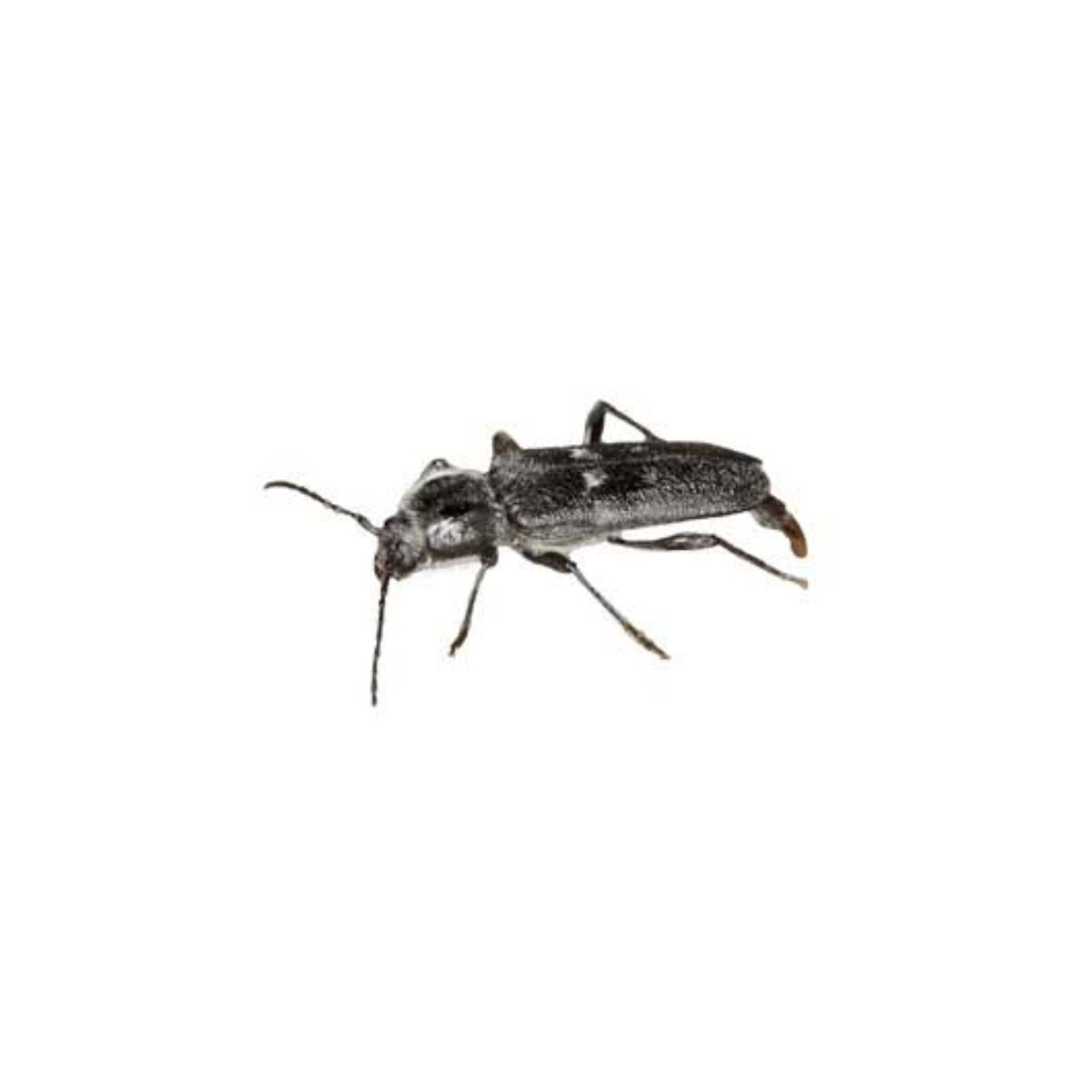
House Longhorn Beetle
Size: 7-25mm
Colour: brown-black with a white spot on each wing case, but can appear grey because of their fur
Preferred timber: Sapwood of softwoods including pine
Flight hole size: 6-10mm
Life cycle: 3-6 years
Telltale signs: Oval flight holes and long curved antennae. Hence the family name ‘longhorn’.
Powder Post Beetles (Lyctus brunneus)
The powderpost beetle specifically targets the sapwood of wide-pored hardwoods like Oak and Ash, with the female laying eggs within these pores. There are several species present in the UK. Only Lyctus linearis is native. All other species have been imported, Lyctus brunneus having been imported from North America many years ago.
The female beetle uses an egg laying tube known as an ovipositor to insert eggs into the pore, which protects them from predators. Only wood with a starch content above 3% will be attacked. Correctly seasoning timber reduces the starch content below this figure.
The beetle will emerge through 1-2mm round holes very similar to Common furniture beetle though the wood is primarily damaged by the larvae, which consume the interior, leaving a powdery frass as fine as talc and a thin surface layer.
Once all the sapwood is consumed, the infestation will die out, but this will disfigure the timber.
With a life cycle of about a year, this beetle is a primary pest in timber yards, known for reducing wood to a crumbly powder, and is increasingly found in imported wood products and laminate flooring layers, primarily infesting the sapwood.
Imported fast grown oak from Continental Europe often contains sapwood bands, to make best use of the tree when converted to lumbar. Plywood and laminate flooring high in sapwood is one of the main routes of infestation, as are consumer products made from fast grown timber originating in the Far East and China.
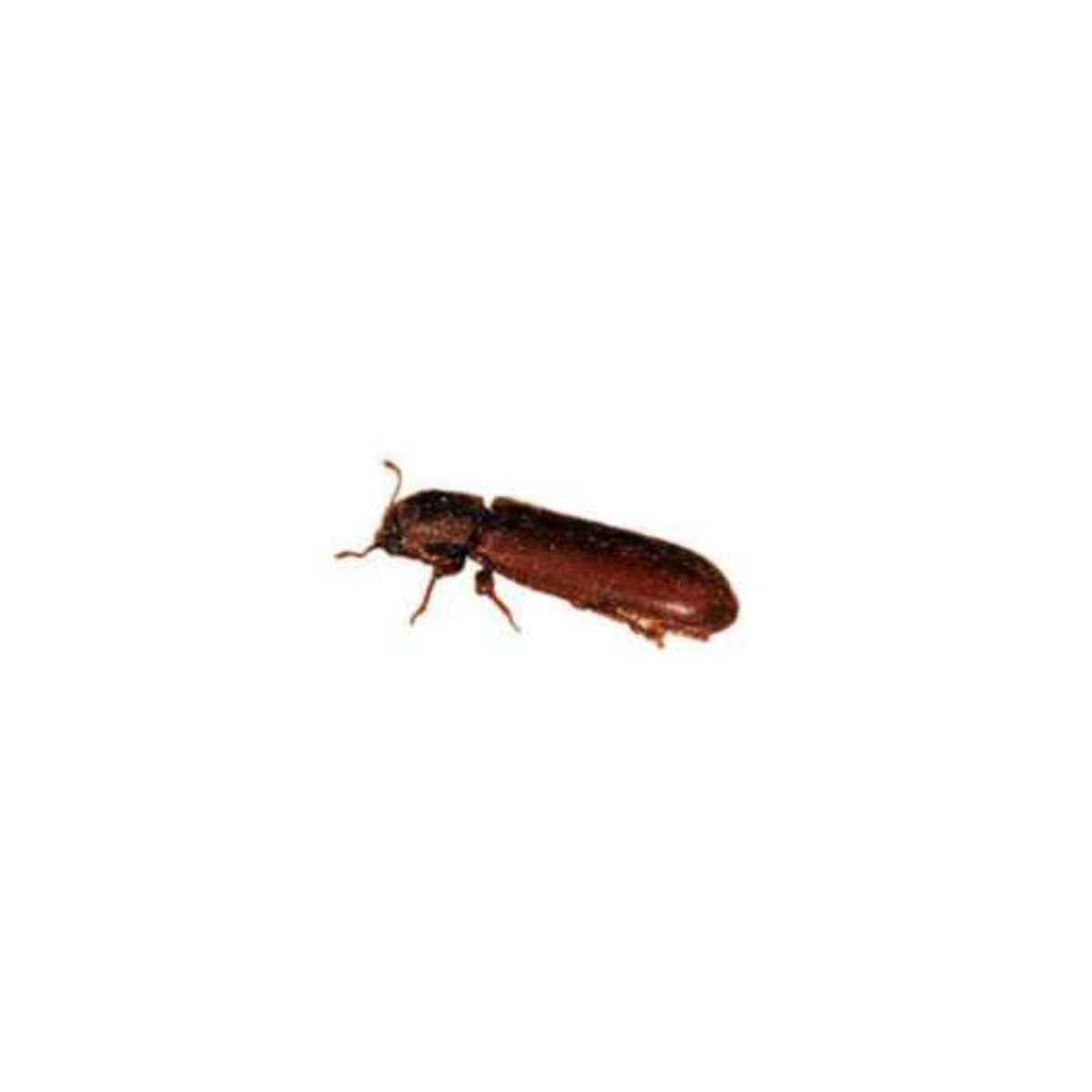
Powder Post Beetles
Size: 4-7mm
Colour: Reddish-brown
Preferred timber: Wide-pored hardwood like Oak, Ash, Elm and Walnut
Flight hole size: 1-2mm
Life cycle: 1 year
Telltale signs: The hairs on the pronotum (prothorax) and pits on the elytra are the main way of identifying the different species.
Other Types of beetle that can be found in homes across the UK
Forest Longhorn Beetles
While there are 69 species of UK Forest Longhorn Beetle, they will typically appear similar to the House Longhorn beetle, in that they have a similar shape, with long antennae and are often quite colourful.
While the Forest Longhorn Beetle is a woodborer, it will typically not infest timber found inside a property, due to the low moisture content. Occasionally, they will emerge from construction timbers, most of which have been imported from Asia.
They will normally emerge from the bark left on logs brought in for open fires or log burners.
In the UK, when this happens, the usual species involved is the Oak Longhorn (Phymatodes testaceus), otherwise known to leather workers as the 'Tanbark borer', as it was often found in the oak bark used for creating tannin.
Large quantities of beetles can be found all at once on window sills, causing concern for occupants. In order to remove the problem, affected logs and beetles should be moved outside, as internal timbers are not at risk. Do not spray the logs with pesticide as it will come off and pollute your home when the log is burnt.
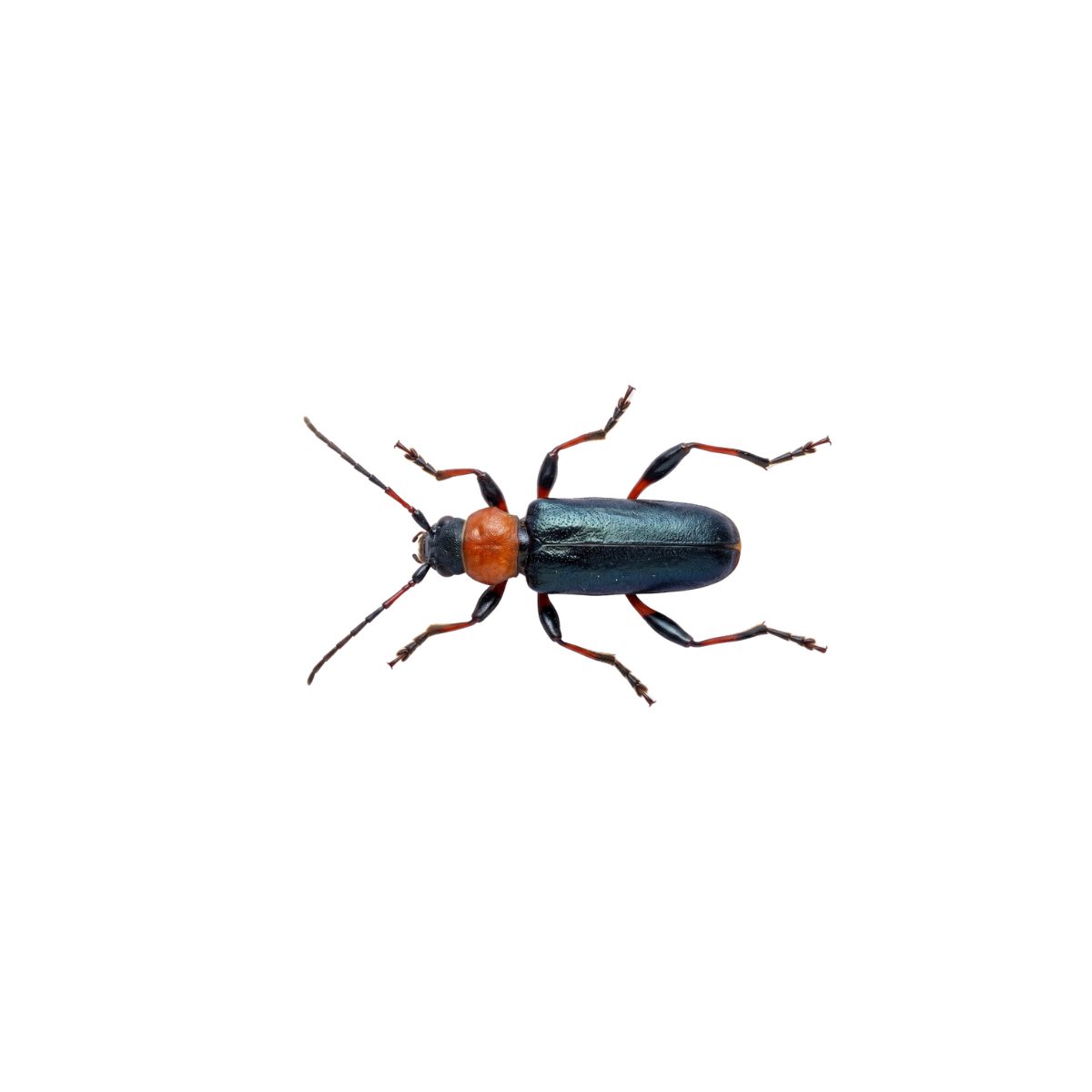
Oak Longhorn beetle (Tanbark borer)
Size: 8-13mm
Colour: Deep blue-black to yellowish brown
Preferred timber: Wood with the bark attached
Flight hole size: 6mm wide oval
Life cycle: 1-2 years
Telltale signs: Eggs are laid under the bark of dead standing trees or recently cut logs. Larval tunnels can cause the bark to fall off. At emergence time, quite large numbers scurry around.
Pine Bark Borer and Bark Beetles
Other wood borers that can appear in UK homes include the Pine Bark Borer and Bark Beetles.
Pine Bark borer (Ernobius mollis) can sometimes be found in softwood timbers such as pine and spruce which still have bark attached as may be found in historic, vernacular or listed buildings.
Eggs are laid in crevices in the bark and the larvae feed in the cambium zone between the bark and sapwood. The life cycle is one year. Treatment with modern water based insecticides will not work as bark is waterproof. The infestation is either left to die out when it runs out of bark or the bark is removed.
Bark beetles develop within or under the bark of dead or living trees, and therefore are a forestry insect that rarely occurs in commercial lumbar, but is a very great risk to commercial forestry.
They will infest bark in dead or dying trees and enter the home via felled logs brought into the home to be burned in log burners or fireplaces.
If the logs are not burnt, large numbers of adults emerge in the spring in a short space of time and fly to windows where they often die. This can cause concern, however the logs and beetles should be removed from the house as they will not infest structural timbers.
Due to Ash Dieback fungus, the most common bark beetle in logs at present is Ash bark beetle (Hylesinus varius), which is 'dumpy’ and around 3mm in size.
Adults bore an entry hole into the bark and then bore egg laying tunnels off this. They lay eggs at regular intervals along the walls and seed these galleries with symbiotic fungi to feed the emerging larvae. When the larvae emerge, they bore off into the bark in a particular pattern. This means that each species has a pattern as distinctive as a fingerprint and if the bark is peeled off a log, the infesting species can be identified long after it has departed.
Biscuit Beetle (Stegobium paniceum)
Biscuit beetle (Stegobium paniceum) is closely related to Common furniture beetle and looks very similar. They are 2-3mm gingery brown beetles with hairs on the wing cases, rather than the chocolate brown of Common furniture beetle. The shape of the pronotum above the head is indicative. They can be found in their hundreds, particularly on kitchen window sills and emerge all year round.
Being a stored product beetle, the eggs, larvae, pupae and adults can all be found in the food source. They are brought into the property in wholefoods such as biscuits, flour, porridge oats, rice, muesli, dry dog food, fish food, nuts etc. They can also infest bird or rodent nests.
More recently, they have started infesting draught excluders or neck pillows containing grain and kitchen unit chipboard made with a proportion of fast growing renewables such as post harvest maize waste. The adult beetles do not feed, so they will eventually die. The entire lifecycle is 12-33 weeks.
Plaster Beetles
Like Bark beetles, Plaster beetles are another species that can appear in their hundreds overnight and are often found desiccated and dead on kitchen floors. They are 1-3mm in size and associated with new build properties and fresh plaster. During building, the amount of water put into a property is quite high. If this does not dry out quickly enough, it gets sealed in. Plaster beetle larvae and adults feed on fungal (mould) hyphae. That mould can be visible or within cavities or the roof void. With correct ventilation, the excess moisture is removed, the mould dies and the plaster beetles die or move out as a consequence.
Have You Noticed Woodworm Beetles inside your Property? Next Steps
Because properties can be affected by all manner of wood boring insects and beetles, the correct identification of the infestation is key before any treatments are carried out. Because of this, if you are unsure about a woodworm problem in your property, you should seek professional advice.
A surveyor will provide you with a thorough explanation of the type of infestation affecting your property, and will make it clear to you if treatments are required or not.
Professional Woodworm Surveys
If you require a timber survey to identify woodworm, Peter Cox has a number of CSRT or CSTDB qualified surveyors who will take the time to fully investigate the problem, identify the species and provide you with recommendations on treatment options. Woodworm treatments are only required when a woodworm infestation is active.
All findings will be detailed in a survey report, along with if any timber repairs are required due to extensive woodworm damage.
Some types of woodworm species require damp timber, and if this is the case, elements of damp proofing may also be required to remove the conditions that are causing the infestation.
Why Choose Peter Cox?
If you have a suspected woodworm problem and require a professional diagnosis, get in touch with Peter Cox.
We have a number of qualified surveyors operating out of our network of local branches across the UK, ready to provide advice and recommendations for all types of timber problems, including woodworm.
Professional advice can give you the peace of mind of an accurate diagnosis, and if treatments are required they are often backed by our long term guarantees, so you know the problem is solved for good.
Choose Peter Cox for woodworm infestations and benefit from:
- Decades of property preservation expertise in professional timber treatments and repairs for woodworm
- Nationwide network of local branches, meaning a local qualified surveyor and technicians in your area.
- Our trained technicians are equipped with the right equipment and materials to get it right the first time, ensuring your property is restored and the full extent of the woodworm infestation is dealt with.
- They are equipped with protective floor coverings, Hilti dust extraction units and vacuums in order to keep your property clean and tidy. Where possible they will cover surfaces with dust sheets in order to keep disruption to a minimum.
- We are a Which? Trusted Trader member
- Rated ‘Excellent’ on Trustpilot with more than 2,500 independent reviews.
- Typically our woodworm treatments come with a 20 year guarantee, which will be detailed in the survey report.
Arrange a Woodworm Survey Today
If you suspect you may have a woodworm issue, we are here to help.
The most important thing is to correctly diagnose the woodworm problem, and our fully qualified specialist surveyors will be able to do this and recommend the most appropriate course of action.
If necessary, we have a team of experienced technicians ready to get started on repairs and resolve the issue for you.
Further Information
*Survey enquiries for your local branch will be directed to our dedicated central survey control teams across the UK. Calls to 0800 and 0808 numbers are free unless you are calling from a business phone, in which case the rate will be set by your provider.