
Call Today on 08082508820 * or Book a Survey Online
Dry Rot in Listed Buildings - Advice and Specialist Solutions
When the fungus Serpula lacrymans, known more commonly as dry rot, germinates and grows across timber inside a building, it can cause severe damage. This is especially true in historic and listed buildings which often suffer from water ingress and contain large quantities of timber.
Dry rot can affect all types of building, including Tudor timber framed buildings, Victorian terraces, Georgian townhouses, churches and converted industrial buildings such as mills and factories.
Because of this, heritage properties across the United Kingdom require regular maintenance and when problems associated with damp and fungal decay are identified, careful and specialist repairs are carried out.
Peter Cox have been trusted experts in property preservation since 1951, and have been restoring historic properties affected by dry rot for decades, often backed by long term guarantees.
We have a network of local branches across the UK, with a number of qualified and experienced surveyors and technicians who understand the importance of working on buildings that are part of our national heritage.
Our experts have put together a guide on how to identify dry rot in older buildings, and the steps that need to be taken to restore your property to its former condition.
What causes dry rot in listed and historic buildings?
Dry rot grows best when the moisture content of timber is increased to around 30-40%, meaning leaks, building defects or damp problems can provide a source of moisture that creates conditions that allow dry rot spores to germinate. Spaces that become humid due to a lack of airflow also provide favourable conditions for dry rot growth.
Unlike other forms of fungal decay such as wet rot, dry rot is capable of spreading away from the source of moisture in order to find new timber to attack.
In reality this means dry rot can occur in one area of a property, and if left untreated or hidden, can spread throughout a building - causing significant damage in older buildings.
Spread is caused by mycelium growth and germination of spores spread on air currents.
The rate of spread is affected by temperature and humidity, but averages a metre a year. It must be remembered that spores can spread throughout a building and therefore growth is from each germinating spore.
It can spread across timber surfaces such as the underside of floorboards or panelling, travel through masonry walls, over metal and behind plasterwork.
Because of the level of damage dry rot can cause, especially in buildings where the original materials cannot be replaced, it's important to seek professional advice as soon as possible.
Moisture ingress
In order to prevent dry rot you must remove the source of moisture, which in turn will lower the moisture content of timber. The objective to get the timber below 20%, at which point the dry rot will stop growing.
If the source of moisture is removed the existing dry rot strands will die out. However they can remain dormant inside masonry, and if another source of moisture becomes available, the outbreak can return.
This makes treating dry rot in historic buildings challenging for those with no experience. Drying out a solid stone building may take years, so steps must be taken to remove any trace of the fungal decay.
A lack of ventilation and air flow
Conditions favourable to dry rot growth can occur in areas with little ventilation and airflow, making areas like sub floor voids, behind panelling and under staircases particularly at risk.
When airbricks or grilles become blocked or covered over it can increase the humidity in these spaces which can lead to fungal decay.
Extensions built onto the side of a property, heightened external ground levels or raised footpaths can cause airbricks to become blocked, which prevents airflow in areas such as sub floor voids.
Building Defects
When roof coverings are damaged, chimney flashing comes loose, gutters are not maintained properly or drains become blocked, these can cause moisture to penetrate into the fabric of a building. There are particular issues with lead trough or valley gutters as these perforate with age and gently water the timbers below.
In many older buildings timber is directly in contact with masonry, so when this becomes damp fungal spores can germinate.
Plumbing leaks can also provide the source of moisture needed for a fungal decay outbreak, so accurate investigation of the property is key, in order to find the source of the problem.
Incorrectly used products or materials
When properties are centuries old, there are often attempts by occupants to try their hand at remedial repairs, which in some cases can exacerbate the problem. It is also not unknown for the occupant to be unaware that listed building consent is required for any repairs to listed buildings.
It is common for products such as cement renders to be used rather than the more traditional lime mortar, and this can trap moisture inside walls. When cement mortar is used to point external walls, it can cause the surrounding masonry to spall. This leads to the face of the brick detaching from the wall, and can cause wind driven rain to penetrate into the building.
Incorrectly specified damp proof paints can also trap moisture inside walls, especially when the source of damp has been misdiagnosed.
DIY attempts can often cause more problems than they solve, especially in older buildings.
This is why it is always recommended to use a professional surveyor who can identify the source of moisture affecting a building, and provide you with expert advice and recommendations that meet conservation guidelines.
Common signs of dry rot in older buildings
Dry rot will often take hold in out of sight areas within buildings, and it is not identified until the fungal decay begins to spread.
That said, there are telltale signs that you can look out for.
Common signs of dry rot in older buildings include:
Damp and mushroom-like smells: Damp and musty smells that smell almost forest floor like, indicate that there is an unwanted presence within the property. If this is isolated to one area, it could indicate a damp or fungal decay problem. Damp smells are often the first sign of an issue and further investigation is required.
Creaking or sagging floors: If you begin to notice the creaking of timber stairs or flooring it could indicate that the structural timber below is losing its ability to support the weight above. Dry rot can cause timber to lose its shape and crack, and ultimately cause it to collapse and fail.
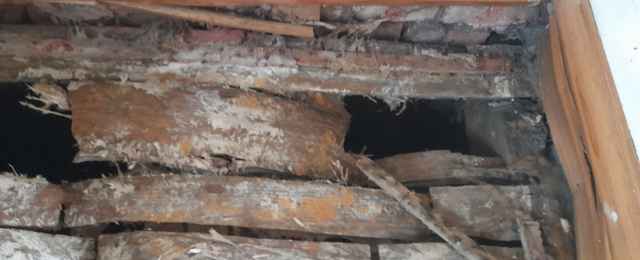
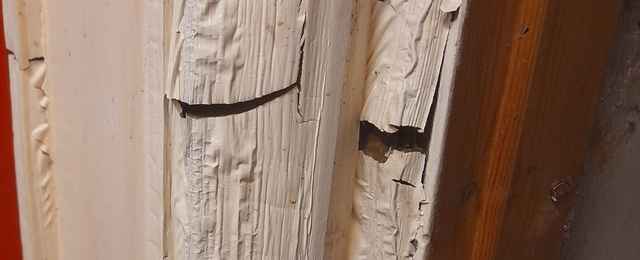
Visibly warping timber: Dry rot will consume any form of timber, which includes door and window frames, wood panelling and skirting boards. This will begin to warp with consistent cracking known as cuboidal cracking. It will become misshapen and pull away from floors or walls.
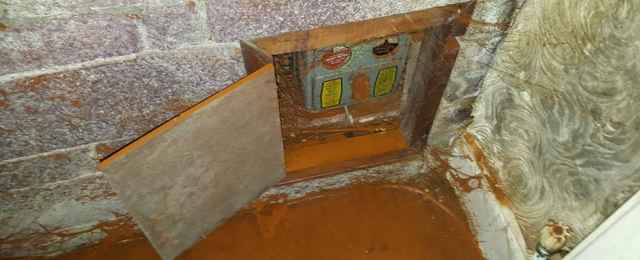
Orange dust: Fine orange dust is one of the most visual ways to tell there is a dry rot problem inside a property, as the dry rot fruiting body produces millions of microscopic spores that spread throughout a property on air currents. They are a red-rust colour.
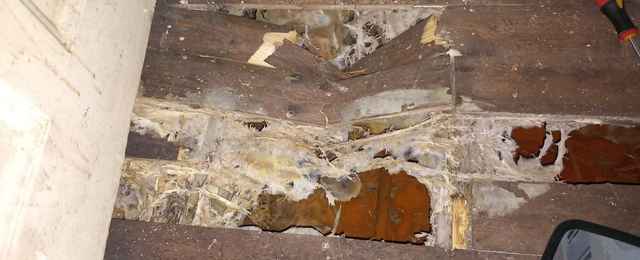
Dry rot strands and fruiting bodies: In severe cases, the physical presence of dry rot strands and the fruiting bodies will become evident, often emerging as it spreads.
Dry rot is not the only form of fungal decay that affects historic buildings, many properties are affected by various types of wet rot, which unlike dry rot, stay isolated at the source of moisture.
If you are worried about fungal decay affecting your historic property, we can provide you with a damp and timber survey to fully assess the extent of the dry rot outbreak, and to identify the source of moisture causing the problem.
Accurate diagnosis is key, as different types of fungal decay require different treatment methods.
Regulations and legal requirements for listed buildings
For anyone who owns or manages a listed property in the United Kingdom, there are strict heritage laws you must follow. This is likewise the case if property preservation is required, including issues such as damp proofing and fungal decay control.
The regulations in each region are slightly different, but follow a common pattern.
Any remedial repairs must be in keeping with the original character of the building, and permission must be granted beforehand.
While listed status will not prevent essential repairs such as dry rot remediation, formal listed building consent is required from your local council.
Conservation officers will typically require repairs to retain as much of the original materials as possible, ensure any treatments are reversible and can be undone in the future without permanent damage to the original condition of the building, and use products that are an historically accurate match.
In reality this means that specialist techniques like timber resin repairs are preferable to the full replacement of historical timber, as this can often damage surrounding plasterwork.
Where the original plasterwork has been damaged, like-for-like replacements will be required, including if Wattle and daub techniques are used, while materials such as traditional lime-plaster would be specified.
Treating Dry Rot in Heritage Properties
The most important step in treating a dry rot problem in a historic building is identifying the source of moisture, and removing it. Dry rot repairs that do not identify the source of moisture risk the problem returning, leading to more disruption and unnecessary costs.
Because dry rot is often in hard to reach areas, thorough investigation is essential requiring access to roof spaces, sub floor voids and behind panelling.
This may require exposure of the decayed area to fully understand how far the dry rot extends and enable a full specification and pricing to be completed. The exposure work will also require listed building consent.
Without opening up areas around infected timber or where sporophores are coming through, you may be totally unaware of the degree and extent of fungal infection.
Ultimately, when you choose a specialist in dry rot you want to know the problem has been fully addressed, and the required treatments will provide long term protection.
Dry rot treatments carried out by Peter Cox will typically be backed by our 20 year guarantee, giving you the peace of mind your listed building is protected.
Damp and timber surveys for older buildings
The first step is to fully investigate the extent of the dry rot outbreak, assess the condition of timber, and the requirements for treatment. This is done by a CSRT / CSTDB qualified surveyor who is experienced in surveying historic buildings.
They will provide their findings in a survey report, outlining the requirements for treatments and a detailed explanation of the processes involved.
They will be on hand to answer any questions you may have, and can work closely with any conservation bodies in order to make the process as smooth as possible.
Removing the source of moisture:
Once a survey has identified the source of moisture ingress, efforts can be made to prevent the problem. Repairs must be made to roof coverings and faulty rainwater systems. Where external renderings are allowing moisture to penetrate into masonry, this must also be addressed.
Repairs to cracked or deteriorated mortar, flashings or damaged window frames can also prevent penetrating damp where evident.
Fixing plumbing leaks must also be a priority.
Where damp proof courses have failed, or if they have become bridged, repairs should be carried out.
Improvements to ventilation and increasing air circulation will help remove the humid conditions that prove favourable to dry rot outbreaks.
Removing affected timber:
All timber that has lost its structural integrity must be removed in order to return the property to its original condition, while preventing further hazard. Timber with a high moisture content, but unaffected by dry rot will be retained, but may require ongoing monitoring as it dries out.
Fungicidal treatments may be applied to retained timber. While removing the source of moisture will prevent dry rot returning, this treatment can help prevent any new outbreaks during the drying process.
Timber Repairs:
Once the area has been cleared of any fungal decay strands, mycelium and damaged timber, timber repairs can then take place.
Where a section of timber has been damaged, but we do not want to replace the entire timber structure due to historic value, we can carry out timber resin repairs.
Timber resin repairs can be used to bond a new section of timber to existing timber, creating a mechanical and seamless join.
This is a useful option to prevent disruption to surrounding plasterwork of historical value while retaining as much original timber as possible.
Timber joists, beams and floorboards will be relaid in keeping with the aesthetics of the property.
Damp masonry can take years to dry out fully, so any beams or joists in contact with masonry must be wrapped with a damp proof membrane in order to prevent the moisture content of timber from increasing.
Masonry treatments for Dry Rot in Heritage Buildings:
Where dry rot strands have grown through masonry or deteriorated plasterwork, surfaces will be wire brushed down to remove it.
In some properties, sub floors can be full of debris that can restrict airflow, or in some cases cause the source of damp when in contact with timber. This will need to be addressed.
Affected masonry may also be sterilised to prevent any existing fungal spores from germinating in the future or mycelium from growing off in search of more wood. Chemical treatments form a protective chemical barrier by using the fungicide to further protect any timber in contact with the masonry.
Monitoring and regular maintenance of the building
While dry rot repairs are designed to provide long term protection, and are often backed by long term guarantees, this does not mean that regular maintenance to prevent future moisture ingress should not be undertaken.
Regular checks of gutterings, roof coverings, drains and the external condition of walls will help protect the property long into the future.
Internal timbers should be monitored regularly in order to make sure that the moisture content is below 20%.
Choosing a specialist for Dry Rot
When you are searching for a specialist for a dry rot problem in your property, you want a company that has decades of property preservation expertise.
All heritage buildings are different, so in order for the most appropriate course of action to be selected, they each require personalised and professional advice and treatment plans.
Peter Cox have vast experience working with historic and listed buildings and our qualified surveyors and experienced technicians are sensitive to the specific requirements of these properties and adhere to conservation guidelines.
Benefits of using Peter Cox for Dry Rot repairs include:
-
A nationwide network of local branches, meaning a local qualified surveyor and technicians in your area experienced to deal with any dry rot problems.
-
Our trained technicians are equipped with the right equipment and materials to get it right the first time, ensuring your property is restored and the full extent of the dry rot outbreak is dealt with.
-
While dry rot treatments can be complex work, our technicians are equipped with protective floor coverings, Hilti dust extraction units and vacuums in order to keep your property clean and tidy. Where possible they will cover surfaces with dust sheets in order to keep disruption to a minimum.
-
We are a Which? Trusted Trader member
-
Rated ‘Excellent’ on Trustpilot with more than 2,500 independent reviews.
-
Typically our dry rot treatments come with a 20 year guarantee, giving you long term confidence the problem is solved. Details will be provided in the survey report.
Honest and Reliable Advice
Our experienced surveyors will carry out a professional and thorough survey of your property, identifying the root cause of your problem. All their findings will be detailed in a survey report, backed with evidence to support their conclusions. If no work is required, we will make this clear in the report.
Taking Care of your Property
Peter Cox technicians will take precautions to look after your property from start to finish. They are provided with vacuums, floor coverings and sheeting to keep dust and debris to a minimum inside your property. We also provide our technicians with Hilti dust extraction units which help remove airborne dust whilst we work.
Timely Completion
Our surveyors, technicians and office staff have years of experience and are extremely efficient, meaning we can complete the job in a timely manner, minimising disruption and preventing delays.
Next Steps


*Survey enquiries for your local branch will be directed to our dedicated central survey control teams across the UK. Calls to 0800 and 0808 numbers are free unless you are calling from a business phone, in which case the rate will be set by your provider.