Dry Rot
Find out more about dry rot

Call Today on 08082508820 * or Book a Survey Online
Peter Cox were called in to carry out a damp and timber survey on a property in Denbigh, North Wales, after the homeowner had noticed signs of fungal decay.
While rural Welsh properties carry a lot of charm, they can be prone to moisture ingress and timber decay if not properly maintained.
A Peter Cox surveyor was called in to carry out a damp and timber survey to inspect for a suspected dry rot outbreak. A qualified surveyor should always start with an external inspection of the property.
The surveyor carrying out the survey noticed issues relating to gutters and downpipes, a common cause of penetrating damp in properties. This can lead to moisture penetrating into the fabric of the building. External renders were also damaged in places, allowing for further moisture ingress.
The surveyor then entered the property and carried out a full assessment of each floor, looking for signs of damp, while assessing timber for signs of fungal decay.
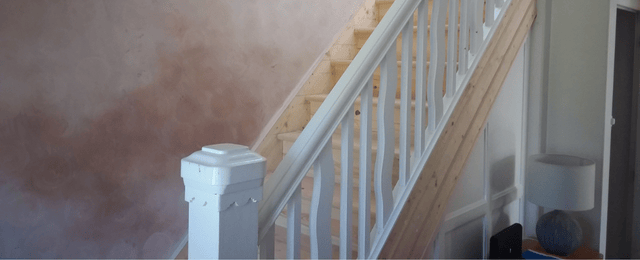
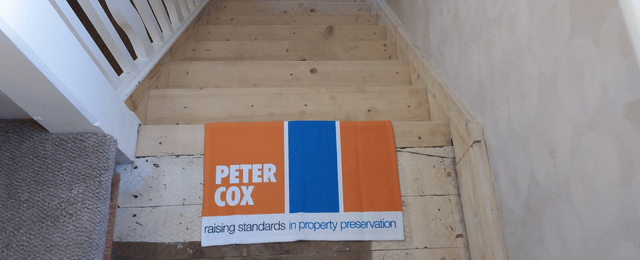
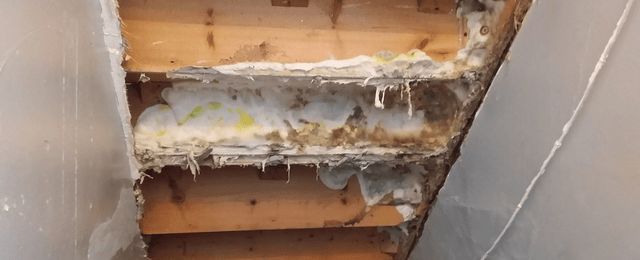
During the inspection, our surveyor identified signs of dry rot affecting the staircase timbers. The timber showed clear evidence of decay and loss of strength, consistent with fungal decay.
Dry rot strands (hyphae) will spread across timber and masonry in search of new food sources.
Due to the location of the blocked gutters and downpipes, this had likely contributed to creating the damp environment needed for dry rot spores to germinate. A lack of ventilation under the staircase had caused the perfect conditions for the outbreak to establish.
Because the surveyor was able to identify the dry rot outbreak early, it was not able to spread further, meaning timber repairs were only required to the staircase, and not on structural timber nearby.
After establishing the extent of an outbreak The first remediation step is to remove the source of moisture causing the issue. Peter Cox provided recommendations for the repair of the external guttering and downpipes.
Specialist technicians from Peter Cox were then called in to remove affected timbers, and repair the staircase.
Our local team carried out the following works:
Experienced technicians were able to repair the staircase, and remove the threat of dry rot for good.
With the staircase repaired and the dry rot treated, the property was left safe, structurally sound, and ready for use once again. The homeowner also received a long-term guarantee on the remedial works, giving peace of mind that the issues had been fully resolved.
This case is a clear example of how a lack of maintenance on external rainwater goods can create the conditions for dry rot to take hold.
Peter Cox was able to eradicate the outbreak and protect the property for the long term.
The treatment was completed to a high standard and is supported by a 20-year guarantee, giving the homeowner peace of mind for the future.
If you suspect your property is suffering from dry rot, contact Peter Cox to arrange a professional damp and timber survey.
The local surveyor said “penetrating damp will often provide fungal decay with a source of moisture, especially in places with a lack of ventilation. Thankfully we were able to carry out repairs before the dry rot spread further. Dry rot is able to travel through masonry and across steelwork so can spread across a property fairly quickly. We were able to stop the source of moisture and carry out repairs, leaving the homeowner with peace of mind the problem is solved long term.”
*Survey enquiries for your local branch will be directed to our dedicated central survey control teams across the UK. Calls to 0800 and 0808 numbers are free unless you are calling from a business phone, in which case the rate will be set by your provider.