
Call Peter Cox on 08082508820 * or Contact Us Online
Severe Dry Rot Outbreak Contained at Former County Durham Nightclub
County Durham, known for its picturesque landscapes and historic architecture, is home to many older buildings with long histories - especially in Durham city centre.
Peter Cox were called in to carry out a survey on a former property that was once a nightclub, but is now being repurposed by the local fire service as a training facility. But before the transformation could begin, a hidden structural issue was discovered beneath the dance floor.
The fire service raised the alarm after entering the dormant property and finding a collapsed section of the dance floor, partnered with extensive timber decay and a red dust coating the interior, classic signs of a dry rot outbreak.
Peter Cox was brought in by the local authority to carry out a full commercial damp and timber survey and deliver a plan for remedial treatment.
Commercial Damp and Timber Survey in a Redundant Nightclub
Our specialist surveyor from the Peter Cox Newcastle team arrived on site and quickly confirmed the presence of widespread dry rot, Serpula lacrymans, affecting the entire ground floor.
Dry rot fruiting bodies had released vast amounts of spores throughout the space, coating not only timber structures but also surrounding surfaces, including, quite literally, the kitchen sink.
Behind wall panelling, thick cotton wool-like mycelium and hyphal strands were discovered, revealing how far the outbreak had spread through the timber and masonry.
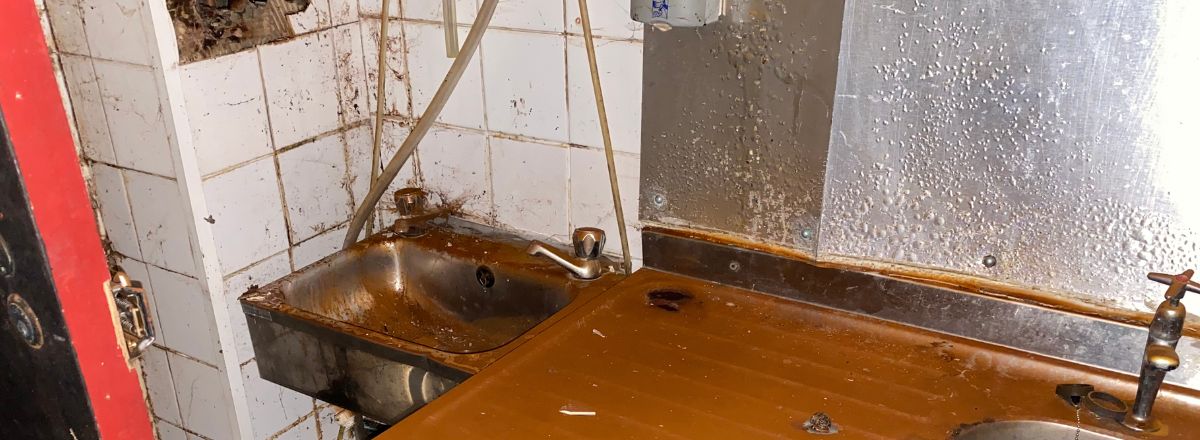
Red/Orange spores are an indicator of a dry rot outbreak, as spores are released into the atmosphere in an attempt to germinate and begin the dry rot lifecycle again.
Dry rot feeds on the cellulose in damp timber, breaking it down and leaving the wood brittle and structurally compromised. In this case, the fungal decay had already led to a partial collapse of the dance floor, posing significant safety risks and threatening the structural integrity of adjacent areas.
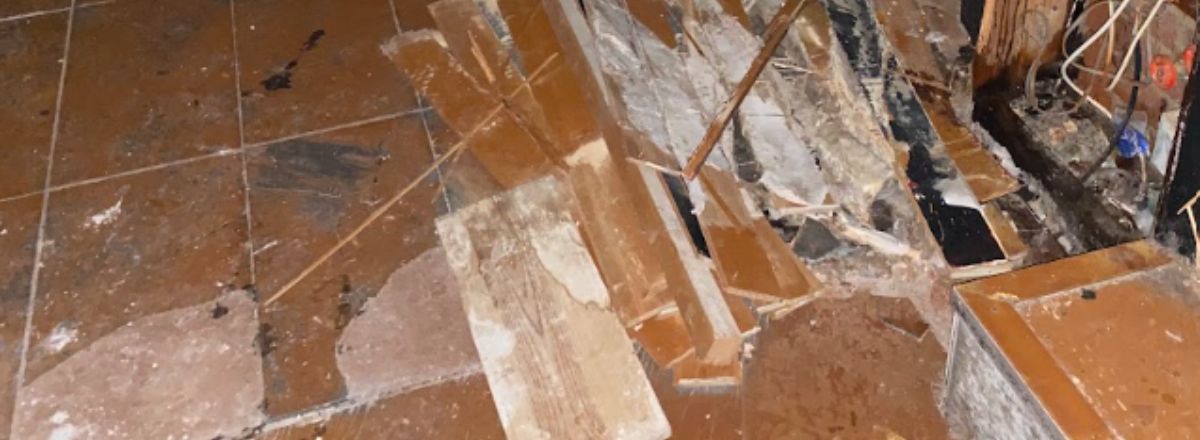
Over time dry rot can cause timber to lose its structural integrity
Root Causes: Water Ingress and Lack of Ventilation
Following a thorough survey and exposure of affected areas, the root causes of the fungal decay problem became clear. Prolonged disrepair, including leaking roof coverings, blocked rainwater goods, and inadequate ventilation due to boarded-up windows and obstructed vents had created the ideal conditions for dry rot to thrive.
While external repair works would be handled by the client’s building contractor, our team’s findings were detailed in a formal report and sketch plan, guiding both partners on next steps.
Dry Rot Eradication and Collaborative Treatment Plan
As with all serious dry rot cases, the first step was full exposure by removing wall plaster, floor coverings, and decayed timber well beyond the visibly affected zones (typically 300–450mm in all directions).
The client’s building contractor took the lead on initial structural works and strip-out. Once the site was cleared, our technicians returned to carry out the specialist treatment phase. This included:
- Wire brushing all masonry to remove visible strands and mycelium
- Targeted fungicidal treatments applied to infected areas
- Replacing essential load-bearing structural timbers
Improving Ventilation and Issuing Long-Term Guarantee
Following the works, the building contractor followed our recommendation to install additional ventilation, an essential step to reduce internal humidity and minimise the risk of future fungal decay outbreaks.
Thanks to the close working relationship between Peter Cox and the local contractor, we were able to inspect critical phases of their works, enabling us to issue our long-term guarantee for the dry rot treatment, providing peace of mind to the local authority.
While the dance floor may never host another party, the former nightclub now stands dry rot-free and structurally secure. This project demonstrates the importance of expert collaboration, thorough exposure works, and targeted treatments, especially in commercial or semi-abandoned properties vulnerable to decay.
With the source of moisture identified, decay eliminated, and long-term protection in place, the building is now fit for its new purpose as a fire service training facility.
Next Steps
*Survey enquiries for your local branch will be directed to our dedicated central survey control teams across the UK. Calls to 0800 and 0808 numbers are free unless you are calling from a business phone, in which case the rate will be set by your provider.