
Call Peter Cox on 08082508820 * or Contact Us Online
Dry Rot Treatments in a North Yorkshire Property
Middlesbrough, North Yorkshire, contains a wide variety of housing stock, ranging from traditional terraced homes and former industrial buildings to cavity brick-built properties.
Although many of these buildings have stood for decades, age and environmental conditions can often lead to defects that result in property preservation issues, such as fungal decay and woodworm.
Peter Cox have been carrying out timber repairs for decades, and our local surveyor covering Middlesbrough was instructed to carry out a damp and timber survey at a property in Middlesbrough after the homeowner became concerned about deteriorating internal timbers following a burst pipe within the property.
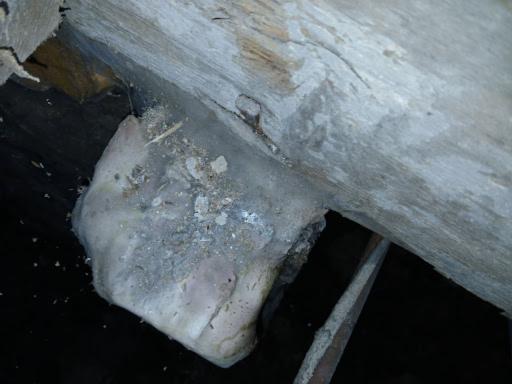
Damp and Timber Survey Middlesbrough
The surveyor attended the property in order to fully understand the extent of the problem affecting the property.
The inspection began externally, where the surveyor identified restricted subfloor ventilation and noted that several airbricks had become blocked by debris. Dry rot can thrive in humid conditions with a lack of air circulation, creating an environment for the fungal decay to spread.
Airbricks are essential in allowing airflow beneath suspended timber floors, helping to reduce moisture levels and protect structural timbers from decay.
The surveyor then inspected inside the property, noticing sections of the timber flooring were found to be structurally weakened. Once access was gained to the subfloor void, further inspection confirmed fungal decay associated with dry rot (Serpula lacrymans).
It was determined that the burst pipe, combined with poor ventilation beneath the floor, had created the damp and humid conditions required for dry rot spores to germinate and develop.
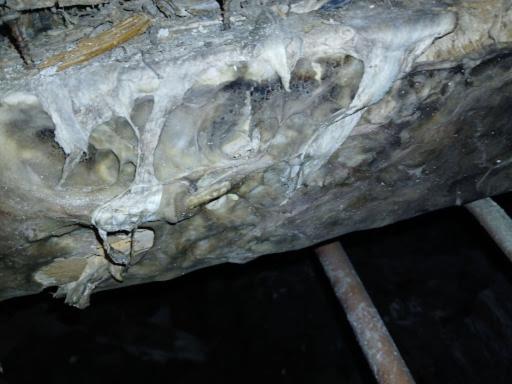
The outbreak had affected floor joists and floorboards, with fungal hyphae visible extending through adjacent masonry.
Dry rot is able to spread through masonry and behind plasterwork, and if left untreated, can grow throughout a property. This makes early intervention essential.
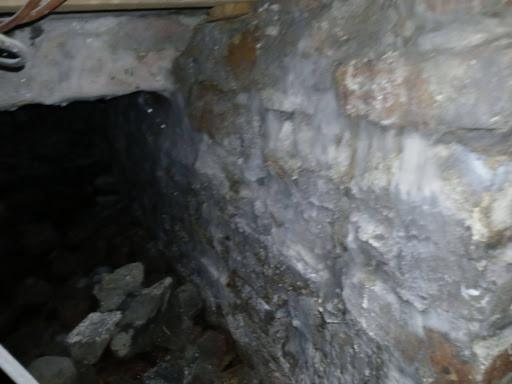
Fortunately, the dry rot was confined to the subfloor void and had not had the chance to spread throughout the remainder of the property.
Following the inspection, the surveyor issued a detailed report outlining recommendations for remedial treatment. These included dry rot eradication measures, removal of contaminated plasterwork, masonry sterilisation and improvements to subfloor ventilation.
Dry Rot Treatments Middlesbrough
The homeowner proceeded with the recommended works, and Peter Cox technicians attended site to undertake the timber repairs.
Affected plaster was removed to expose the underlying masonry, allowing all visible fungal growth and strands to be treated appropriately and reducing the risk of further spread.
Decayed joists and floorboards were removed before the surrounding masonry was wire-brushed and treated using a fungicidal solution.
As part of the dry rot treatment process, staggered drill holes were formed within the masonry to create what is commonly referred to as a toxic box treatment.
Replacement joists and floorboards were then installed, with joist and timber ends suitably wrapped for additional protection.
Existing air vents were cleared and additional ventilation installed to encourage a consistent flow of dry air beneath the suspended floor.
The burst pipe had also been repaired before reinstatement works were completed.
Throughout the project, our technicians remained available to explain each stage of the process while ensuring disruption to the homeowner was kept to a minimum.
Protective floor coverings, Hilti dust extraction systems and Hilti vacuums were used throughout the works to maintain a clean and tidy environment.
The property was successfully restored, with all affected structural timbers replaced and the dry rot treated effectively, providing the homeowner with reassurance that the issue had been resolved long-term.
The works were also supported by a long-term 20-year guarantee, typical of our fungal decay treatments.
Final Thoughts
This project in Middlesbrough demonstrates the importance of addressing issues promptly and maintaining suitable ventilation beneath suspended timber floors. Through a combination of detailed surveying, targeted fungal treatment and improved airflow, the property is now protected against future dry rot activity.
If you have noticed musty odours, weakened timber, or signs of fungal growth within your property, arranging a professional damp and timber survey can help identify the cause before more extensive damage occurs.
If you are worried about a fungal decay problem in your property in Middlesbrough or across Teesside, get in touch with your local Peter Cox branch for an expert damp and timber survey, and specialist treatments, if required.
Next Steps
*Survey enquiries for your local branch will be directed to our dedicated central survey control teams across the UK. Calls to 0800 and 0808 numbers are free unless you are calling from a business phone, in which case the rate will be set by your provider.