Black Mould Treatment
Find out more about black mould

Call Today on 08082508820 * or Book a Survey Online
Peter Cox research* indicates that up to 30% of Brits report seeing condensation and mould in their home every day during the winter months. Ventilation is essential to remove excess moisture vapour from your property, preventing it from condensing on surfaces. Trapped humid air will lead to condensation and mould growth.
Peter Cox offer a wide range of condensation control solutions including the installation of Positive Input Ventilation (PIV) units. The first step is to carry out a condensation survey to fully understand the issues facing your property, before providing recommendations to combat condensation and mould. This may include the installation of a PIV unit.
We work closely with homeowners, commercial clients and social housing providers every year to help remove condensation problems, improving the air quality for the occupants.
If you are considering a PIV unit to help with condensation, Peter Cox are here to help provide you with a long term solution as the experts in condensation control.
*Research carried out by Mortar Research on behalf of Peter Cox between the 21st and 23rd November 2023, amongst 2,080 UK respondents who own or rent a home.
A Positive Input Ventilation (PIV) unit is designed to increase ventilation and remove condensation in the home by introducing fresh tempered air to replace stale humid air.
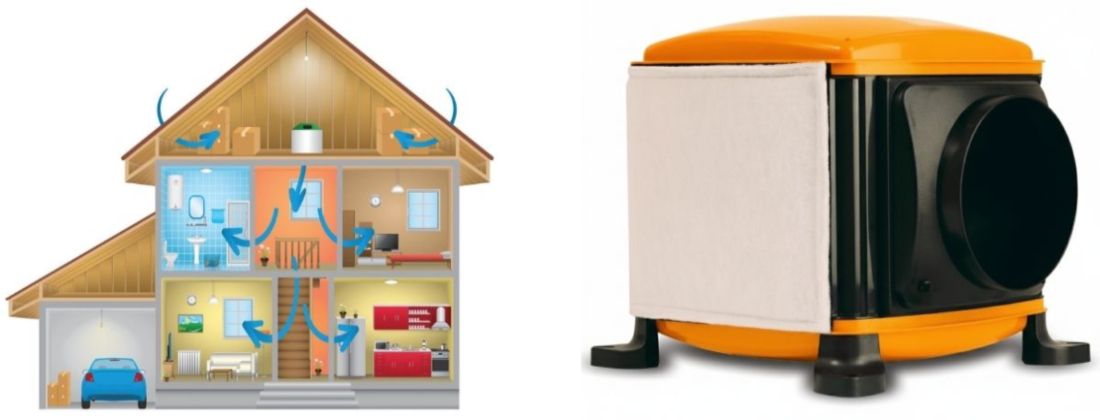
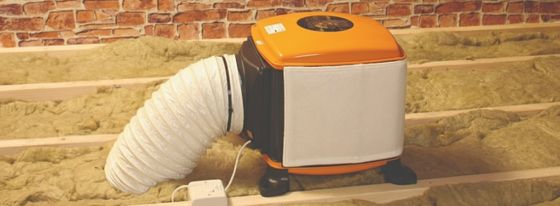
A PIV unit is typically installed into a loft space and will draw in fresh air that is filtered and distributed throughout a property at a continuous rate from a central distribution vent. The fresh air will push stale humid air out, before condensation can form on cold surfaces. This will therefore help prevent condensation and mould problems.
PIV units are fitted with a filtration system that will prevent outdoor pollutants from entering the internal space. Although PIV units are fitted in loft spaces in many properties, wall mounted units are available for flats and properties without a loft.
PIV units are typically fitted in loft spaces, providing the whole
property with fresh filtered air
By introducing fresh filtered and tempered air into a property, the PIV unit creates slight positive pressure which forces the existing humid air out of the building. This reduces the amount of excess moisture in the indoor environment and therefore prevents mould growth.
The PIV air distribution vent will be placed centrally, typically in the landing ceiling of a house or central hallway in a flat, so it can provide airflow throughout the property. It will push stale air out of the property through natural gaps under floors, trickle vents, airbricks, window sashes and doors. Indoor air quality is improved and moisture in the air reduced, thereby reducing the risk of condensation and creating a far more healthy environment for occupants.
A PIV unit will benefit from solar gain within the loft space - the natural accumulation of heat from the sun on bright days, resulting in a relative saving of around 150 Watts per day in an average modern family home. This equates to approximately 10% of annual heating costs. In addition, warm air trapped at ceiling level is mixed by the air flow and is redistributed around the home thereby improving thermostat operation and reducing space heating costs.
It is still advised that occupiers continue to make practical changes to moisture production by using extractor fans when cooking, cleaning and washing, and by heating the property adequately. The switchable integral pre-heater tempers the incoming air during periods of low external temperatures. It slowly pulses heat to ensure temperatures are held to a pre-set minimum.
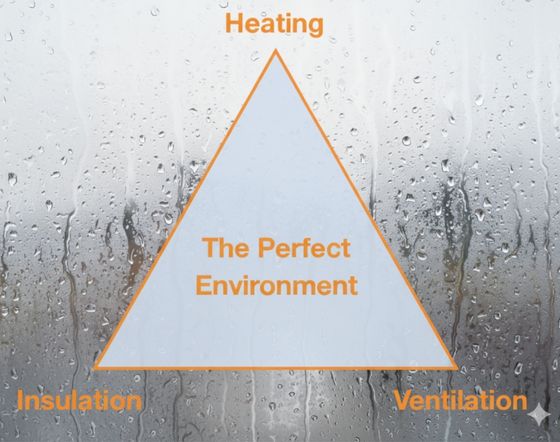
Properties must have a balance between heating, ventilation and insulation to maintain
a habitable environment for occupants.
Mould isn’t just unsightly, it can have an impact on the health of those living in properties suffering from condensation and mould.
PIV units help improve the internal environment and will reduce mould spores, dust mite allergens and other volatile organic compounds from cleaning products, aerosols and scented candles. All of these can contribute to asthma symptoms. Long term exposure to mould spores can also cause effects such as coughing, wheezing or sore throats.
The type of PIV required for your property will depend on the layout of your home. Typically PIV units are either loft mounted or wall mounted.
Peter Cox can install loft mounted PIV units, which are fitted into the roof void, with the distribution vent typically mounted in a ceiling above the stairs. The unit's heater control switch will be sited on the landing wall, as well as fan speed controls. The unit will need to be wired into the electrical supply.
PIV units are non-disruptive and relatively quick to install - meaning they can start working on removing the excess moisture in your property as soon as they are fitted.
For flats or apartments a wall mounted PIV unit is fitted directly onto a wall, usually within the hallway. The ideal placement will be as close to the air intake point as possible. They can also be placed within cupboards where access to an air intake through the external wall is possible. Supply ducting will then be placed to an outlet air grille so fresh filtered air is delivered to a central point within the property. They are designed to be slimline and as unobtrusive as possible.
This unit is equally as quiet as the loft unit and has a low power consumption rate.
In order to provide the right solution to your damp problem, we will first carry out a full house condensation survey to understand the dynamics of the property before recommending any types of treatment. This is because we want to make sure we are providing the right solution to the problem found, through expert diagnosis from qualified surveyors. We have CSRT and CSTDB qualified surveyors located across the country based from our network of local branches.
Once a damp, condensation or mould problem has been confirmed, you will receive a detailed survey report detailing their findings, along with recommendations for treatments, including the installation of PIV units, if necessary.
Our experienced technicians will then install the PIV to the specification detailed in your survey report. This will also include details of a long term guarantee, if applicable.
For dealing with a condensation and mould problem, a PIV unit is a much better option. This is because a PIV system will provide constant ventilation and therefore force moisture laden air out across the whole property from its central position. A dehumidifier will only provide isolated moisture removal in localised areas, as it needs to be plugged in one room at a time. The dehumidifier will stop working when water trays become full and also requires constant maintenance to empty water trays and clean any filters.
PIV systems are more energy efficient and can be a much more cost-effective treatment for condensation and mould problems across the whole house. This therefore means the PIV unit provides a much better long term solution to the condensation problem.
A PIV unit is an excellent solution for properties with a condensation and mould problem, and will work quickly, with properties typically starting to notice a difference within days.
They are very quiet and almost unnoticeable when operating from the loft space. They require little maintenance and running costs are low.
PIV units require an initial upfront cost to install, but Peter Cox will only recommend these when necessary - as a solution to help improve the internal environment of a property.
Improving the air quality of a property while preventing potential health issues related to mould growth means PIV units are popular choices in the UK.
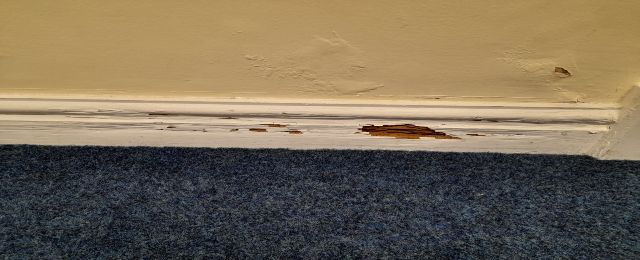
If left untreated, condensation can cause damage, meaning further costs in the future, especially if it causes issues such as fungal decay to structural timber.
If left untreated, condensation can cause problems such as fungal decay in structural and decorative timber.
Yes, Positive Input Ventilation (PIV) units will reduce condensation and mould growth because they help introduce continuously circulating fresh air into a property. This helps prevent mould growth, particularly in areas where there is stagnant humid air. They are energy efficient and can provide a cost effective solution to a condensation problem. A condensation survey will provide answers on whether a PIV is necessary for your damp problem.
When installed correctly by a trained and experienced technician, they will be almost inaudible, especially when installed in the loft space. Sound pressure is less than 15dB.
Yes, a damp problem which is caused by condensation will be solved by improvements to ventilation, which is what a PIV unit will do. PIV units will introduce fresh, tempered and filtered air into a property, while pushing stale moist air out. It is essential that a damp survey is carried out to fully understand the type of damp causing the problem in your property, as PIV units will not provide a solution to the root cause of rising damp or penetrating damp problems.
PIV units are very energy efficient (4-9W), with the heater disabled. These cost as little as a few pennies a day to run. Both the wall mounted PIV system and the loft mounted unit are designed with low-power, ultra-low watt motors and controls to keep running costs low for billpayers.
A PIV unit draws in fresh air from the loft space or outside, which will then mix with the air already inside the property, and will be warmed by it. If a property has the correct balance of heating and insulation the heat loss will be minimal, and the overall environmental benefits should prove worth the small additional costs of heating. Thermostats also work more efficiently, as the air is now better mixed and circulated.
*Survey enquiries for your local branch will be directed to our dedicated central survey control teams across the UK. Calls to 0800 and 0808 numbers are free unless you are calling from a business phone, in which case the rate will be set by your provider.