
External rendering is designed to protect homes from rain and moisture, but when it fails, water can penetrate walls unnoticed, causing damp, mould growth, timber decay and, in some cases, structural damage.
Key stats: Damp affects around 5% of homes in England, which is roughly 1.3 million households, and properties with failed or defective render are three times more likely to experience damp problems.
When moisture becomes trapped behind render, it can spread through masonry and into internal walls and floor timbers. What starts as a small crack or minor external defect can develop into penetrating damp and timber decay if left unaddressed. Identifying the cause early helps prevent hidden damage and costly repairs.
For homeowners, landlords, estate agents, and building contractors, early risk recognition is essential to avoid hidden damage and costly repairs. A professional property survey offers the insight needed to separate minor, surface-level defects from deeper moisture-related problems that demand expert attention.
Peter Cox combines national expertise with local surveyors and technicians to provide professional surveys and long-term solutions, all backed by industry-leading guarantees. Raising the standard in property preservation, local experts assess every property thoroughly, delivering actionable insights and practical recommendations to protect homes and investment.
Table of Contents
- Why External Renders Can Cause Damp
- Industry Data: Damp Trends and Local Patterns
- How Damp Develops: Expert Insights
- Spotting Warning Signs: Practical Guidance
- Real-World Impact: Human Stories
- Why Local + National Expertise Matters
- Key Takeaways and Next Steps
Why External Renders Can Cause Damp
External renders are applied to walls to protect against rain, moisture and, in some cases, to provide a decorative finish. However, when the render fails or is applied incorrectly, water can penetrate through the surface, creating hidden damp and associated problems leading to:
- Cracks or gaps in the render that allow water to seep in
- Defective or bridged damp-proof courses, which can let moisture bypass the DPC into the property
- Blocked ventilation, including airbricks, which reduces airflow and increases damp risk
- Hidden structural issues, such as corroded wall ties or early-stage dry rot in timber
Even small or seemingly minor defects can conceal serious damage. A professional survey is essential to accurately diagnose the root cause and fully assess the extent of any damp or timber problems
Industry Data: Damp Trends and Local Patterns
“Moisture ingress is one of the most common and persistent housing quality issues in the UK, with millions of homes now recording higher levels of damp and mould than in recent years. Defects in external elements, from failed renders to poor detailing around windows and ground levels, are key drivers. Timely, evidence-based diagnosis is essential to address not just the visible symptoms, but also the root causes of damp before they escalate into structural decay or health risks.”
Nicholas Donnithorne, National Technical Manager for Peter Cox
The most recent English Housing Survey (2025), shows that damp is a growing concern across England:
- Around 5% of homes had significant damp in 2023/24, the highest level in five years
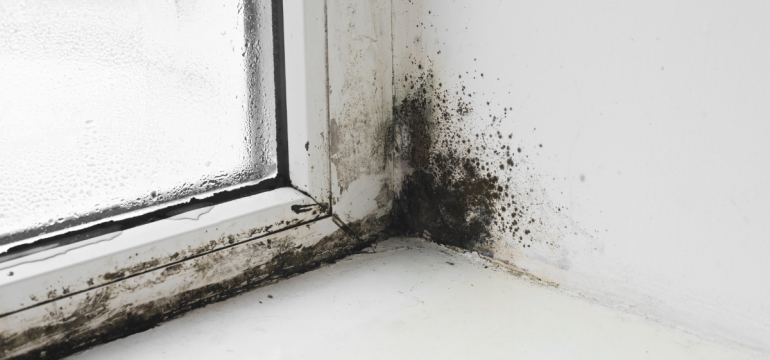
- This equates to roughly 1.3 million households experiencing significant damp problems, including penetrating damp, rising damp, or extensive mould, often linked to defective or failing external renders
- Private rented and local authority homes are more likely to have damp (around 9%) than owner-occupied homes (around 4%)
- Properties with external defects are three times more likely to suffer from damp
- Seasonal patterns show moisture peaks in autumn and winter, when rainfall and humidity are highest
- Regional hotspots include older properties and high-rainfall areas such as the North-West, South-West, and East Midlands, Welsh and Scottish uplands

How Damp Develops: Expert Insights
Moisture can penetrate walls in ways that aren’t immediately visible:
- Water bridging: If the render is applied too low, moisture can bypass or bridge the damp-proof course (DPC), allowing water to penetrate internal walls. A compromised or bridged DPC can enable rising damp, where moisture is drawn up the wall via capillary action.
- Timber decay: Dry rot, wet rot, and fungal growth often develop behind external render, unnoticed until significant damage occurs
- Structural risks: Corroded wall ties, weakened lintels, or compromised masonry may remain hidden
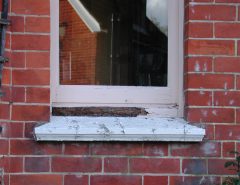
- Hairline cracks: Allow water to run into the masonry, where it remains trapped or passes through to the wall plaster.
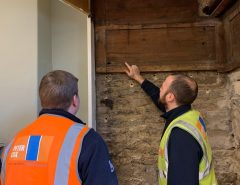
Professional surveyors use specialist equipment, including moisture meters, thermal imagers and detailed timber inspections, to identify these issues accurately. DIY fixes cannot reliably detect hidden moisture, timber decay or structural defects. A damp and timber survey may be required for long-term solutions.
Spotting Warning Signs: Practical Guidance
For Homeowners:
- Damp patches or staining on the walls behind the render
- Cracks, blistering, or peeling paint
- Musty odours, particularly near ground floors
- Blistered or crumbling external render
For Commercial Clients and Contractors:
- Conduct pre-work surveys before refurbishment or maintenance
- Detect hidden timber or structural issues early
- Use survey reports with evidence to plan safe, efficient and cost-effective projects
If you notice any of these signs, book a professional property survey with Peter Cox. Surveys accurately identify the root cause of damp or timber problems and provide long-term, expert solutions. Raising the standard in property preservation, our experts combine national data with local surveyor knowledge, offering recommendations tailored to your region and property type.
Real-World Impact: Human Stories
Minor visible signs often hide more serious problems.
A family in Manchester noticed small damp patches behind a recently rendered wall. A local Peter Cox surveyor found water ingress around window lintels and early-stage dry rot in floor joists. Early intervention prevented expensive structural repairs and long-term damage.
“When we inspected the property, it was clear that water was finding its way in around the window lintels. The early signs of dry rot in the floor joists were a warning, but because the family acted quickly, we were able to address the issues before they caused serious structural damage. Early intervention always makes a huge difference.”
Sam Shaw, Peter Cox, Surveyor, Manchester
Stories like this show why professional surveys are essential. They protect homeowners, landlords, and property professionals by identifying hidden issues before they escalate, saving time, money and disruption.
Why Local and National Expertise Matters
Peter Cox combines national scale with local knowledge to provide the highest standard of property preservation:
- National expertise: We have full UK coverage, bringing decades of experience and advanced techniques in every survey we carry out
- Local presence: Surveyors and technicians live near your property, providing responsive, personalised service along with insights and understanding of regional risks
- Professional insight: Surveys include detailed reports with photographs, measurements, and evidence-based recommendations
- Long-term guarantees: Many of our treatments and repairs are backed by industry-leading guarantees.
Whether you are a homeowner, landlord or commercial client, this combination ensures tailored, long-term solutions that protect your property and give you peace of mind.
Key Takeaways and Next Steps
- Early detection prevents major damage: damp caused by failed renders can be hidden, but is manageable if identified promptly
- Visible signs may be misleading: minor cracks, staining, or peeling paint can conceal serious issues
- National expertise with local knowledge: Peter Cox combines decades of experience with surveyors and technicians who understand regional property risks
- Professional surveys provide actionable solutions: detailed reports, evidence, and long-term recommendations give you peace of mind
- Peter Cox combines national scale with local expertise, giving tailored advice backed by long-term guarantees
Book a survey today to protect your property, understand the full extent of any damage, and access long-term solutions
,