
Skirting boards are more than just a decorative finish; they serve a practical architectural purpose in homes and properties.
They are designed to hide the joint where the floor meets the wall, as they cover the small gap between the plasterwork and the floor, while also protecting the lower portion of the walls from everyday wear and tear.
However, because they are at the very base of the wall, skirting boards can often act as the ‘canary in the coal mine’ for the property’s health. They are often the first structural element to show visible signs of serious underlying issues like rising damp, penetrating damp, or timber decay.
If you have noticed your skirting boards starting to warp, discolour, or crumble, it is vital not to view this as a purely cosmetic problem. Repainting or replacing a damaged board without addressing the underlying moisture issue is a temporary and costly mistake. Understanding what causes this damage and how to treat the root cause is essential for protecting the structural integrity of your home.
What Causes Rotten Skirting Boards?
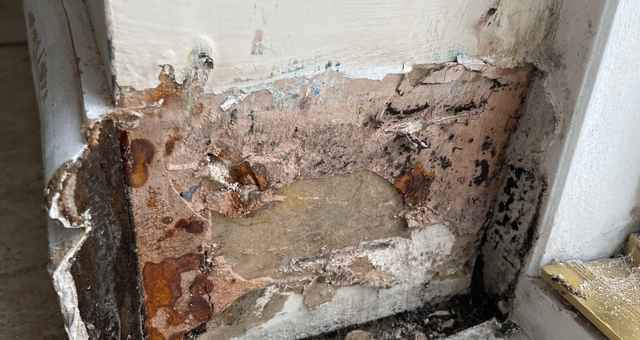
Timber is a natural, porous material that is highly susceptible to moisture. When the moisture content of wood remains consistently high, typically above 20%, conditions become optimum for problems such as fungal decay and woodworm. Woodboring weevils in particular enjoy eating gently decaying skirting boards, and when these are levered from the wall, it is not unusual for hundreds to scurry away under the floor.
There are several main culprits behind damp and rotting skirting boards:
Rising Damp
Rising damp occurs when groundwater is drawn up through the tiny capillaries in masonry, similar to how oil rises through a lamp wick. If a property lacks a functional damp proof course (DPC), this moisture travels vertically upwards through a wall, saturating the masonry behind the skirting board. Because the timber is in direct contact with this damp masonry, it quickly absorbs the water, leading to increased moisture content and fungal decay.
Penetrating Damp
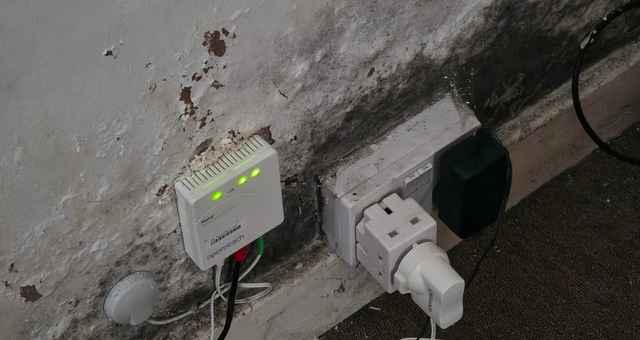
Unlike rising damp, penetrating damp can occur at any level but is often at the base of a wall due to high external ground levels. This allows groundwater to penetrate through the wall and soak into the plaster. The water source might also be from blocked gutters or overflowing gutters, or cracked rendering.
Plumbing Leaks and Spills
Slow, hidden leaks from radiators, washing machines, or under-floor piping can saturate skirting boards over time. Because these leaks are often behind appliances or under floorboards, the damage to the skirting may be the first visible sign that a pipe has failed.
High Humidity and Condensation
In properties with poor ventilation, moisture-heavy air can condense in the stagnant gaps behind furniture or in corners. This localised high humidity encourages mould growth on the surface of the skirting and, if left unmanaged, can eventually lead to surface-level timber decay.
Spotting the Signs: What Does Rising Damp Look Like on Skirting Boards?
Identifying the specific type of damp affecting your skirting boards is critical for choosing the right treatment. Signs the problem is caused by rising damp include:
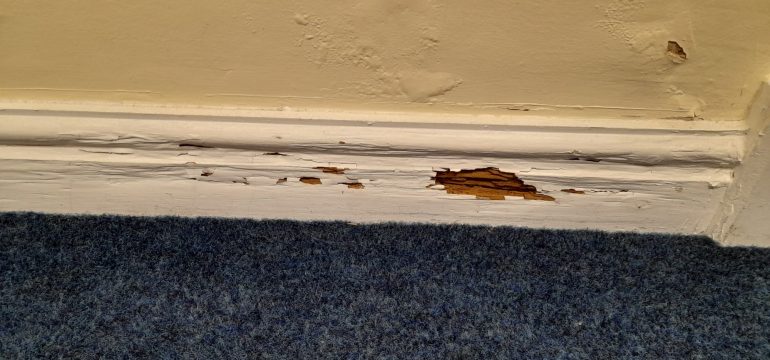
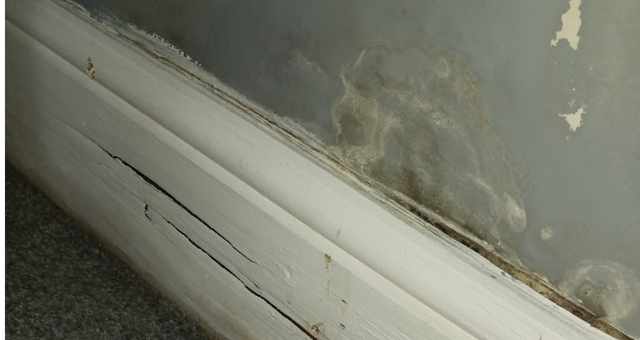
- Peeling Paint or Wallpaper: As moisture pushes through the wall, it causes the bond between the paint or wallpaper and the skirting to fail, leading to flaking or bubbling.
- Tide Marks: You may notice a brownish or yellowish “tide mark” on the wall just above the skirting board, caused by the evaporation of salt-laden groundwater.
- Musty Smells: A persistent, earthy odour is a classic sign of damp masonry and decaying timber.
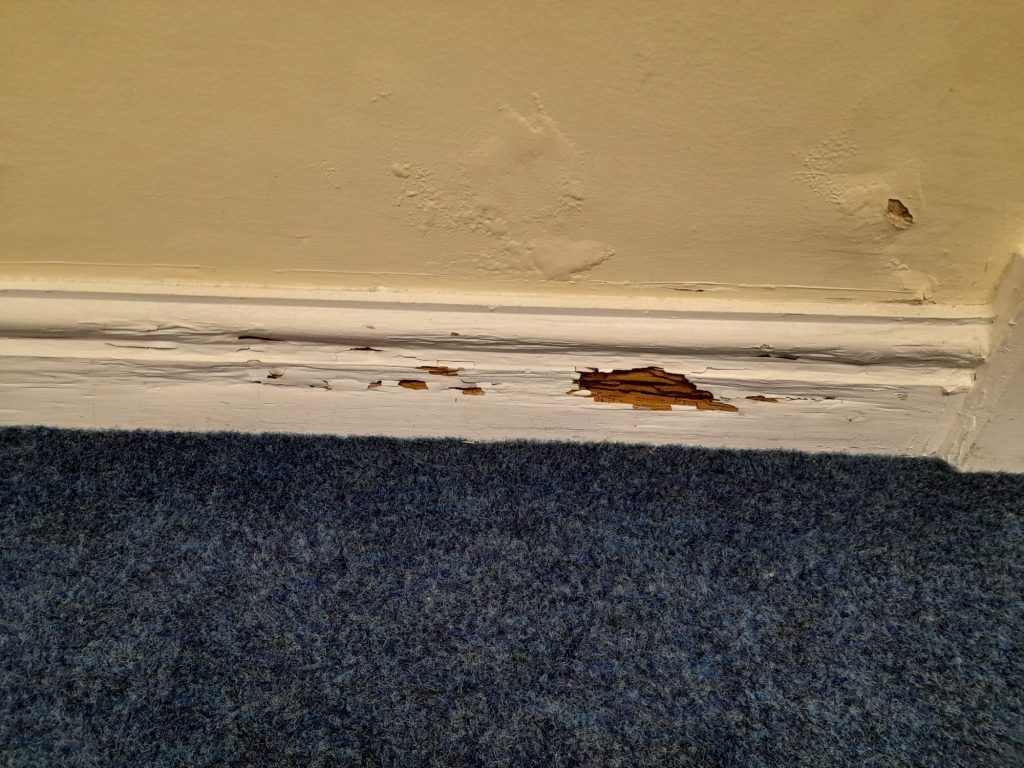
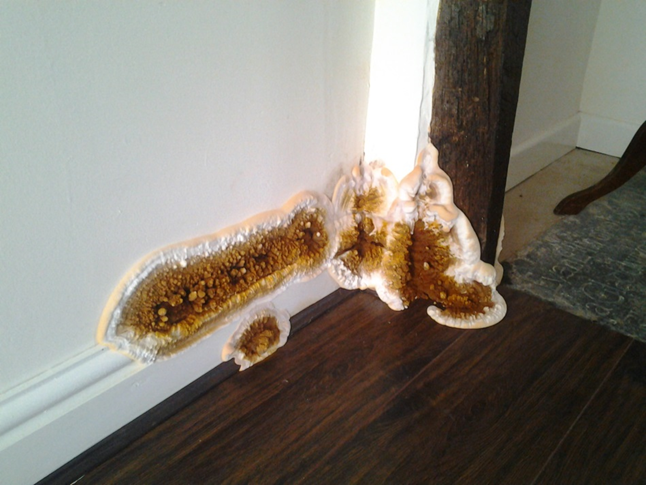
- Cuboidal Cracking: Look for “shrunken” wood or deep cracks that break the timber into small cubes. This is a primary indicator of brown wet rot, where the fungus has consumed the cellulose in the wood. It is also possible to get dry rot growth and the formation of reddish-brown pancake mushroom growths above the skirting board.
Rising damp symptoms may appear similar to both condensation and penetrating damp. This is why it is important to accurately distinguish the root cause of damp, because the treatment methods differ. If you are unsure, you may benefit from a damp and timber survey from a professional surveyor.
Spotting the Signs: What Does Condensation Look Like on Skirting Boards?
Condensation is the most common form of damp that affects homes in the UK, and often rotten skirting boards are caused by water forming on cold walls, and saturating the skirting boards below
- Damp walls with beads of water forming on the surface indicate the problem could be condensation
- Peeling paint or wallpaper may indicate a condensation problem, especially if the problem is on north-facing external walls
- Mould growth is a common problem associated with condensation, as the cold, damp walls provide the perfect conditions for mould spores to germinate
- Condensation forming on windows, mirrors and other surfaces indicates an excess of moisture inside the home
Condensation can be prevented by increasing ventilation and the thermal efficiency of cold walls and surfaces. While condensation will not require traditional damp proofing methods, if the moisture content of timber has risen, it could lead to fungal decay, which needs to be addressed.
Wood Rot Explained: Can You Stop It Once It Starts?
A common question from homeowners is whether wood rot can be stopped once the process has begun. The answer is yes, but it requires professional identification and intervention. It is vital to differentiate between the two main types of rot, as the treatment strategies differ significantly:
Wet Rot
Wet rot is generally localised to the area where the timber is actively damp. If you eliminate the moisture source and treat the remaining wood with specialist fungicides while the wood dries out, you can stop its progression. While damaged sections of the skirting may need to be cut away and replaced, it will not spread through the masonry like dry rot can.
Dry Rot
Dry rot (Serpula lacrymans) is far more aggressive and dangerous. Despite its name, it still requires moisture to start, but it can then spread rapidly through brickwork and behind plaster to find new timber to consume. If you suspect dry rot, professional treatment is mandatory, as it can compromise the entire floor or even the structural stability of the property.
How to Treat Damp in Skirting Boards
Treating damp skirting is a three-step process that must be followed in order to ensure the problem does not return:
Step 1: Eliminate the Moisture Source
The most important step is to find out why the moisture is there. This may involve installing a new chemical damp proof course for rising damp, repairing external masonry for penetrating damp, or fixing a plumbing leak. If the issue is condensation, improving the property’s ventilation is essential.
Step 2: Timber Treatment
Once the source is fixed, the remaining healthy timber should be treated with specialist fungicides to kill any spores and prevent fungal growth during the drying period.
Step 3: Replacement
In many cases, the original skirting can be too damaged to salvage. If damage has occurred to a section of timber, this can be removed and replaced, whilst retaining the rest.
Can Rising Damp Be Fixed?
Homeowners are often worried that rising damp is a terminal diagnosis for a property. We want to reassure you that with professional intervention, rising damp and its effects on your timber are entirely treatable.
A professional survey is the only definitive way to differentiate between a simple plumbing leak and a serious structural issue. At Peter Cox, our specialists have the diagnostic expertise to identify the root cause of your damp and provide a tailored, and typically guaranteed, treatment plan that ensures the long-term structural integrity of your home.
How to Prevent Condensation Rotting Skirting Boards
Prevention is always more cost-effective than repair. To keep your skirting boards healthy:
- Improve Airflow: Ensure furniture is not pushed tight against external walls, allowing air to circulate.
- Reduce Humidity: Use extract fans in kitchens and bathrooms to prevent moisture from settling at the base of your walls.
Regular Maintenance: Keep an eye on external air bricks and guttering to ensure they are clear and functional.
Conclusion
Do not ignore rotting or damp skirting boards; they are rarely just a cosmetic issue and are almost always a sign of a deeper moisture problem. By acting quickly, you can stop wood rot in its tracks and protect your home from more expensive structural repairs.
Take the next step in protecting your home.Book a Professional Damp and Timber Survey with Peter Coxtoday to identify the root cause of your damp issues and receive a permanent, professional solution.