
Rising damp is one of the most misunderstood property issues in the UK. It is often misdiagnosed by inexperienced contractors, however with the correct tools and experience a surveyor will be able to correctly identify whether the damp problem is caused by rising damp, penetrating damp or condensation.
If rising damp is left untreated, it can lead to crumbling plaster, peeling wallpaper, decay to structural and decorative timbers, and unhealthy living conditions. Fortunately, modern technology offers a reliable fix—even in older homes with no effective damp proof course in place.
Enter the chemical damp proof course (DPC) via damp proof injection: a long-term, cost-effective solution that restores protection where traditional methods may have failed.
What is a Damp Proof Course (DPC) and Why Does My Home Need One?
A damp proof course—often abbreviated to DPC—is a horizontal barrier installed in a property’s walls to stop moisture from the ground rising up through capillary action. Capillary action is essentially the way in which moisture is drawn up through porous masonry, similar to the way fragrance in a reed diffuser rises up a wick. A DPC will prevent this moisture from rising.
A DPC is designed to:
- Keep internal walls dry
- Prevent rising damp
- Avoid internal plaster damage
- Reduce the risk of decaying timber
Without a functioning DPC, your home is vulnerable to visible and hidden moisture damage.
There are several types of DPC, including:
- Electro-osmotic DPC
- Chemical damp proof course (via injection)
- Membrane damp proof courses
- Integral damp proof course
Learn more about DPC options
Different Types of Damp Proof Course: Traditional vs. Modern Solutions
While newer homes are built with a DPC as standard, many older properties—especially Victorian or Edwardian homes—were built with no DPC or a rudimentary one. Even when a DPC was installed, it may have:
- Deteriorated over time
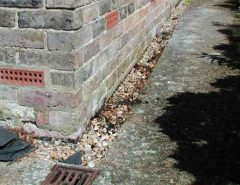
- Been bridged (e.g., by external debris or raised ground levels)
- Been installed incorrectly
Once the DPC is breached, moisture rises through walls unchecked, creating ideal conditions for rising damp.
Signs Your Damp Proof Course (DPC) Is Bridged or Failing
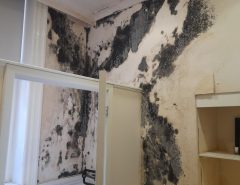
If your DPC has failed or been compromised, you may start to notice clear signs of rising damp, including:
- Tide Marks & Salt Stains
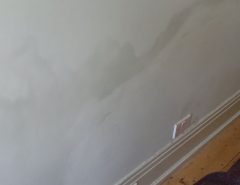
Yellow-brown bands or “tide marks” on internal walls, typically up to 1–1.5 metres from the floor, are caused by evaporating moisture leaving salt deposits. - Crumbling plaster
- Peeling wallpaper
- Discolouration or damp patches
- A musty smell
More signs of rising damp
Damp Proof Injection: A Modern Solution for Failed or Absent DPCs
A chemical DPC through damp proof injection is a proven method for tackling rising damp, especially in properties with no original DPC or where the existing one has failed.

How Does Damp Proof Injection Work?
- Step 1: Drill Holes – Small holes are drilled into the mortar course at regular intervals.
- Step 2: Inject Cream – A silicone-based damp proof cream is injected into these holes.
- Step 3: Diffusion & Curing – The cream diffuses into the mortar and chemically reacts to form a water-repellent barrier.
- Step 4: Long-Term Protection – Once cured, the barrier prevents moisture from rising up the wall by capillary action.
Learn more about the process
✅ Effective on brick, stone, and most masonry types
✅ Minimal disruption during installation
✅ Fast-acting and long-lasting
Why a Professional Damp Survey is Essential
Accurate diagnosis is everything. Many homeowners mistake condensation, salt damp or penetrating damp for rising damp and invest in the wrong treatment.
Before any damp proof injection is carried out, a professional damp survey should always be conducted.
What’s Included in a Peter Cox Damp Survey?
- Full property inspection by qualified damp surveyors
- Use of advanced tools: moisture meters, hygrometers, thermal imaging
- Identification of the type of damp and the source of moisture
- A detailed report with tailored recommendations and guaranteed solutions
Pro Tip: DIY fixes often mask the symptoms, not the source. Trusting professionals ensures long-term protection and peace of mind.
Final Thoughts: Restore Protection with the Right DPC Solution
Whether you own a charming Victorian home or a modern build with a failing DPC, the key to a dry, healthy property is correct identification of issues and appropriate treatment.
Damp proof injection is one of the most effective, efficient, and non-invasive ways to restore a protective barrier in your walls. When paired with a professional damp survey, it offers a permanent solution to one of the most common causes of property damage in the UK.
FAQs:
Here are some questions that often come up when trying to protect your home from Rising Damp:
1. What does DPC stand for?
DPC stands for Damp Proof Course. It’s a protective barrier, usually installed at the base of walls, designed to prevent moisture from rising up through the brickwork. It will normally be in a slightly thicker mortar course, 6 inch (150mm) above external ground level. Some companies inject the brick instead. Over time, older DPCs may fail, allowing damp to enter the property.
2. Can I inject a damp proof course myself?
While DIY DPC kits exist, professional installation is strongly recommended. Proper diagnosis, correct drilling patterns, and specialist injection techniques are essential to ensure long-term protection and compliance with building standards. Learn more about our expert DPC solutions here.
3. How effective are chemical DPC injections?
When installed correctly by a qualified technician, chemical DPC injections are a reliable and long-lasting treatment for rising damp. At Peter Cox, we use high-performance damp-proofing creams backed by guarantees for up to 20 years.
4. What are the risks of incorrect DPC installation?
Poorly installed or misdiagnosed DPC treatments can lead to recurring damp, damage to internal finishes, and wasted money. It’s essential to get a professional damp survey to identify the true cause of damp issues and apply the correct treatment.
Peter Cox has over 70 years of experience diagnosing and treating all forms of damp, including rising damp. Trust our certified specialists to provide long-lasting solutions tailored to your property.
Ready to protect your home? Book a damp survey with Peter Cox today