
Dry rot (Serpula lacrymans) is at its most destructive when it goes undetected, before it takes hold and spreads, meaning treatment is delayed. One of the top hiding spots is under floorboards.
In the dark and poorly ventilated voids beneath suspended timber floors, dry rot can spread and cause significant structural damage long before any signs appear at surface level.
So if dry rot under floorboards develops out of sight, what can property owners do to help avoid it? This guide covers the causes and signs to look out for, and what to do if you suspect it’s hiding below.
What Causes Dry Rot Under Floorboards
Dry rot needs moisture to get started, and subfloor voids can be particularly vulnerable to damp conditions and poor ventilation.
Suspended timber floors rely on airflow through these voids to keep timber dry. When airflow is restricted, or if moisture finds another way in, conditions become ideal for dry rot to develop in the joists and floorboards above.
Dry rot spores are all around us, and can be present in properties without causing any problems. But, if they settle on timber with an ideal moisture content of above 20% (optimum 30%-40%), they germinate and start to feed on the wood, causing it to weaken and decay.
Unlike wet rot, dry rot doesn’t need an ongoing source of moisture once established. It needs less moisture to take hold in the first place, and can spread to floorboards from elsewhere in the building.
Common Causes of Dry Rot Under Floors:
- Blocked or missing air bricks stopping airflow into the subfloor void
- Gently leaking pipes running below floors
- Rising damp affecting ground floor timbers
- Penetrating damp bypassing damp proof courses to reach floor joists through external walls
- Timber joist ends being in direct contact with damp masonry
Any of these can create the right conditions for a dry rot outbreak, allowing it to spread and cause damage to floorboards and other timbers.
Signs of Dry Rot Under Floorboards
Even if dry rot is developing under floorboards, it can be difficult to identify at an early stage. Floor coverings like carpet or vinyl conceal what’s happening underneath, meaning damp and dry rot outbreaks can be well established before there are any signs up above. Vinyl flooring in particular prevents moisture loss and allows the timber to sweat.
These are the signs to watch out for to tell if floorboards are rotten:
Above Floors
- Floors that feel bouncy underfoot
- Floorboards that are pulling away from or dropping below skirting boards
- Excessive or new creaking
- A persistent musty smell rising from the floor
- Rust-red or orange spore dust near skirting boards or in corners
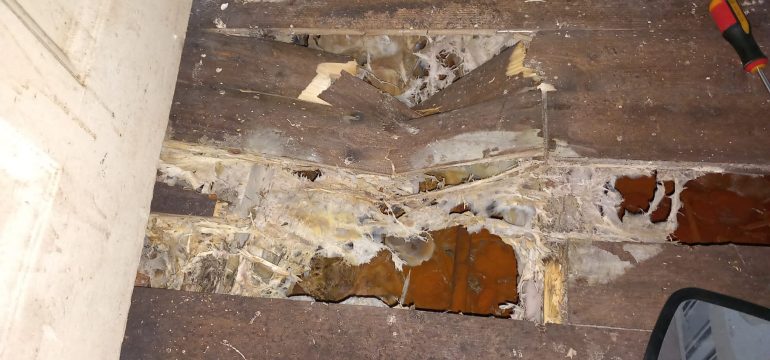
- Grey or white strands (mycelium) spreading across surfaces, sometimes extending onto brickwork or plaster (mycelium can also be found on or below floors)
Below Floors
- Timber that crumbles, gives way or feels hollow when pressed or pushed with a screwdriver
- Darkened or discoloured timber
- Rust-red or orange spore dust on surfaces
- White or grey cotton-wool-like growths on joists or masonry
- Deep cube-shaped cracking in floorboards or joists
- Orange or rust-coloured pancake-shaped fruiting bodies (sporophores) on timber or masonry (in more advanced cases these can also appear above floors)
If something doesn’t seem right with your floors, it’s always worth further investigation. Left unchecked, dry rot can spread beyond the original source and cause damage to other parts of the property.
The good news is that you don’t need to rip up your entire floor to investigate if you suspect dry rot underneath. A specialist surveyor can use moisture meters and other equipment to assess the extent of any damp or decay, and identify whether dry rot is present before any major exposure, repairs or treatment starts.
Is It Dry Rot or Something Else?
The signs of dry rot under floorboards can be similar to other problems like wet rot, plumbing leaks, or even structural movement. Getting the diagnosis right matters because different types of decay need different treatments.
| Sign | Possible Cause |
| Musty or mushroom-like smell | Dry rot |
| White cotton-wool-like growths on timber or masonry | Dry rot |
| Grey or white strands spreading across surfaces or brickwork | Dry rot |
| Rust-red or orange spore dust | Dry rot |
| Orange or rust-coloured pancake-shaped fruiting bodies | Dry rot |
| Cuboidal cracking in timber | Dry rot (also sometimes seen in wet rot, with smaller cubes) |
| Timber that feels hollow or crumbles when pressed | Dry rot or wet rot |
| Springy floors | Dry rot or wet rot |
| Darkened or discoloured timber | Dry rot or wet rot |
| Floorboards pulling away from or dropping below skirting boards | Dry rot or wet rot |
| Dark, soft or spongy timber | Dry rot or wet rot |
| Floorboards that feel soft or give way underfoot | Dry rot or wet rot. |
| Musty or damp smell without mushroom-like odour | Wet rot |
| Small holes in timber with fine dust around or below | Woodworm |
| Damp near skirting board level with salt deposits | Rising damp |
| Damp patch that appears after rainfall | Penetrating damp |
| Damp patch near a pipe or fitting | Plumbing leak or condensation on cold water pipe |
What to Do If You Find Dry Rot Under Floorboards
Treating floorboards affected by dry rot needs immediate action. Dry rot doesn’t stay where you find it, and what’s visible is rarely the full extent of the problem.
The first step is identifying and fixing the source of moisture that is allowing the fungus to grow. Whether it is a ventilation issue, leaking pipe, a blocked air brick or a damp proof course issue, treating the timber without addressing the underlying cause means the problem will return and continue to spread.
Dry rot treatment isn’t a simple DIY job. Where required, treatment needs to go well beyond any visible damage because of the way it spreads. This includes cutting back timber past the obvious damage, treating surrounding masonry with a certified fungicidal treatment, and replacing affected wood with pre-treated timber. Dormant spores can remain in masonry if not treated properly, so a professional approach gives the best chances of stopping dry rot for good.
A specialist damp survey is the most reliable way to understand what’s going on under your floorboards. Peter Cox surveyors will:
- Inspect your property using specialist equipment to identify the root cause of damp
- Diagnose whether dry rot or another issue is present
- Provide a clear written report with recommendations so you can decide on next steps
Dry rot treatments carried out by Peter Cox are typically backed by a 20-year guarantee, so you can feel confident the problem has been dealt with for good.
Book a survey online or get in touch with your local Peter Cox branch to arrange an inspection.
Frequently Asked Questions on Dry Rot Under Floorboards
Can dry rot spread from under floorboards to the rest of the house?
Yes, dry rot is known for using its mycelium and strands to spread through masonry and brickwork in search of new timber to consume. What appears to be a problem affecting floorboards can affect joists, wall timbers, and skirting boards if left untreated. It can even spread into neighbouring rooms or properties.
Will dry rot spread without moisture?
Once established, dry rot can spread to drier areas of a property via its mycelium strands, which can transport moisture through masonry to reach new timber. It also requires a lower moisture content than wet rot to take hold. Even after the original moisture source is fixed, dormant spores can remain in surrounding masonry and reactivate if conditions become right again. This is why treating the masonry surface is an essential part of dry rot treatment.
How long does it take for dry rot to destroy wood?
It depends on conditions and the type of timber affected. In the right conditions, wood can begin to lose structural integrity within months and deteriorate significantly within two to three years. Softwoods are generally more vulnerable than hardwoods, and higher moisture levels and warmer temperatures can speed up decay. Acting quickly once signs are spotted limits the damage and the cost of repair.