Many homeowners and occupants struggle with patches of black mould that stubbornly reappear every winter, even after intensive cleaning with bleach or other cleaning products.
Often, the culprit is not just moisture from daily activities, but a structural issue known as cold bridging, or simply a cold spot on a surface where warm, moist air inside the property can condense. This, in turn, leads to mould growth, as mould spores land on the damp surface and germinate.
Understanding what cold bridging is and how it affects your property is the first step toward creating a warmer, healthier, and more energy-efficient home or living environment.
What is Cold Bridging?
In the context of buildings, cold bridging, otherwise known as thermal bridging, refers to a specific area in a building’s structure that allows heat to escape much more easily than the surrounding materials, cooling the area in the process.
This is because there is a weak spot or gap in the structure, creating a point where there is a ‘bridge’ for cold temperatures to enter from the exterior, causing internal heat loss.
This usually occurs due to a break or gap in the building’s thermal properties, or if there is a building defect causing damp spots. It can be as simple as forgetting to seal the gap between insulation panels with thermal tape, thereby allowing a thermal bridge to form.
When a property is compromised or interrupted by more conductive materials, heat follows the path of least resistance through that material, leading to localised cold spots on internal walls.
Common Areas Where Thermal Bridging Occurs
Cold bridges are typically caused by the way a building was originally constructed or has been modified over time. Due to the age of the housing stock in the UK, it is fairly common for properties to be affected by cold bridging. Sometimes building defects, or a lack of regular maintenance on the exterior of a property, can also lead to cold spots, especially in buildings that are built with solid brick walls, rather than cavity walls.
Some of the most frequent locations for these thermal defects include:
- Wall-to-floor junctions: These are critical spots where the floor joists or concrete slab meet the external wall, often creating a gap or interruption in the thermal properties of the building.
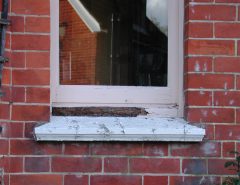
- Window and door reveals: The area where a window or door frame meets the masonry is a common place where cold bridging occurs, especially if the frames are not correctly insulated or sealed.
- Steel lintels and concrete beams: Found above windows and doors, these conduct heat significantly faster than traditional brickwork or timber, creating a direct cold bridge from the outside to your interior masonry or plaster.
- Roof-to-wall junctions: If loft insulation fails to meet the wall insulation, a significant gap is left that allows heat to bypass the thermal envelope.
- Projecting structures: Items like concrete balconies that are part of the main floor slab or the floor slab itself can, in winter, drag heat out of the building and cool the concrete to a point where condensation forms.
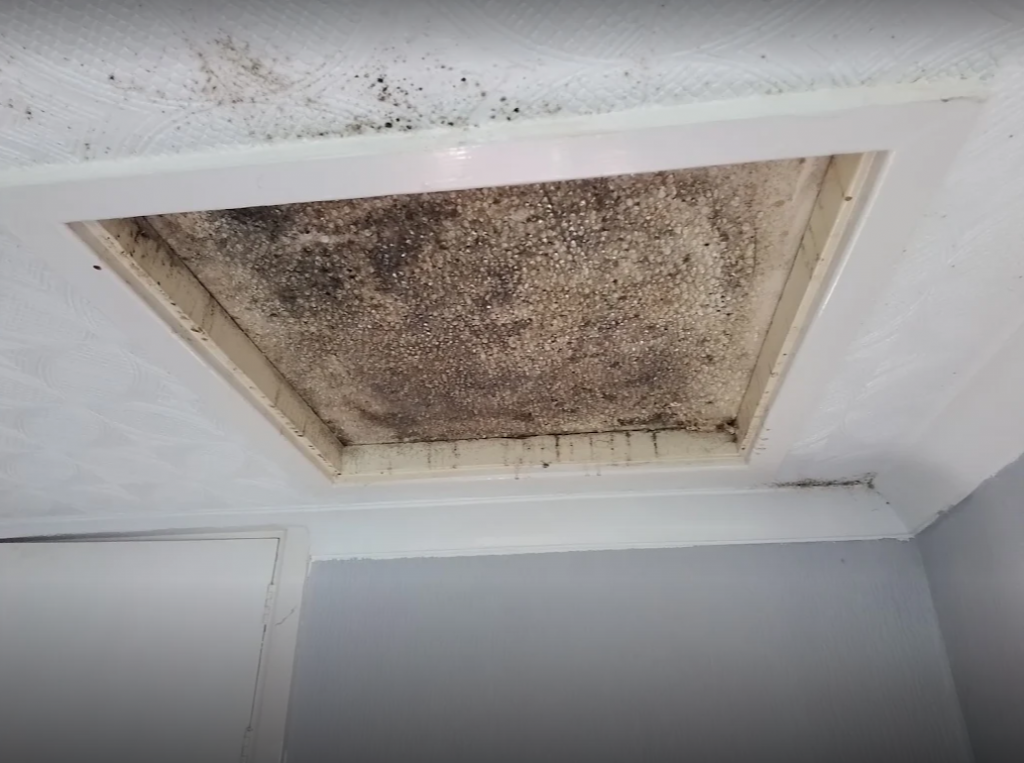
- Missing insulation: Sometimes you may notice mould patches in rectangular patterns on ceilings, and this can indicate a missing gap in the insulation above, leading to a cold spot on the ceiling, which allows mould spores to germinate. On other occasions, ‘dusty’ patches may form, but no mould grows. This is still a cold bridge, but dust is being stuck to the slightly damp surface as heat passes through the insulation gap.
- Solid brick walls: Solid masonry walls do not have a thermal break like a cavity wall does, meaning they are less insulated and can often cause a thermal bridge, especially in north-facing rooms that receive less direct sunlight to warm them.
- Damp patches: When solid walls become damp due to driving rain, leaking gutters or downpipes, etc., they lose their thermal properties. This causes the cold external temperature to cool the wall, causing a thermal bridge with the warmer interior.
The Science of Mould: Why It Forms on Cold Spots caused by Cold Bridging
The presence of a cold bridge does more than just make a room feel chilly or increase your heating bills; it can cause cold spots in varying sizes that can cause warm, moisture-laden air to condense on the surface.
This process is driven by the dew point, the temperature at which air can no longer hold its moisture in vapour form, and it becomes visible as droplets of water.
Warm air is like a sponge; it can hold a significant amount of water vapour. But when warm, moist air created by everyday activities like cooking, bathing, or even breathing comes into contact with these colder surfaces, it rapidly cools.
As the air temperature drops at that specific spot, it reaches its dew point and condenses into liquid water droplets on the wall or ceiling.
Because cold bridging causes these spots to remain consistently colder than the rest of the room, they can stay damp for extended periods, especially during winter or periods of heavy rainfall.
This persistent dampness provides the perfect, nutrient-rich environment for mould (such as Aspergillus or Stachybotrys) to flourish, leading to unsightly stains, damaged decor, and potential health risks for inhabitants.
Avoiding ‘Quick Fixes’
When faced with cold spots in a property, many people turn to temporary solutions that fail to address the underlying structural issues. This can lead to further problems in the future, so it is best to avoid temporary fixes such as:
- Anti-mould paint: While this may kill spores on the surface, it does nothing to stop the cold spot or the excess moisture in the atmosphere that is contributing to the condensation problem. Condensation can still form on the surface and run down the wall.
- Dehumidifiers: These can reduce overall humidity, but they are expensive to run and do not fix the ‘bridge’ in the wall, caused by structural issues.
- Constant heating: Turning up the thermostat can help warm the home and allow the air to hold more water vapour, but it is an inefficient and expensive solution, especially as the heat created can simply be dragged through thermal bridges, causing more cooling.
How Do You Fix Cold Bridging Permanently?
Treating cold bridging requires more than just a surface-level clean. Where possible, you must prevent the loss of heat by removing the thermal bridge to prevent the cycle of condensation and mould growth long term.
The Importance of a Professional Survey
If you are unsure about the source of the problem and do not know the best course of action for an effective treatment, professional advice may be beneficial.
A professional damp and timber survey can find the source of the problem and provide advice, while correctly identifying the root cause. Mistaking a structural cold bridge for rising damp, penetrating damp, or a leaking pipe can lead to expensive, unnecessary, and ultimately ineffective treatments, and is why it’s important to use a qualified professional.
Sometimes the cold bridge is caused by building defects externally, causing damp patches internally. These can be caused by porous brickwork, damaged gutters or downpipes, blocked drains or damaged roof tiles, so these problems must be addressed. Again, these issues may not require professional treatments, just routine repairs from a reputable builder.
Specialised Thermal Improvements
While often the solution may be minor repairs, sometimes more specialised treatments are required in order to improve the thermal properties of your property or home. At Peter Cox, we offer specialised internal solutions designed to eliminate these cold spots quickly and effectively, or prevent the damp problem at source.
Solutions for cold spots include:
- Thermal Plastering: For solid wall constructed properties, a thermal plastering system can be applied that helps improve the thermal efficiency of the surface, without large reductions in room dimensions. This system may be used where it is not functionally or technically possible to install thicker insulation systems. The system ensures that the wall surface stays above the dew point, preventing mould from forming. However, excess moisture production will still require addressing at the source, with improved ventilation.
- Improving Insulation: By improving the thermal envelope of your property by topping up or installing new insulation in roof spaces, you can help prevent heat from escaping.
- Ventilation improvements: While raising the surface temperature ensures that humid air no longer reaches its dew point, the excess moisture within the property must also be addressed by ventilation improvements.
- Repairs to detailing: Where required, you may need repairs to be carried out to detailing around windows and doors, or where there are conductive materials such as steel lintels.
- Elements of damp proofing: Sometimes, masonry is porous and can cause moisture to penetrate through and cause damp spots. Masonry protection cream can be applied to the external face to prevent moisture ingress, provided the mortar is in good condition. This has the added benefit that a dry wall loses less energy.
Take the Next Step: Protect Your Property
If you are worried about cold spots causing mould growth in your property, a professional survey can help provide answers and long-term solutions. Leaving the problem can lead to further damage to your property, and mould problems can cause uncomfortable living conditions and even health problems.
Contact Peter Cox today to book a professional survey and discover how our expert surveyors can help provide answers, and where required, thermal plastering and damp proofing solutions to eliminate cold bridging for good, providing you with a warmer, drier, and mould-free home.