
For owners, renovators, and caretakers of older buildings, dealing with persistent dampness on masonry walls is a constant challenge. Traditional period properties were built using fundamentally different materials and construction methods compared to modern homes. When damp patches, flaking paint, or crumbling plaster appear on solid masonry walls (as against cavity wall construction), applying quick cosmetic fixes or impervious modern coatings often makes the underlying problem much worse.
Understanding the relationship between historic building fabrics and moisture is the key to protecting your property. Lime plastering has been the historical finish for centuries, offering a natural, breathable (vapour permeable) method to manage dampness in solid walls without trapping moisture where it can cause structural damage.
Will Lime Plaster Prevent Damp Problems Internally?
Homeowners dealing with damp walls frequently ask direct questions: Will lime plaster stop walls from being damp? Or does lime plaster prevent damp?
The answer depends on understanding what lime plaster is designed to do. Lime plaster is not a waterproof tanking slurry or an impenetrable liquid barrier. It will not physically hold back structural water ingress.
Instead, lime plaster works as a moisture-management tool. It handles ambient indoor water vapour and allows ground or environmental moisture trapped inside solid masonry walls to evaporate away naturally into the air. This may be outwards into the environment, or inwards into the property.
Fixing Root Causes First
Before investing in new plasterwork, any active sources of dampness must be identified and repaired. Lime plaster cannot overcome an active structural defect. You must fix underlying issues first, including:
- Leaking roof slates, lead valleys, or compromised chimney flashing.
- Broken, blocked, or overflowing external gutters and downpipes.
- High external ground levels bridging the original damp proof course.
- Defective external lime pointing or cracked render.
- Defective sub-floor ventilation.
Once the issues causing dampness are resolved, applying lime plaster to a traditional period building provides the ideal breathable surface to allow the wet wall to dry out naturally over time.
How Lime Plaster Manages Moisture in Solid Walls
To understand the benefits of lime plastering, it helps to contrast traditional solid-wall construction with modern cavity-wall building techniques.
Historic buildings constructed before the early 20th century typically feature solid brick or stone walls without a cavity gap. These walls rely on a vapour-permeable structure to stay healthy, absorbing small amounts of rainfall during wet weather and releasing it through evaporation during dry periods.
Vapour Permeability and Capillary Action
Lime plaster works in harmony with solid masonry through two physical processes:
- Vapour Permeability: Lime plaster is naturally breathable. Its microscopic porous structure allows water vapour to pass freely through the material rather than building up behind it.
- Capillary Action: Lime draws liquid moisture out of the damp wall and distributes it across a wide surface area, accelerating natural evaporation.
Gypsum Plasters
Issues can occur on period buildings when traditional lime plaster is stripped away and replaced with modern gypsum-based plasters or dense cement renders, without the underlying moisture ingress issues being resolved.
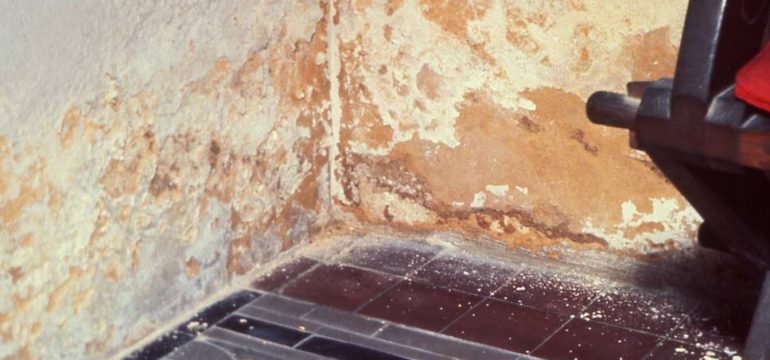
Gypsum and cement based systems form dense, less-breathable barriers over solid walls. When the moisture issue is not correctly addressed and it rises from the ground or penetrates the external masonry, it hits the back of the plaster system. Evaporation is reduced and mineral salts within the wall can continue to migrate. This may result in blown plaster, persistent damp patches, blistering paint, and localised timber decay in adjacent skirtings or joists.
Why is Lime Plaster No Longer Commonly Used?
Property owners often wonder why lime plaster use became rare, asking: Why is lime plaster no longer commonly used?
The decline of lime plastering occurred during the mid-20th-century building boom, driven by the need for rapid housing construction. Modern builders shifted away from traditional lime in favour of the more modern gypsum plasters and cement renders, as they were easier to use.
Cement and gypsum-based products are cheaper to manufacture, set in hours rather than days, and can be applied more easily by general plasterers, as there is less preparation. While gypsum works exceptionally well on modern, cavity-walled properties with built-in damp-proof membranes, its use on traditional solid-wall buildings must be carefully considered in relation to the underlying issues.
What Are the Disadvantages of Using Lime Plaster?
While lime plaster is the traditional finish in solid-wall period properties, it is essential to evaluate its practical limitations before starting a renovation project.
1. Cost and Specialist Skill
Is lime plastering expensive? Yes, lime plastering generally carries higher upfront costs compared to standard gypsum and cement plastering. The raw materials (such as lime putty or hydraulic lime mixed with specialised aggregates) are more expensive to buy. Furthermore, application requires experienced, skilled lime plasterers who understand how to mix and apply this product correctly.
2. Complex Application and Longer Curing Times
Gypsum and cement plastering systems can be applied and finished in single coats quite quickly, as they tend to be thinner and dry more rapidly, whereas traditional lime plastering is a labour-intensive, multi-stage process. It typically requires a three-coat application:
- The Scratch Coat: A coarse base layer applied directly to the bare masonry.
- The Floating Coat: An intermediate leveling layer mixed with coarse sand aggregates.
- The Setting Coat: A fine lime finish coat that provides a smooth surface.
Each layer must chemically cure slowly and dry out thoroughly before the next coat can be applied, meaning a room can take several days to weeks to complete if using traditional lime materials.
3. Strict Paint and Sealer Restrictions
A common query among homeowners is: What is the best sealer for lime plaster?
The answer is that you must never apply a standard film-forming sealer or vinyl paint to lime plaster. Coating lime plaster with non-breathable modern paints blocks its microscopic pores, destroying its ability to regulate moisture and causing the finish to fail.
Lime plaster must only be finished with fully vapour-permeable (breathable) coatings, such as traditional lime wash, silicate mineral paints, or specialised breathable clay paints.
How Lime Plastering is Applied to Interior Masonry Walls
Applying lime plaster to historic masonry requires careful surface preparation and traditional plastering techniques:
- Substrate Preparation: Old, blown plaster is carefully stripped back to reveal the bare brick or stone wall. Mortar joints are raked out, and the surface is thoroughly cleaned of dust and loose debris.
- Dampening the Wall: The bare masonry is sprayed with clean water to control suction, ensuring the wall does not pull moisture out of the fresh lime mixture too quickly and cause cracking or loss of adhesion.
- Applying the Scratch Coat: A coarse lime and sharp sand scratch coat is troweled firmly onto mortar joints and the masonry surface to create a strong mechanical bond. The surface is scratched with a comb to provide a grip key for the next layer.
- Applying the Floating and Finishing Coats: Once the base layer has cured, an intermediate floating coat is applied to level the wall, followed by a fine, smooth setting coat of lime putty and fine aggregate.
- Slow Curing: The fresh plaster is kept moist and allowed to cure slowly under controlled environmental conditions, thereby preventing shrinkage cracks.
How Peter Cox Can Help
Preserving traditional solid-wall properties requires specialised knowledge and a sympathetic approach to historic building materials. Peter Cox has decades of experience in diagnosing property dampness and executing specialist damp-proofing and replastering schemes across the UK.
Our qualified surveyors hold benchmark industry accreditations, including CSRT (Certificated Surveyor in Remedial Treatments) and CSTDB (Certificated Surveyor of Timber and Dampness in Buildings) qualifications. We evaluate your damp walls using diagnostic tools to identify the exact cause of moisture before recommending any treatment.
When replastering is required on period properties, our team provides suitable damp-proof plaster systems that protect your building’s structural health while preserving its historic character. Best of all, our specialised treatments are backed by long-term property guarantees for total peace of mind.
Conclusion
Lime plaster is an essential moisture-management finish for traditional solid-wall properties, allowing damp walls to breathe and dry naturally without triggering plaster failure or timber decay. However, there are other alternatives, and any plastering system must be paired with an accurate diagnosis to ensure active damp issues are resolved at the source. By choosing the right materials and working with experienced heritage specialists, you can protect your building’s structural health and maintain its character for generations to come.