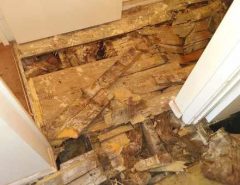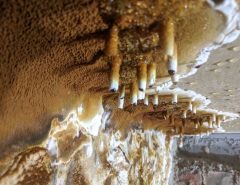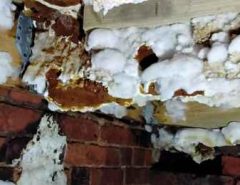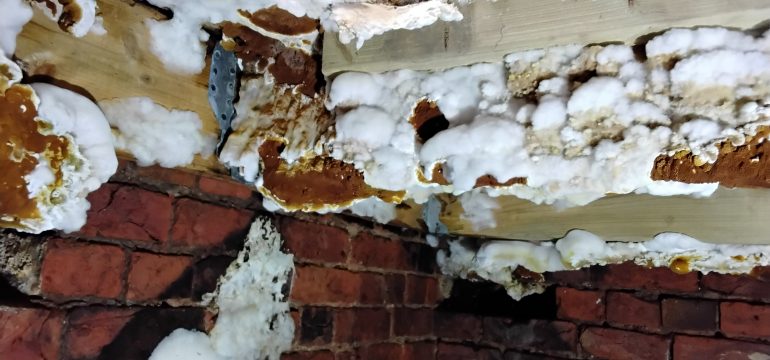

Timber decay is the slow breakdown of wood caused by fungi or wood-boring insects thriving in damp conditions. It affects properties of all ages: from Victorian terraces to modern commercial buildings undergoing refurbishment.
Timber decay almost always starts with the same root cause: moisture.
There are two main types of timber decay: fungal decay and woodworm. Fungal decay includes wet rot and dry rot, while woodworm is the damage caused by wood-boring beetle larvae tunnelling their way through timber. Both can cause serious damage, but this damage can be limited or even prevented if the underlying cause of the timber decay is tackled early.
The Root Causes of Timber Decay
Before exploring the different types of timber decay and how they happen, it’s important to understand the conditions that allow it to take hold. Timber needs to be exposed to moisture, oxygen, and a lack of ventilation on an ongoing basis for fungi or insects to take hold.
Moisture and Ventilation Problems
The most common underlying cause behind timber decay is a building defect that allows moisture to reach timber, or poor ventilation that traps humid air inside. Common causes include:
- Leaking or damaged roofs, including missing or slipped tiles
- Blocked or damaged gutters and downpipes
- Penetrating or rising damp
- Condensation caused by poor ventilation
- Timber in direct contact with damp masonry
- Blocked air bricks restricting airflow into subfloors
These small defects can go unnoticed by property owners until visible damage appears. But even seemingly small problems like a slipped tile can be all that is needed for moisture to get in, and timber decay to begin.
Other Contributing Causes
While moisture and poor ventilation are the core cause that leads to timber decay, there are other conditions that allow it to thrive. Weathering and environmental exposure can cause timber to crack and split, creating entry points for moisture.
Poor construction and maintenance can also accelerate timber deterioration. Untreated timber in damp locations, worn protective coatings, and timber installed without adequate ventilation can all invite rot and woodworm in.
How This Leads to Fungal Decay and Woodworm
If moisture is present in wood for long enough, the conditions are right for fungi and wood-boring insects. Both thrive in damp, poorly ventilated timber, and can cause serious structural damage if left untreated.
Wet Rot
Wet rot is the most common form of fungal decay in buildings. It’s usually triggered by a building defect allowing moisture to reach timber. When timber becomes persistently damp, the structure of the wood can be broken down by fungal mycelium to become soft, dark, and weak.
Some forms of wet rot bleach the timber and make it fibrous. This is called white wet rot.
Wet rot stays localised to the moist area so usually causes less property damage. Once the source is fixed and dried, it will stop spreading. Wet rot is common on exposed timber such as window frames.
Dry Rot
While less common, dry rot presents a bigger problem. Dry rot is triggered by the same types of building defects as wet rot. But unlike wet rot, the mycelium and strands spread through masonry to reach dry timber in other parts of a building, turning it soft and brown. It also establishes itself at lower moisture levels, and doesn’t need ongoing wet conditions to keep spreading.
Woodworm
Woodworm is the collective term for the damage caused by the larvae of wood-boring beetles. Adult beetles lay eggs on damp timber, and the larvae spend years tunnelling through timber feeding on it. There are multiple species active in the UK, including the common furniture beetle, deathwatch beetle and woodboring weevils.
Fungal decay and woodworm are similar in that they prefer damp timber. This makes addressing the underlying moisture source the key starting point for treatment.
Signs of Timber Decay to Look Out For
The signs of timber decay vary depending on the type, but here are some common signs that may mean you have a timber decay problem.
Early Warning Signs of Timber Decay
| Sign | What It Might Mean |
| Damp or wet timber | Moisture problem, risk of timber decay |
| Timber that feels cold or clammy | Moisture present in or around timber |
| Musty or mushroom-like smell | Moisture getting into or behind timber |
| Warped or swollen door or window frames | Timber absorbing moisture |
| Damp patches on walls or ceilings near timber | Moisture reaching structural timber |
| Musty or earthy smell without visible cause | Early-stage fungal decay |
Signs of Active Timber Decay
| Sign | What It Might Mean |
| Weakened or crumbling timber | Wet rot, dry rot, or woodworm |
| Discolouration or staining on timber | Wet rot or dry rot |
| Timber that sounds hollow when tapped | Wet rot or dry rot |
| Cuboidal cracking of timber | Wet rot or dry rot |
| Soft, spongy, or darkened timber | Wet rot or dry rot |
| Dark brown or black strands on surfaces | Wet rot |
| White or grey cotton-wool-like growths | Dry rot |
| Orange or red fruiting bodies | Dry rot |
| Small exit holes in timber | Woodworm |
| Fine dust around or below exit holes | Woodworm |
If you have spotted any of these signs in your property, a specialist damp and timber survey will confirm what is causing them and what action to take.
What To Do About Timber Decay
As timber decay is almost always caused by moisture, fixing it starts with finding where that moisture is coming from. Any repairs to the timber will likely fail and decay will continue to occur if the underlying cause isn’t fixed first.
The extent of repairs to timber depends on how far the decay has progressed. Minor cases of wet rot can be treated easily at times, but if it has caused structural damage it will need to be cut back and replaced. Dry rot requires more extensive repairs as hidden strands may have spread well beyond visible damage to other parts of your property.
A professional damp survey is the right starting point for repairing timber decay. A survey with one of Peter Cox’s CSRT and CSTDB qualified specialists includes an in-depth inspection inside and outside your property to identify any building defects letting moisture in. They can also assess the extent of any timber decay, identify whether fungal decay or woodworm is present, and provide a clear written report with recommendations.
Caught early, timber decay is manageable. Left unchecked, it can compromise the structural integrity of floors, joists and beams, and become significantly more costly to put right.
Frequently Asked Questions About Timber Decay
Can you stop wood rot once it starts?
Yes, wood rot can be stopped once it starts, but first you must find and fix the moisture source allowing it to thrive. Without eliminating the damp conditions that caused it in the first place, timber treatments will fail and rot will return. Once the source is fixed, affected timber can be treated or replaced depending on the extent of the damage.
What is timber decay?
Timber decay (sometimes called wood decay) is the breakdown of wood caused by fungi or wood-boring insects thriving in damp conditions. It usually starts with moisture reaching timber through a building defect or poor ventilation, and covers both fungal decay (wet rot and dry rot) and woodworm.
How quickly does timber decay spread?
It depends on the type. Wet rot stays localised to the damp area and won’t spread beyond it. Dry rot is more aggressive, and can advance at around one metre a year from each infection point in the right conditions. Woodworm can seem slow, as it typically takes up to five years for larvae to emerge and exit holes to appear, but significant structural damage can occur unnoticed in that time.
How to repair timber decay?
Repair always starts with finding and fixing the moisture source. Minor wet rot can sometimes be consolidated and treated with fungicidal products, but more serious cases require affected timber to be cut back and replaced. Dry rot shouldn’t be treated as a DIY project as it can spread and remain hidden behind plaster and under floors. A professional damp survey is recommended to understand the full extent of the problem before any treatment begins.