
Noticing cracks above a window or door can be unsettling, particularly when they appear gradually and without an obvious cause. These cracks are often dismissed as cosmetic or attributed to age or settlement. However, in many properties, they are among the earliest visible warning signs of lintel failure, a structural issue that can worsen quickly if left uninvestigated.
Key stats: Structural cracking is cited in around 20% of building defect investigations, and homes with unresolved damp are up to three times more likely to experience corrosion-related structural defects.
Lintels are critical load-bearing elements that support the masonry above openings. When they begin to fail, whether through corrosion, decay or movement, the surrounding brickwork is often the first area where damage becomes visible. What may start as a fine crack can develop into more extensive structural and damp-related problems if the underlying cause is not correctly identified.
For homeowners, buyers and contractors alike, understanding what lintels do, how they fail and when professional assessment is essential is key to protecting both the structural integrity and long-term value of a property. A professional survey provides the clarity needed to distinguish between cosmetic movement and defects that require expert structural repair.
Peter Cox combines national structural expertise with local surveyors and technicians, delivering professional surveys, expert structural repairs, and long-term guarantees. Raising the standard in property preservation, Peter Cox provides clarity where structural uncertainty exists.
Table of contents:
- What Is a Lintel and Why Is It So Important?
- The Main Types of Lintels Found in UK Properties
- How Lintels Fail: Common Causes Identified in Surveys
- Industry Data: Structural Defects and Housing Risk
- Warning Signs Homeowners Should Never Ignore
- Building Regulations & Compliance Considerations
- Real-World Experience: Why Early Diagnosis Matters
- Why Local Knowledge and National Expertise Make the Difference
- Key Takeaways
- Book a Professional Structural Survey
What Is a Lintel and Why Is It So Important?
A lintel is a horizontal structural support installed above openings, such as:
- Windows
- Doors
- Archways
Its role is to carry the weight of masonry above the opening and transfer it safely into the surrounding walls. Without this support, cracks, movement, and even damp ingress can occur, potentially compromising the stability of the structure.
Lintel failure may seem rare, but when it happens, it can affect safety, comfort and the long-term value of your home.
The Main Types of Lintels Found in UK Properties
Concrete Lintels
- Common in post-war housing
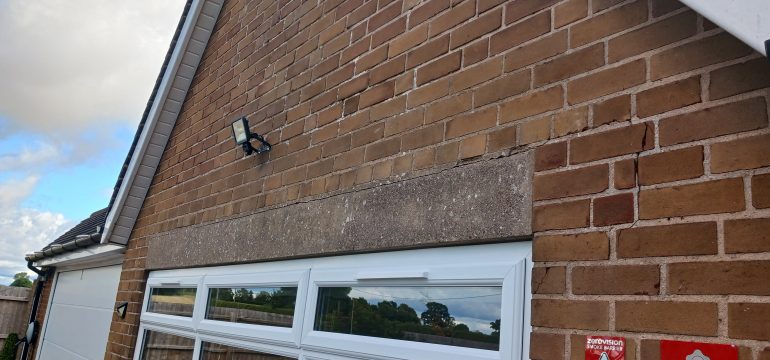
- Durable but prone to cracking, spalling, or carbonation over time
- Early-stage failure can be subtle and hard to spot
Steel Lintels
- Widely used in modern construction
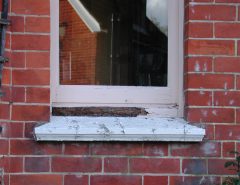
- Structurally strong but susceptible to corrosion where damp is present
- Rust can expand and crack the surrounding brickwork or render
Timber Lintels
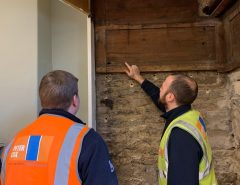
- Typically found in older or historic properties
- Vulnerable to fungal decay, wet rot, and insect attack
- Often hidden until failure is advanced
No Lintel
It is not unknown for no lintel to be in place, and only a door or window frame holds the masonry up. This can become evident when replacement windows are fitted, and the frame starts to bow in the middle, as the masonry drops.
The lintel type often reflects the building’s age, but failure is rarely age-related alone. Damp exposure, corrosion, and historic alterations are usually the real triggers.”
Paul Owen, Peter Cox, Structural Repair Specialist
How Lintels Fail: Common Causes Identified in Surveys
Professional surveys frequently uncover one or more of the following issues:
- Corrosion of steel lintels due to penetrating damp
- Fungal decay in timber lintels caused by moisture ingress
- Cracking or spalling of concrete lintels
- Movement or overloading following window replacements or extensions
- Poor original installation or insufficient bearing into masonry supports
It is worth noting that lintel failure and damp issues often go hand in hand. Moisture accelerates corrosion and decay, whilst cracking allows more water to enter, worsening the problem over time. If the internal steel rebar of concrete lintels becomes wet, they will corrode, expand and cause more cracking.
Industry Data: Structural Defects and Housing Risk
- Structural cracking is cited in around 20% of building defect investigations following homebuyer surveys
- Lintel-related movement accounts for a significant proportion of localised masonry cracking above openings
- Homes with unresolved damp are up to 3 times more likely to experience corrosion-related structural defects
- Older properties and post-war housing stock show the highest prevalence of lintel deterioration
“We regularly find that what appears to be a hairline crack is actually the visible symptom of a failing lintel, and the longer it’s left, the more disruptive and costly repairs become.”
Paul Owen, Peter Cox Surveyor
Warning Signs Homeowners Should Never Ignore
- Horizontal or stepped cracks above windows or doors
- Dropping or distorted window frames
- Rust staining on brickwork or render
- Sticking doors or windows
- Damp patches forming internally around openings
For buyers and sellers, these issues are commonly flagged in homebuyer reports, which will usually recommend a specialist structural survey to determine the cause and severity.
Spotted one of these warning signs? It is best not to wait. Booking a professional structural survey with Peter Cox can uncover hidden lintel issues early. Our local surveyors, backed by national expertise, provide clear reports, expert recommendations, and long-term solutions to protect your property.
Building Regulations & Compliance Considerations
- UK Building Regulations, Approved Document A, require adequate structural support over openings
- Replacement windows or doors must not compromise lintel performance
- Structural alterations must maintain correct load paths and bearing requirements
For commercial projects, incorrect lintel specification or unresolved and delayed repairs can:
- Delay refurbishment programmes
- Introduce health and safety risks
- Cause compliance, insurance or warranty concerns
Real-World Experience: Why Early Diagnosis Matters
Homeowner scenario:
A property sale was delayed when cracks above a bay window caused concern. A Peter Cox survey confirmed corrosion of a steel lintel due to long-term damp exposure. Targeted lintel replacement prevented wider structural work and allowed the sale to proceed smoothly.
“What initially looked like a cosmetic crack turned out to be corrosion of the steel lintel caused by long-term damp exposure. By carrying out a professional structural survey early, we were able to recommend a targeted lintel replacement that avoided wider disruption and allowed the property sale to proceed with confidence.”
Paul Owen, Peter Cox, Structural Surveyor
Commercial scenario:
During refurbishment, movement around new window openings was identified. Early assessment allowed lintel replacement to be planned into the build programme, avoiding delays and unnecessary costs.
“Identifying lintel movement at an early stage meant repairs could be planned into the refurbishment programme rather than reacting to failure later. Coordinating lintel replacement alongside other works helped prevent delays, manage risk, and keep the project on schedule.”
Paul Owen, Peter Cox, Structural Repairs Specialist

Why Local Knowledge and National Expertise Make the Difference
- Local surveyors understand regional building styles, materials, and exposure risks
- National expertise ensures consistent technical standards and repair methods
- Professional reports include photographs, measurements, and clear recommendations
- Long-term guarantees provide reassurance long after the work is complete
This approach ensures repairs are proportionate, compliant and future-proofed, raising the standard in property preservation.
Key Takeaways
- Lintels are critical structural elements, and failure should never be ignored
- Cracks above openings are often structural warnings, not cosmetic defects
- Damp and lintel failure are frequently linked
- Only a professional survey can accurately diagnose the cause and extent
- Early intervention prevents escalation, minimises disruption, and reduces repair costs
Book a Professional Structural Survey
If you notice cracking, movement, or damp around windows and doors, or if a survey report flags potential lintel failure, a professional assessment is essential.
Book a paid property survey with Peter Cox today. Our qualified surveyors provide expert diagnosis, evidence-based recommendations, and long-term solutions, raising the standard in property preservation.