Can Cavity Wall Insulation Cause Damp? Risks, Signs, and Solutions
Cavity wall insulation started in the 1960s, but in recent years, retrofitting properties with cavity wall insulation has been widely promoted across the UK as a primary way to improve energy efficiency and lower heating bills. Supported by various government-backed schemes, millions of homes have had insulation materials injected into their wall voids.
However, for many homeowners, what was intended as an energy-saving upgrade has turned into a nightmare of damp patches, bubbling paintwork, and persistent black mould growth.
Understanding how cavity insulation can lead to dampness, identifying whether your property is at risk, and knowing how to rectify failed insulation will help protect your building's structure and safeguard your home's resale value.
How Does Cavity Wall Insulation Cause Damp?
The short answer is, it does not. When correctly specified, installed in a suitable building, and kept completely dry, cavity wall insulation is an effective thermal barrier.
Problems arise when insulation is installed incorrectly, such as being injected into a property that is structurally unsuitable or exposed to severe weather conditions due to location or building defects.
The original purpose of a cavity wall, introduced in UK building construction during the late 19th and early 20th centuries, was to create an air gap between the outer leaf of brickwork and the inner leaf of masonry.
Rainwater naturally penetrates porous external brickwork during heavy storms, but the clear cavity allows that water to trickle harmlessly down the inside face of the outer wall and drain away in the footings before it can reach internal living spaces.
When a cavity is filled with insulation material (such as blown mineral wool, bonded EPS beads, or urea-formaldehyde foam), that crucial protective air gap is eliminated. However, if the material has been blown to the correct density, water runs down the inner face rather than being absorbed by the insulation.
If water penetrates the outer leaf of the masonry, and the insulation has been incorrectly blown or installed, it will act like a sponge, absorbing water and bridging the gap between the wet exterior wall and the dry internal wall.
This continuous physical bridge allows moisture to transfer directly across to internal plasterwork, resulting in severe penetrating damp and localised cold spots inside the property.
Which Houses Are Not Suitable for Cavity Wall Insulation?
Not all properties are candidates for retrofitted cavity wall insulation. Most of the suitable building stock was insulated in the 1970s and 80s. Poor installation often occurs when contractors fail to perform essential pre-installation checks. Buildings that are generally unsuitable include:
- Homes located along coastal regions or elevated areas in Britain which face severe, wind-driven rain. Relentless rainfall saturates outer brickwork, ensuring that any material inside the cavity may eventually become wet.
- Buildings featuring spalling brickwork, cracked render, or eroded mortar allow heavy water ingress directly into the wall cavity.
- Solid wall properties, or cavity walls obstructed by mortar droppings, rubble at the cavity base, or faulty wall ties. Mortar droppings and defective ties can create localised bridges that collect moisture even before insulation is added.
- Homes that are suffering from unaddressed rising damp or plumbing leaks. Injecting insulation over active damp problems can trap moisture deep within the building fabric.
Signs That Cavity Wall Insulation Has Failed
Recognising the signs of failed cavity wall insulation early allows you to address the problem before extensive internal decay sets in:
Visual Indicators
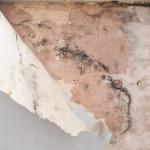
- Dark, discoloured damp patches spreading across internal plasterwork, particularly on exterior-facing walls.
- Peeling wallpaper, bubbling paint, or crumbling plaster on outer wall surfaces.
- Widespread black mould growth clustering in room corners, behind heavy furniture, or along skirting boards.
Sensory Cues
- A heavy, persistent, musty odour lingering inside living spaces, bedrooms, or built-in wardrobes.
- Pronounced cold spots on internal wall surfaces that feel damp and chilled to the touch.
- Unexplained spikes in indoor relative humidity, leading to heavy window streaming and condensation.
Structural Indicators
- Horizontal damp lines following mortar joints, indicating that saturated insulation is resting directly against wall ties.
- Corrosion and rust expanding on metal wall ties inside the cavity, which can eventually cause structural cracking in external masonry.
What Happens If Cavity Insulation Gets Wet?
When cavity insulation becomes saturated, it loses its thermal resistance entirely. Instead of retaining heat, wet insulation transfers warmth out of the property much faster than an uninsulated cavity wall would.
This loss of thermal efficiency causes internal wall surface temperatures to drop significantly. When warm, moisture-laden indoor air meets these chilled wall surfaces, it drops below its dew point, triggering severe internal condensation and black mould growth.
Furthermore, wet insulation creates a continuous moisture reservoir that rots adjacent structural floor joists, ruins wall plaster, and promotes the growth of mould, which then releases spores that lower indoor air quality.
How to Fix Damp Caused by Cavity Wall Insulation
Rectifying damp caused by failed cavity wall insulation requires a clear, methodical approach:
Step 1: Professional Diagnosis
Commission an independent specialist damp survey. A qualified surveyor will inspect the cavity using endoscopes and thermal imaging to confirm whether the insulation material is correctly installed, is saturated and locate the exact points of water ingress.
Step 2: Exterior Building Repairs
Before addressing the cavity, all external masonry defects must be repaired. This includes repointing eroded mortar joints, fixing defective roof gutters, repairing cracked render, and sealing porous brickwork.
Step 3: Cavity Wall Insulation Removal
Saturated or defective insulation must be completely removed from the wall void. Specialist extraction technicians drill small, targeted holes in the lower external masonry and use high-pressure air combined with industrial suction extraction machinery to draw all wet material out of the cavity.
Will Removing Cavity Wall Insulation Stop Damp?
Yes. Once the wet insulation is completely extracted and external masonry leaks are repaired, the natural unpressurised air gap is restored. Given adequate background heat and ventilation, the wall structure will dry out naturally over time, stopping the dampness permanently. A decision can then be taken on whether the cavity is suitable for re-insulation or another alternative such as exterior or interior insulation.
Guarantees, Claims, and Buying a House with CWI
Navigating cavity insulation issues involves important financial and legal considerations:
Installation Guarantees
Most legitimate cavity wall insulation installations carried out under official schemes come with a 25-year guarantee issued by the Cavity Insulation Guarantee Agency (CIGA) or an equivalent body. If your insulation has failed due to poor workmanship or improper specification, you may be able to claim the cost of cavity extraction and building repairs under this guarantee.
Should You Buy a House with Cavity Wall Insulation?
Buying a property with cavity wall insulation is fine, provided the system is performing correctly. However, if you are purchasing a home in an exposed coastal area or notice signs of dampness during a viewing, you should exercise caution.
Always request original CIGA documentation from the seller and arrange an independent specialist damp and timber survey before exchanging contracts to ensure the cavity insulation is dry and correctly installed.
How Peter Cox Can Help
Accurately diagnosing failed cavity wall insulation requires specialist diagnostic equipment and deep building expertise. Peter Cox has decades of experience in assessing structural moisture and protecting UK homes.
Our nationwide network of local branches provides independent, expert advice. Our surveyors hold benchmark CSRT (Certificated Surveyor in Remedial Treatments) and CSTDB (Certificated Surveyor of Timber and Dampness in Buildings) qualifications.
We utilise non-destructive diagnostic tools, including cavity endoscopes and thermal imaging cameras, to inspect the condition of your insulation without damaging your property. Following our inspection, we provide clear, written diagnostic reports that outline the exact cause of moisture and specify necessary remedial steps, ensuring your property remains dry and structurally sound.
Conclusion
Cavity wall insulation should improve your home's comfort and save energy, not cause dampness and mould. Identifying failed, wet insulation early, restoring the wall's natural protective air gap, and repairing exterior masonry will stop structural decay and protect your family's health. By choosing an expert diagnosis, you can restore your property's thermal efficiency and keep your living spaces dry for years to come.
Protect your property's value and structural health.